

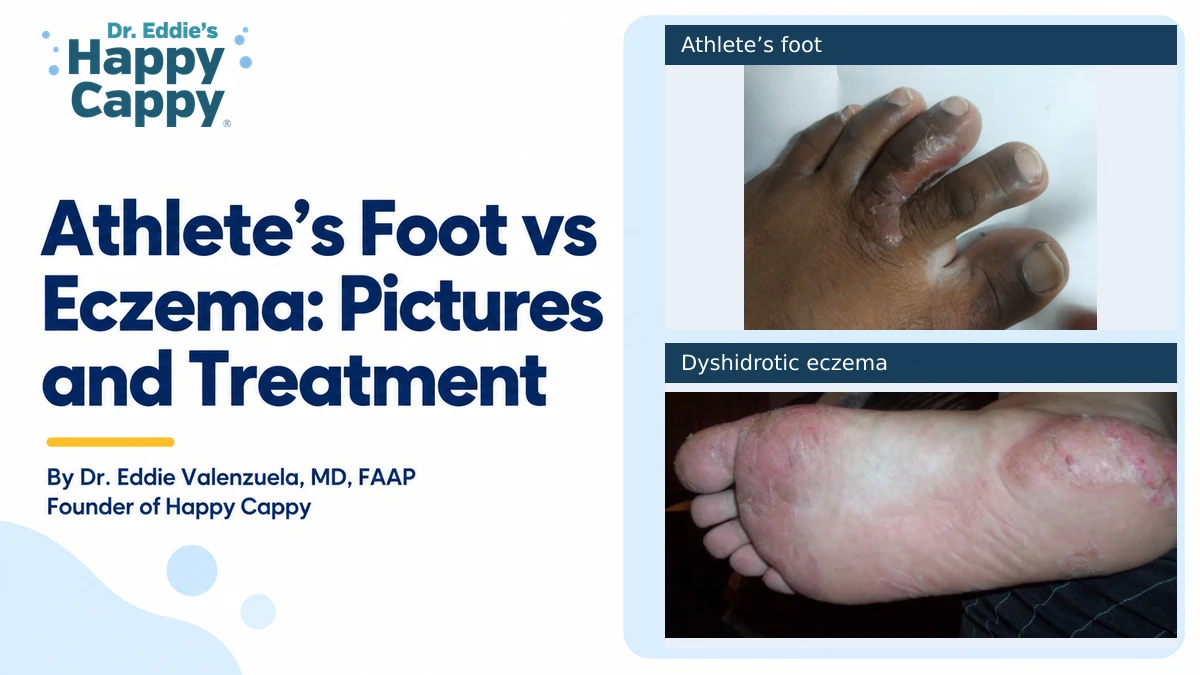
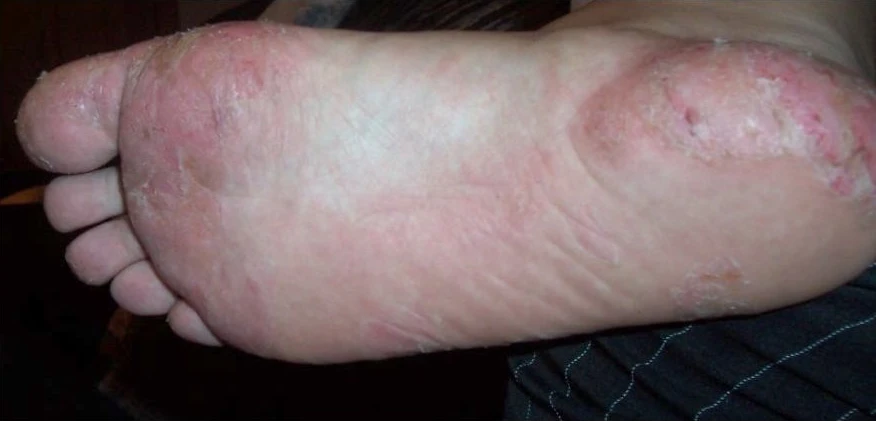
Cover photographs show athlete’s foot around the toes and peeling-stage dyshidrotic eczema on a sole. They are different people, not a treatment comparison.Cover photo credits: Dr Hari K Kasi, Athletes foot–Tinea Pedis, CC BY-SA 4.0. Resized and converted to WebP; clinical appearance unaltered. La belle morte, Dyshidrosis sole, CC BY-SA 3.0. Resized and converted to WebP; clinical appearance unaltered.
Quick answer: Athlete’s foot is a fungal infection; foot eczema is an inflammatory skin problem. Both may itch, peel or blister. Toe-web scale suggests fungus, but eczema can affect the soles too, and appearance alone is not always enough. A fungal scraping can help.
Athlete’s foot: a fungal infection
Athlete’s foot, or tinea pedis, is an infection caused by dermatophyte fungi. It can affect the spaces between the toes, the sole and sides of the foot, or produce blisters. It is not limited to athletes. Shared damp surfaces, footwear and other exposures can contribute to spread.1
Peeling or whitish, softened skin between the toes is a familiar pattern, especially around the outer toe webs. Another pattern causes dry scale across the sole and sides, sometimes called a moccasin distribution. A blistering form can resemble eczema.
Foot eczema: inflammatory skin conditions
Eczema on the feet can have several causes. Atopic eczema may occur as part of a recurring itchy-skin pattern. Dyshidrotic eczema can cause intensely itchy, small, deep-seated blisters, followed by peeling. Irritant or allergic contact dermatitis may relate to footwear materials, adhesives or other exposures.2
Foot eczema is not confined to the top of the foot. It can involve toes, soles or sides, depending on the type. Eczema itself is not contagious, although damaged skin can develop an infection.
Pictures of athlete’s foot and foot eczema
These examples show different patients and stages. Neither image includes every possible presentation. Tap to enlarge and compare the distribution as well as the surface changes.

Athlete’s foot vs eczema: comparison clues
Between the toes
Moist-looking white scale, peeling and cracks between toes can suggest athlete’s foot. Irritation and other infections can also affect these spaces, so this is a clue rather than proof.
Sole and sides
Fungus can cause broad dry scale or blisters. Eczema can also affect these surfaces. A “dry sole” does not automatically mean eczema.
One foot or both
Athlete’s foot may be more marked on one side; eczema may be more symmetrical. Both have exceptions, and this pattern should not decide treatment alone.
Blisters
Dyshidrotic eczema often starts with very itchy small blisters. Vesicular athlete’s foot can also blister. A fungal test may be useful when the distinction is unclear.
Shoe-shaped pattern
A rash that corresponds to parts of footwear may suggest contact dermatitis. Repeated flares with certain shoes are worth mentioning; patch testing may help with suspected allergy.
Toenails
Thickened or discolored nails can accompany fungal infection, but injury and other conditions also change nails. Nail appearance alone cannot confirm the cause of a foot rash.
Itch, odor or a photograph cannot reliably settle every case. If you also have round patches on the legs or trunk, see ringworm vs eczema.
Sweaty sock syndrome in children
Juvenile plantar dermatosis, often called sweaty sock syndrome, is another reason a child’s feet can be sore and cracked. It typically affects weight-bearing areas of the forefoot and may look shiny or glazed, while the toe webs are often spared. Friction, sweating and repeated wet-to-dry changes can contribute.3
That pattern differs from typical toe-web athlete’s foot, but it is not enough for a parent to make a certain diagnosis. See the dedicated sweaty sock syndrome guide for the child-specific discussion. The eczema photograph above is labeled dyshidrotic eczema and should not be used as a substitute example.
Fungal testing and allergy assessment
Fungal microscopy and culture
A clinician may scrape scale for microscopic examination, sometimes with a fungal culture. Testing is especially useful when a rash is atypical, recurrent or not responding as expected. Bring the names of antifungals, steroid creams and foot products already used.1
Footwear allergy and patch testing
If footwear allergy is suspected, patch testing can help identify a delayed allergic reaction. Fungus and dermatitis can coexist, so one diagnosis does not always explain every area of irritated skin.
Treatment differences
Antifungal treatment for athlete’s foot
For confirmed athlete’s foot: topical antifungal treatment is often appropriate. Follow the product’s age restrictions and full course instructions. More extensive, recurrent or difficult cases may require a clinician’s treatment plan. Skin moisturizer alone does not eradicate fungus.14
Treatment for foot eczema
For confirmed foot eczema: avoid relevant irritants or allergens, moisturize dry areas and use prescribed anti-inflammatory treatment as directed. Dyshidrotic or recurrent shoe-related eczema may need a more specific plan.
Steroids and an uncertain diagnosis
Do not use steroid cream alone on suspected athlete’s foot or select a steroid-antifungal combination just to “cover both.” Steroids may disguise or worsen a fungal infection. If you have already been given a treatment plan, ask the prescriber before changing it.4
Practical foot care while you treat the cause
- Dry carefully between the toes after bathing. Avoid leaving damp skin trapped in socks.
- Change damp socks after sports or whenever they become sweaty. Let shoes dry before wearing them again.
- Use sandals in communal shower areas and avoid sharing shoes or towels when fungal infection is a concern.
- Moisturize dry, eczema-prone areas as advised, while avoiding heavy moisturizer packed into already wet, softened toe webs.
- Do not pop blisters or pull peeling skin. Protect sore areas from friction and seek advice about dressings if needed.
- Review footwear exposures if flares repeatedly follow particular shoes, insoles, adhesives or sprays.
Gentle cleansing for dry, eczema-prone feet
Dry areas affected by sweaty sock syndrome (juvenile plantar dermatosis) or dyshidrotic eczema need gentle cleansing and regular moisture. Use Happy Cappy Daily Shampoo & Body Wash, a fragrance-free cleanser for dry, sensitive skin. Glycerin and provitamin B5 help skin feel soft and hydrated. Massage gently onto wet feet, rinse and dry carefully, especially between toes.
Moisturizing dry areas with Happy Cappy Cream
Follow with Happy Cappy Moisturizing Cream, a fragrance-free daily moisturizer, on dry areas. Glycerin draws in moisture and petrolatum helps retain it for softer, more comfortable skin. The cream absorbs quickly without a greasy feel. Keep heavy moisturizer out of wet, softened toe webs.
Choose one 8 oz Daily Wash with a 6 oz cream tube or 12 oz pump jar. Shop the Daily Wash + Moisturizing Cream Bundle
This routine is for dry, eczema-prone skin, not athlete’s foot treatment. Continue treatment for the diagnosed condition as directed.
Signs that need medical attention
Seek an examination when the diagnosis is uncertain, treatment is not helping as expected, the rash repeatedly returns or walking is painful. Get prompt care for spreading warmth or redness, pus, increasing swelling, severe pain or fever.
If you have diabetes, poor circulation or a weakened immune system, seek individualized advice early about a new foot rash, crack or wound. Do not repeatedly self-treat a painful or worsening foot problem.