

Part of the Eczema Resource Center and Types of Eczema guide.
Quick answer: Neurodermatitis, also called lichen simplex chronicus, is an intensely itchy area of skin that becomes thick and leathery through repeated scratching or rubbing. Treatment aims to calm the itch, protect the skin and address what started the cycle. It is not contagious.1, 4
Neurodermatitis and the itch-scratch cycle
Neurodermatitis often affects one or a few persistent patches. An itch prompts rubbing or scratching; that repeated friction changes the skin, which can keep itching even after the original trigger has passed. The resulting thickening is called lichenification.1, 4
Relationship to atopic dermatitis
Neurodermatitis is commonly included among the types of eczema. The word eczema is also often used to mean atopic dermatitis, which can occur together with neurodermatitis. Lichen simplex chronicus can develop on previously normal skin or as a result of repeatedly scratching an underlying itchy condition. Simply telling someone to stop scratching is rarely a complete treatment plan.3, 5
Neurodermatitis in adults and children
Neurodermatitis occurs most often in adults and is rare in children. It can develop in a child with atopic dermatitis. A persistent itchy, thickened patch in a child needs an examination to identify the cause and select treatment appropriate for the child's age.3, 9
Neurodermatitis symptoms and pictures
Itching, skin texture and color
Neurodermatitis causes repeatedly itchy patches that feel thicker or rougher than nearby skin. Features may include:
- Prominent skin lines: a grooved or crisscross appearance.
- Scale and thickening: a dry, raised or leathery surface.
- Color changes: pink or red, violet, brown, or darker or lighter than surrounding skin.
- Scratch damage: tenderness, cracks, scabs or broken hairs.
- Disrupted sleep: itch may intensify while resting or at night.
Texture can be a more useful clue than redness, especially on darker skin.2, 3
Common body areas
The neck, wrists, forearms, legs, ankles and scalp are common sites. Genital or anal skin can also be affected.2, 3
Clinical photographs of lichen simplex chronicus
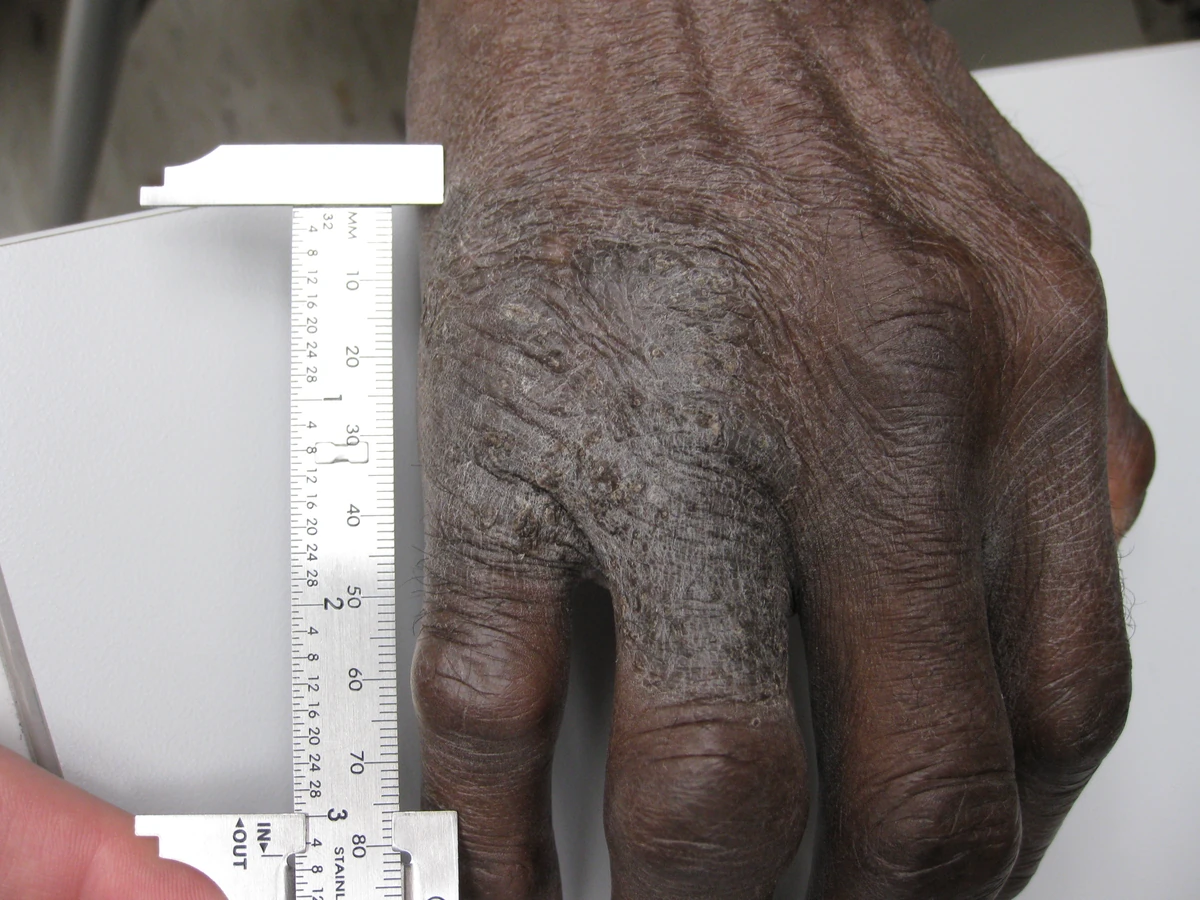

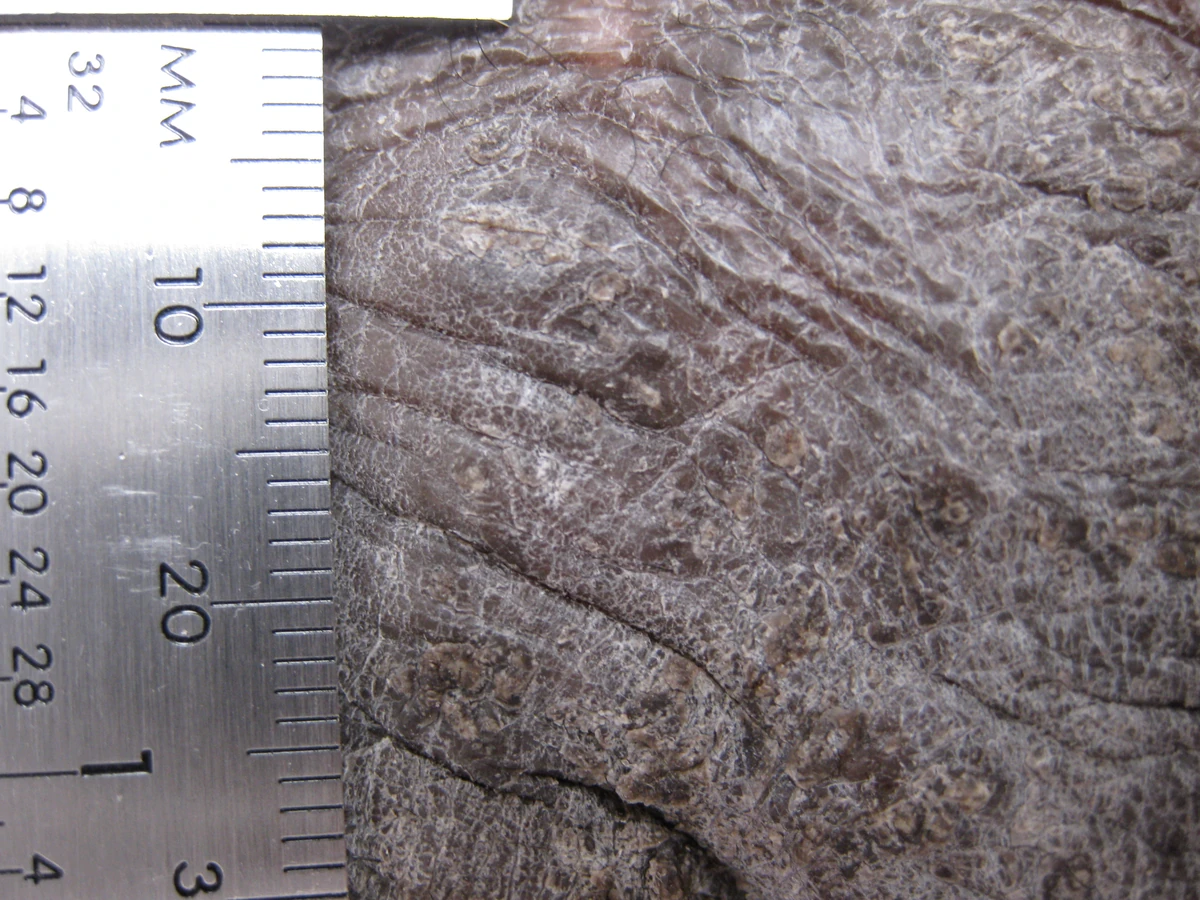

These photographs show examples, not every presentation. A new itchy plaque needs assessment when its cause is uncertain.
Causes and triggers of neurodermatitis
Sources of the initial itch
The first itch may come from dry skin, atopic dermatitis, contact allergy, irritation, an insect bite, or another skin condition. Sometimes nerve-related itch contributes, and sometimes no clear starting cause is found. Heat, sweat and friction may aggravate symptoms.3, 4
Stress and automatic scratching
Stress and anxiety can make itching and repetitive scratching harder to control, but they are not the only explanation. Scratching can also happen automatically while reading, working or sleeping. Addressing that pattern is part of medical care, not a judgment about willpower.1, 6, 8
Conditions that resemble neurodermatitis
| Condition | Useful distinction |
|---|---|
| Atopic dermatitis | A recurring inflammatory condition that may affect several areas. Longstanding atopic eczema can also become lichenified, so the two can overlap. |
| Contact dermatitis | Irritation or allergy from skin exposures may start or sustain the itching. The allergic contact dermatitis guide explains patch testing. |
| Psoriasis or lichen planus | Both can produce persistent itchy, thickened lesions. Examination, and occasionally a biopsy, helps distinguish them. |
| Fungal infection | A scaly rash may need a skin scraping or fungal test. The ringworm and eczema comparison explains that distinction. Treating an unexplained rash repeatedly with steroid alone can miss its cause. |
| Prurigo nodularis | Typically produces multiple firm, raised nodules rather than primarily a thickened plaque. Its evaluation and treatment plan may differ. |
Appearance alone cannot reliably settle these differences.3, 4, 5
Diagnosis of lichen simplex chronicus
History and skin examination
Thickened skin alone cannot distinguish neurodermatitis from longstanding atopic dermatitis. The diagnosis is usually based on the history and examination, including the pattern of the patches and what may be causing the itch. When atopic eczema starts the itch–scratch cycle, a doctor may diagnose atopic dermatitis with secondary lichen simplex chronicus.3, 5
Testing when the diagnosis is uncertain
Depending on the history, skin exposures and examination findings, testing may include a fungal scraping, an infection swab, patch testing for contact allergy, or a biopsy of an unusual or persistent lesion. Not everyone needs each test.3, 5, 8
Neurodermatitis treatment
An effective plan treats inflammation and itch while giving the repeatedly scratched skin a chance to heal. The original trigger also needs attention when it can be identified.4, 6
Topical corticosteroids for inflammation
Topical corticosteroids are commonly used to calm a thick, inflamed patch. Some plaques need a stronger prescription than over-the-counter hydrocortisone. The clinician selects the strength, duration and follow-up for the body area and age. A medicine used on thick hand or leg skin may be unsuitable for eyelids or genital skin.3, 4
Other prescription treatments
Tacrolimus or pimecrolimus may be considered as nonsteroid options, particularly for sensitive areas. Corticosteroid injections into a persistent plaque or prescription steroid tape are other options in selected cases. These are individualized treatments rather than a single cream that suits every rash.4, 5, 6
Relief for nighttime itching
A clinician may recommend a short course of a sedating antihistamine, such as diphenhydramine, to help relieve nighttime itching and allow sleep while the flare is brought under control. It does not replace treatment of the inflamed skin. Drowsiness, other medicines and the person's age affect whether it is appropriate; check with the child's clinician before using it for a child.5, 6, 8
Persistent or nerve-related itching
Other itch-directed options include pramoxine, capsaicin or doxepin preparations. Persistent nerve-related itch may prompt consideration of medicines such as gabapentin or pregabalin. Suitability depends on the diagnosis and site; some preparations sting or irritate sensitive skin.3, 5, 6
Protection from repeated scratching
Loose clothing or a clinician-recommended dressing can reduce unconscious scratching. Occlusion also increases medication absorption, so use a dressing over a prescription treatment only as directed.6, 7, 8
Habit reversal and stress support
Habit-reversal techniques help a person recognize automatic scratching and practice a different response. Counseling can help when stress or anxiety sustains the cycle. These approaches work alongside treatment of the itchy skin.6, 7, 8
Reassessment and specialist treatment
If a patch persists, the next step is to reassess the diagnosis, exposures and treatment plan. Dermatologists may consider phototherapy or other specialist therapies. Antibiotics are reserved for a diagnosed infection rather than used routinely on every itchy patch.5, 6, 8
Daily skin care for neurodermatitis
Gentle washing and regular moisturizing
- Keep washing gentle: use lukewarm water and avoid scrubbing the thickened patch.
- Moisturize consistently: apply a fragrance-free cream or ointment after washing and when skin feels dry.
- Reduce irritation: choose comfortable clothing and avoid known product triggers.
Limiting scratching damage
- Cool the itch: try a clean, cool damp cloth instead of scratching.
- Keep nails short: this limits damage from accidental scratching.
- Notice the pattern: keep your hands occupied when you tend to scratch without realizing it.
These steps support the treatment plan and help protect recovering skin.7, 8
Cleansers and moisturizers for sensitive skin
Happy Cappy Daily Shampoo & Body Wash provides fragrance-free cleansing. Happy Cappy Moisturizing Cream provides fast-absorbing, non-greasy moisture for dry, itchy, eczema-prone skin. These daily-care products support comfort alongside the clinician's treatment plan.
Recovery and recurrence
Changes in itch, skin thickness and color
Itch may settle before thickening and color changes have fully faded. A darker or lighter patch can remain after the active inflammation improves. Avoid scrubbing or harsh lightening products on irritated skin, and have persistent changes assessed.2, 7, 8
Reducing repeat flare-ups
Neurodermatitis can clear, but it can return. Controlling the original source of itch, following the prescribed plan and continuing gentle skin care help manage recurrence. Persistent itching needs reassessment.5, 7
When to seek medical care
Persistent or unexplained skin changes
Arrange an examination for persistent localized itch, a thickened patch of uncertain cause, disrupted sleep, or symptoms that keep returning despite treatment. Genital symptoms, hair loss or a changing or nonhealing lesion also deserve assessment.
Signs of infection
Increasing pain, warmth, swelling, spreading inflammation, pus or fever can signal infection and need prompt care.2, 5, 8
For broader navigation, visit the Eczema Resource Center. To compare this condition with other eczema patterns, return to Types of Eczema.