

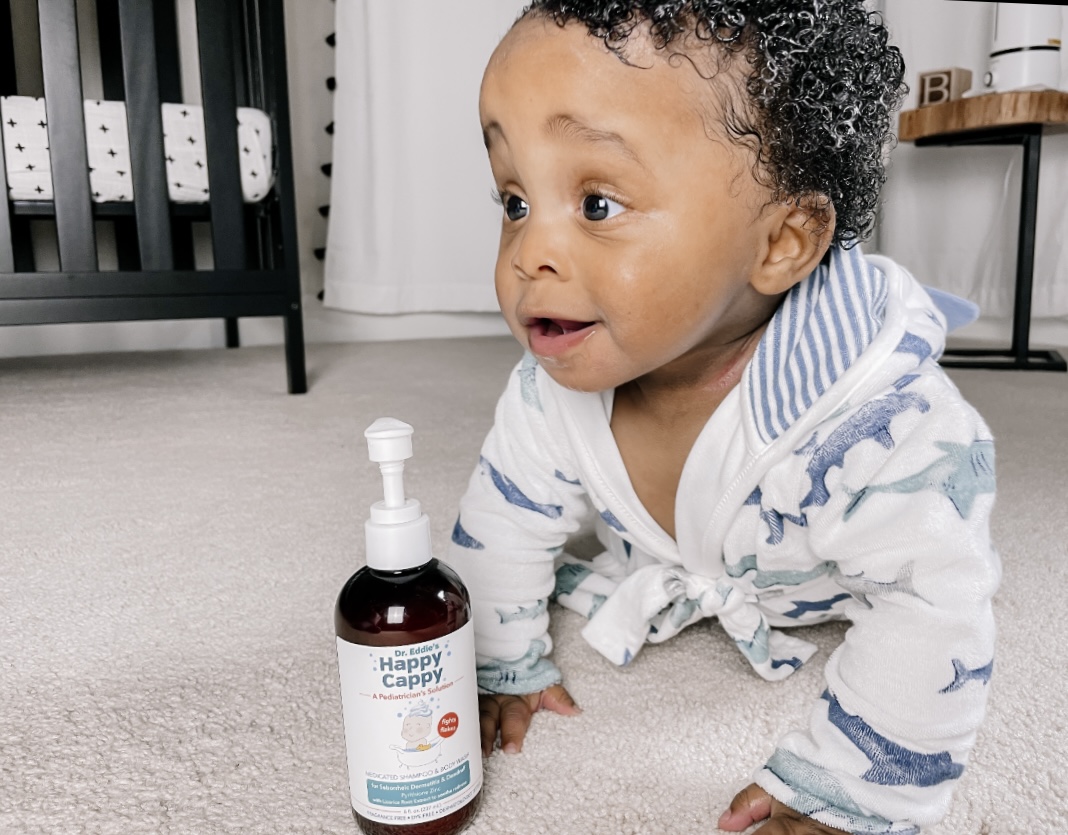
Quick answer: Some hair may come away with cradle-cap scales and will grow back. But babies also commonly shed their birth hair during the first few months. Normal newborn shedding and cradle cap can happen at the same time without cradle cap causing the shedding.1,3,4
Normal Hair Loss in the First Few Months After Birth
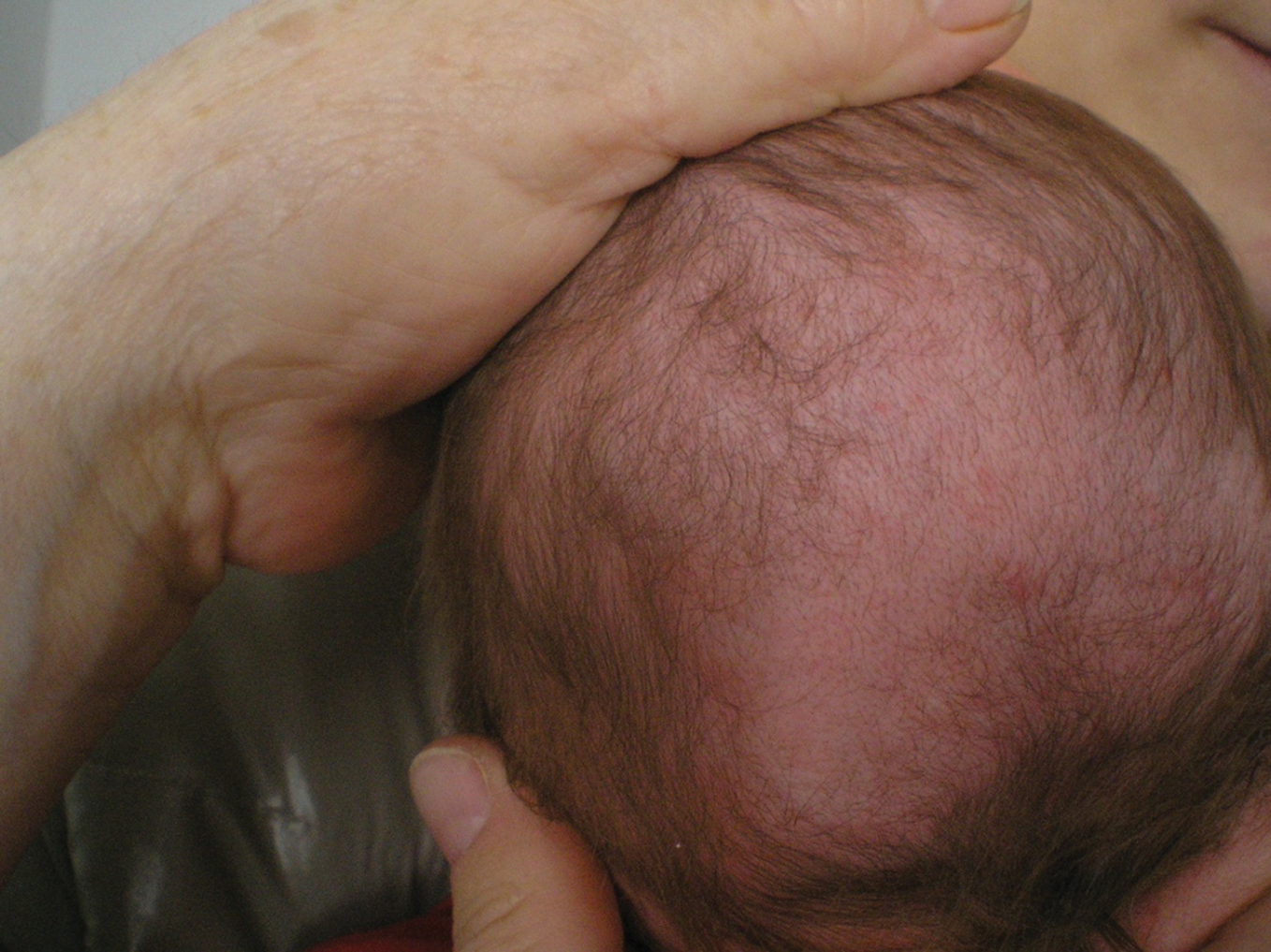
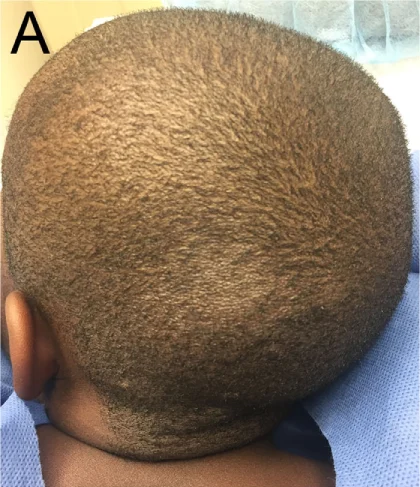
A baby born with a full head of hair may gradually look much less hairy. This common change is part of early hair development, and it can happen even when the scalp has no flakes or rash. Some babies also lose more hair at the back of the head.1
Normal shedding often peaks around 3 months and can occur during the first 6 months. Cradle cap commonly starts between about 3 weeks and 2 months, so the timing overlaps. Seeing both together does not establish that the cradle cap caused the hair loss.2,3
Clues that distinguish scales, normal shedding, and other hair loss
Cradle cap is seborrheic dermatitis on a baby’s scalp. Its usual sign is greasy, stuck-on white or yellow scale, often with little or no discomfort. Marked itching or pain is not typical of uncomplicated cradle cap.3,4
| What you notice | Possible explanation |
|---|---|
| Hair gradually thins during the early months, with comfortable skin underneath. | Normal newborn shedding may be happening, whether or not cradle cap is also present.1 |
| A few hairs come away with flakes during gentle washing. | Hair can lift away with cradle-cap scales and will grow back.3 |
| A thinner patch develops at the back of the head. | Early shedding and rubbing can both contribute; it is not automatically cradle cap.1,2 |
| An unexplained or enlarging bald patch, broken hairs, or a painful, swollen scalp. | Another hair or scalp condition needs assessment.2,5 |
Keep placing your baby on their back for every sleep, on a firm, flat sleep surface. Do not add pillows or change to stomach sleeping to protect a thin patch of hair.7
Hair that comes away with cradle-cap scales will regrow
Ordinary cradle cap is not expected to cause permanent baldness. Hairs caught in the scales may come away as the flakes loosen. This can look alarming, but the hair will grow back.3,4
Picking attached scales or scrubbing hard can pull hairs and injure the skin. A persistent bare patch should not simply be blamed on cradle cap: scalp ringworm, alopecia areata, and other causes of hair loss need a different assessment.1,2,5
For older children and adults, see our separate guide to seborrheic dermatitis and hair loss.
Removing every scale does not speed hair growth
Removing every scale is not necessary for a baby’s hair to return. Hair that comes away with cradle-cap scales will regrow. Normal newborn shedding follows its own course. Clearing flakes should not be presented as a way to speed up that process.1,3
There is no useful fixed inches-per-month promise for an individual baby. Replacement hair after normal newborn shedding often becomes more noticeable between 6 and 12 months. If regrowth is not appearing or hair loss continues, discuss the pattern with your pediatrician.2
Gentle scalp care protects attached hair
- Wash gently. Use a mild, fragrance-free baby shampoo and massage with your fingertips.
- Lift only loosened flakes. A soft baby brush or comb can help during washing. Use light pressure and leave attached scales alone.
- Avoid picking and scraping. The scalp does not need to be completely clear after one bath.
- Stop if the skin becomes sore. More brushing is not better, and brushing should not be promoted as a hair-growth treatment.5
For thick, stuck-on scales, the American Academy of Dermatology recommends a non-food-based oil, such as baby oil, to soften them before shampooing. See our guides to coconut oil for cradle cap and olive oil for cradle cap. Oils soften scales; they do not treat normal newborn hair shedding.5
Treating scalp flakes while normal shedding runs its course
Common dandruff-shampoo actives include pyrithione zinc, selenium sulfide, ketoconazole, salicylic acid, sulfur, and coal tar. Formulations and age directions differ; these are not interchangeable choices for a baby.8
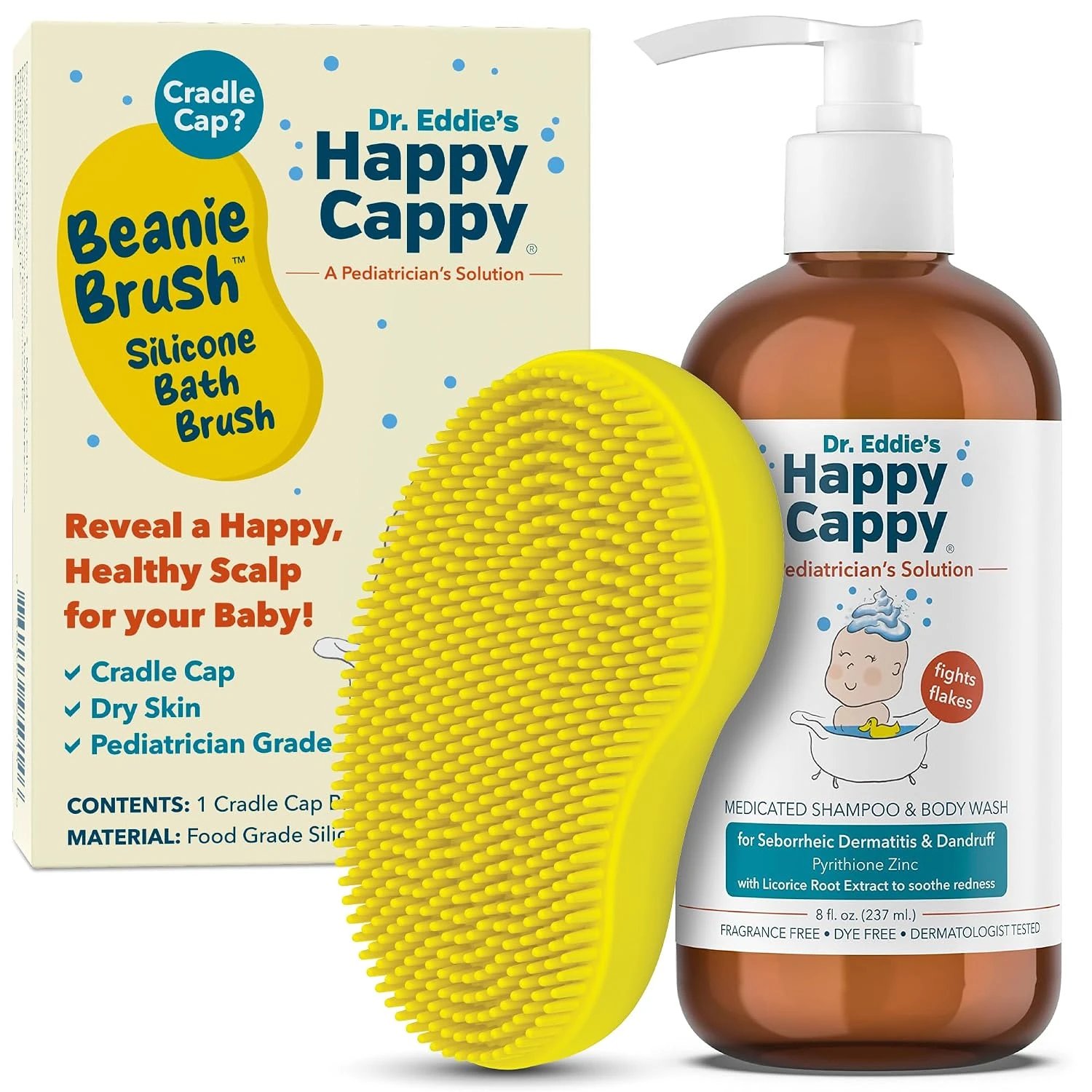
The Happy Cappy Medicated Shampoo + Beanie Brush Bundle pairs an 8 oz medicated wash with a soft silicone scalp brush.
The wash contains 0.95% pyrithione zinc to help relieve flaking, scaling, redness, and itching associated with seborrheic dermatitis and dandruff. Its fragrance-free, dye-free formula is designed for sensitive skin.6
Skip the oily mess. Use the brush with a light touch during washing to move flakes that release easily; leave attached scales alone.
Use directions: Wet the hair thoroughly, gently massage in the shampoo, and rinse well. Use at least twice weekly. Keep it out of the eyes. Stop use and ask a doctor if symptoms worsen or do not improve with regular use.6
The wash addresses flaking and scaling; the brush gently moves loose flakes. Neither is a hair-regrowth treatment. Normal newborn shedding alone does not need medicated shampoo.
Hair-loss patterns that need assessment
Arrange an examination for unexplained, enlarging, or persistent bald patches; broken hairs with scale; or hair that is not growing back as expected. Scalp ringworm can cause scaly patches of hair loss and generally needs an oral prescription medicine, not shampoo alone.2
Seek prompt care for a painful or swollen scalp, pus, oozing, bleeding, a spreading rash, or a baby who seems unwell. Significant itching also deserves a closer look rather than assuming it is ordinary cradle cap.3,5