

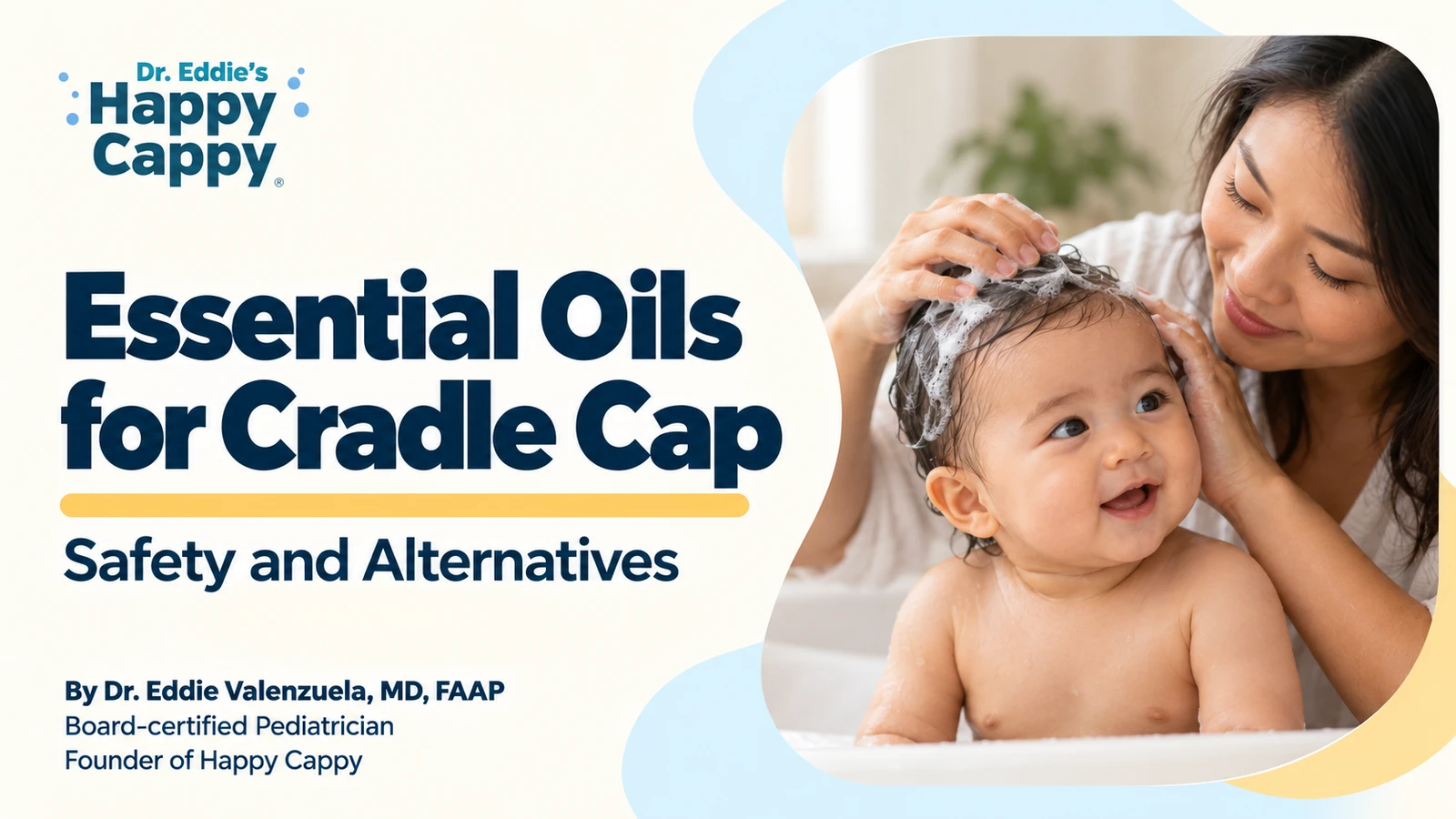
Quick answer
Skip essential oils as a home remedy for your baby's cradle cap. They can cause skin reactions, and swallowing some oils can be dangerous. Gentle, fragrance-free scalp washing is a better starting point. A medicated cradle-cap wash can help control flakes when regular washing is not enough.1,2
Cradle cap is a common form of seborrheic dermatitis in babies. Its scalp scales usually cause little discomfort. The aim of care is to loosen flakes gently while keeping the skin comfortable.2
Essential oils are concentrated plant extracts
Essential oils contain aromatic compounds extracted from plants. Tea tree, lavender, peppermint, eucalyptus, and lemon oils are examples. Their plant origin does not establish that they are suitable for a baby's scalp.1
Coconut oil, olive oil, mineral oil, and petroleum jelly are different kinds of products. Advice about using an emollient to soften scale is not advice to apply an essential oil. Our coconut oil and olive oil guides address those separate questions.
Tea tree dandruff research does not establish a baby treatment
A frequently cited trial studied a shampoo containing 5% tea tree oil in 126 people age 14 and older. Used daily for four weeks, it improved the study's dandruff severity score more than the comparison shampoo.3
That trial did not study babies, cradle cap, pure tea tree oil, or a homemade mixture. Its results cannot establish a safe concentration or effective routine for a baby's scalp. Laboratory antifungal activity also cannot, by itself, answer those questions. The National Center for Complementary and Integrative Health describes the evidence for many topical tea-tree-oil uses as insufficient.3,4
Skin reactions and accidental exposure are the main concerns
Irritation and allergy can add a new rash
Essential oils can cause irritation or an allergic skin reaction. Tea tree oil, for example, may cause redness and irritation, particularly when an older product has been exposed to heat, light, or air. Adding a fragranced remedy can leave a baby's scalp more uncomfortable instead of helping the flakes.1,4
Swallowing some essential oils can cause poisoning
Risk depends on the oil, its concentration, the amount, and how exposure occurs. Some essential oils can cause serious poisoning when swallowed; oil entering the lungs can also cause injury. Store concentrated oils in their original containers, locked out of children's sight and reach.1,5
A homemade dilution is not an established cradle-cap treatment
Dilution changes the concentration, but it does not supply the missing evidence for treating babies. A recipe described as natural, therapeutic grade, or only a few drops is not proof of safety or benefit. Avoid adding essential oils to your baby's shampoo or mixing a scalp remedy at home.1,3,4
Act promptly after an essential-oil exposure
If an oil causes a skin reaction, stop using it and gently wash it off. If a baby may have swallowed essential oil, call Poison Control at 1-800-222-1222 in the United States for product-specific advice. Do not induce vomiting. Call 911 for a seizure, trouble breathing, collapse, or a child who cannot be awakened.1,9
Gentle washing offers a simpler starting point
Use a fragrance-free baby shampoo and gently massage the scalp with your fingertips. A soft baby brush can help lift flakes that release easily during washing. Leave attached scales alone. For stubborn scale, dermatologists describe using a non-food-based emollient before shampooing; essential oils are unnecessary for that step.2
Our cradle cap guide covers the full care routine, and our baby brush guide explains gentle technique. Seek medical advice for painful, raw, bleeding, or oozing skin, or a rash that spreads or fails to improve.2
Happy Cappy Medicated is a cradle cap shampoo
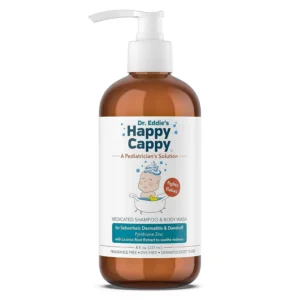
Happy Cappy Medicated Shampoo & Body Wash is a cradle cap shampoo that helps gently wash away flakes and scales while cleansing your baby’s hair and scalp. Cradle cap is the infant form of seborrheic dermatitis.
Its 0.95% pyrithione zinc helps relieve flaking, scaling, redness, and itching associated with seborrheic dermatitis and dandruff. The formula is fragrance-free and dye-free.6,7
Skip the oily mess. Happy Cappy Medicated helps wash away flakes and scales without applying oil beforehand. Gently massage with your fingertips and rinse, leaving attached scales to loosen gradually.2,6,7
Use as directed: Wet the hair thoroughly, gently massage onto the scalp and skin, and rinse well. For best results, use at least twice weekly or as directed by a doctor. For external use only. Avoid the eyes; rinse thoroughly with water if contact occurs. Ask a doctor before use if seborrheic dermatitis covers a large body area. Stop use and seek advice if the condition worsens or does not improve with regular use as directed.6
A brush is optional. If you prefer one, the Medicated Shampoo + Beanie Brush Bundle pairs the wash with a soft silicone brush for flakes that release easily. Use it lightly on intact, comfortable skin.2,8
Keep cradle-cap care simple
Essential-oil recipes add uncertainty to a condition that usually responds to gentle care. Start with fragrance-free washing, lift only loose flakes, and use a suitable medicated wash when needed. Leave essential oils out of the routine.