

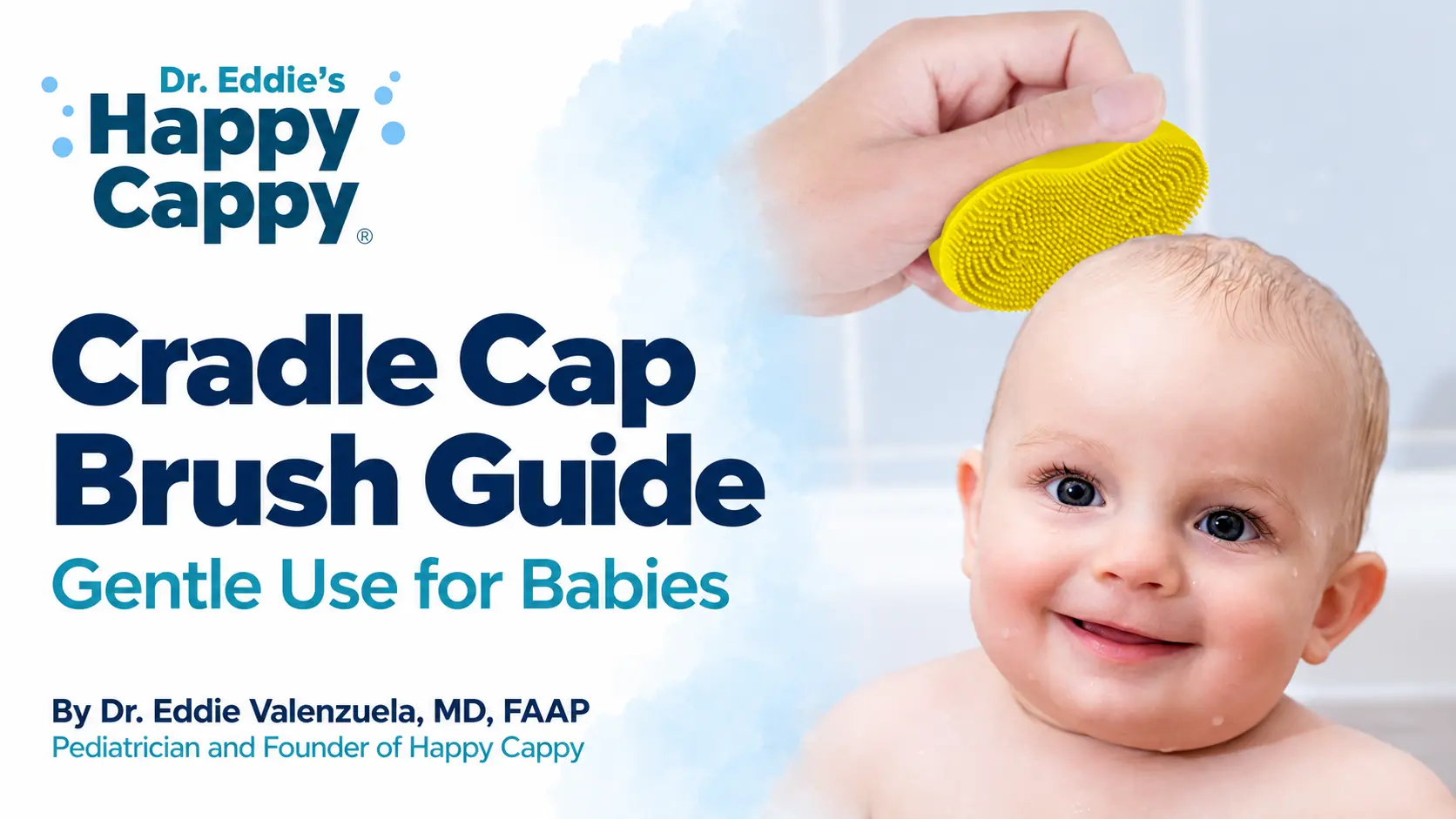
A cradle cap brush is an optional tool for lifting loose scalp flakes during washing. Mild cradle cap often clears on its own. For help recognizing it and choosing care, visit our cradle cap guide.1,2
A soft brush helps lift loose flakes
A baby brush can help separate softened scales from the hair so they rinse away. A baby comb can also lift flakes that are already loose. Neither tool should scrape the skin, pull the hair, or be used to pry off a crust. Gentle fingertip massage while shampooing is another option.1,2
Choose soft, flexible bristles and a comfortable grip. Avoid stiff adult scalp scrubbers and sharp comb teeth. The goal is comfortable scale removal, with no pressure to clear the scalp in one sitting.
Use light pressure while shampooing
Gather your shampoo, a clean brush, water, and a towel before starting. Keep your baby supported throughout washing. Then use this gentle sequence:1–3
- Wet the scalp and hair. Use lukewarm water, then gently massage in the shampoo with your fingertips.
- Let the bristles skim the scalp. Use small, soft circular movements with a silicone brush. Avoid digging in, pressing hard, or repeatedly working over one patch.
- Leave attached scales alone. Lift only flakes that release easily. If the brush catches the hair or a scale resists, stop working on that area.
- Rinse well and pat dry. Rinse away shampoo and loosened flakes, then gently pat with a towel.
The Beanie Brush can be used on wet or dry skin. For cradle-cap scale removal, using it during shampooing follows the gentle washing approach above. Dry brushing is optional, and it is not a reason to scrape at attached scales.1,3
Stop when brushing causes discomfort or irritation
Stop if your baby seems uncomfortable, the skin becomes irritated, or brushing causes bleeding. Do not brush over raw, broken, or oozing skin. Swelling, pus, an unpleasant odor, pain, or a worsening rash needs medical assessment. See our guide to cradle cap that is leaking fluid.2,4
You do not need to remove every flake at every bath. Use the brush only as gently as your baby's scalp tolerates, and skip it when fingertip washing is enough. Never follow brushing with picking or peeling. Our picking cradle cap article explains the risks and care for an accidentally scratched area.2,4
Oil and shampoo choices before brushing
Oil is optional
For stubborn scales, the American Academy of Dermatology suggests a non-food-based oil, such as baby oil, before bathing, followed by shampooing. This can soften attached scales. For more detail, see our coconut oil and olive oil guides.1
Choose a shampoo appropriate for your baby
Common medicated shampoo ingredients include pyrithione zinc, selenium sulfide, ketoconazole, salicylic acid, sulfur, and coal tar. Formulations and age suitability differ. Our baby dandruff shampoo guide explains those differences.6
Happy Cappy's Beanie Brush and shampoo routine
A gentle brushing routine pairs scalp cleansing with light-touch removal of loose flakes. The Happy Cappy Beanie Brush provides optional help lifting flakes during washing. Happy Cappy Medicated Shampoo & Body Wash helps control flaking and scaling and can be used with or without the brush.3,5
Happy Cappy Beanie Brush for gentle flake removal
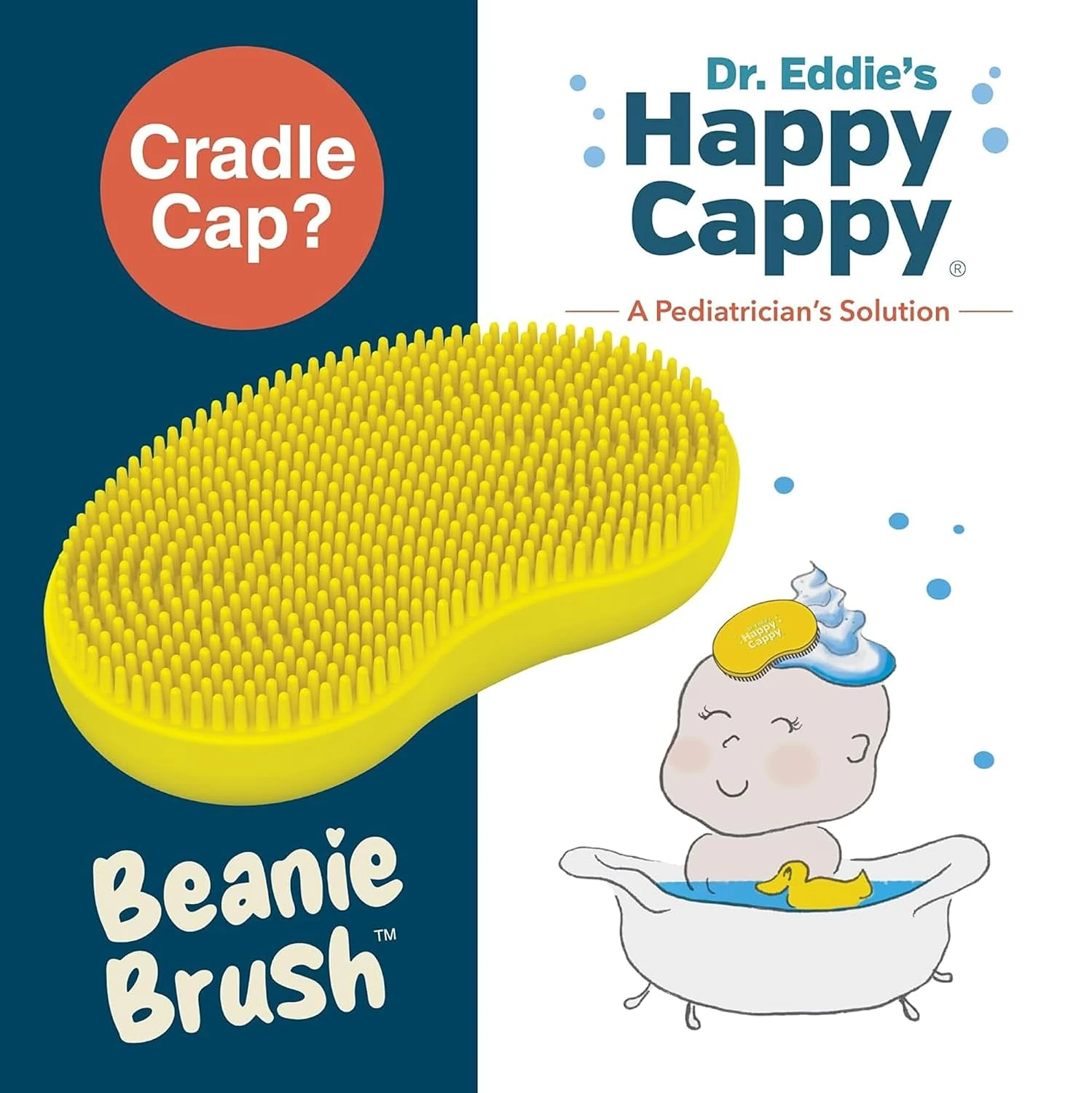
The Happy Cappy Beanie Brush is a pediatrician-developed silicone scalp brush designed for gentle use on babies, including newborns.
- Soft, densely arranged bristles gently lift loose flakes so they can wash away.
- Full silicone construction makes it easy to rinse clean after bath time. The silicone is food-grade and BPA-free.3
Use: While shampooing, move the bristles in small, gentle circles with the light-pressure technique above.
Keep the Beanie Brush clean between uses
Wash it before the first use. After each use, rinse thoroughly under warm water and let it air-dry. Replace it if it becomes torn, damaged, sticky, or difficult to clean.3
Happy Cappy Medicated Shampoo + Beanie Brush Bundle
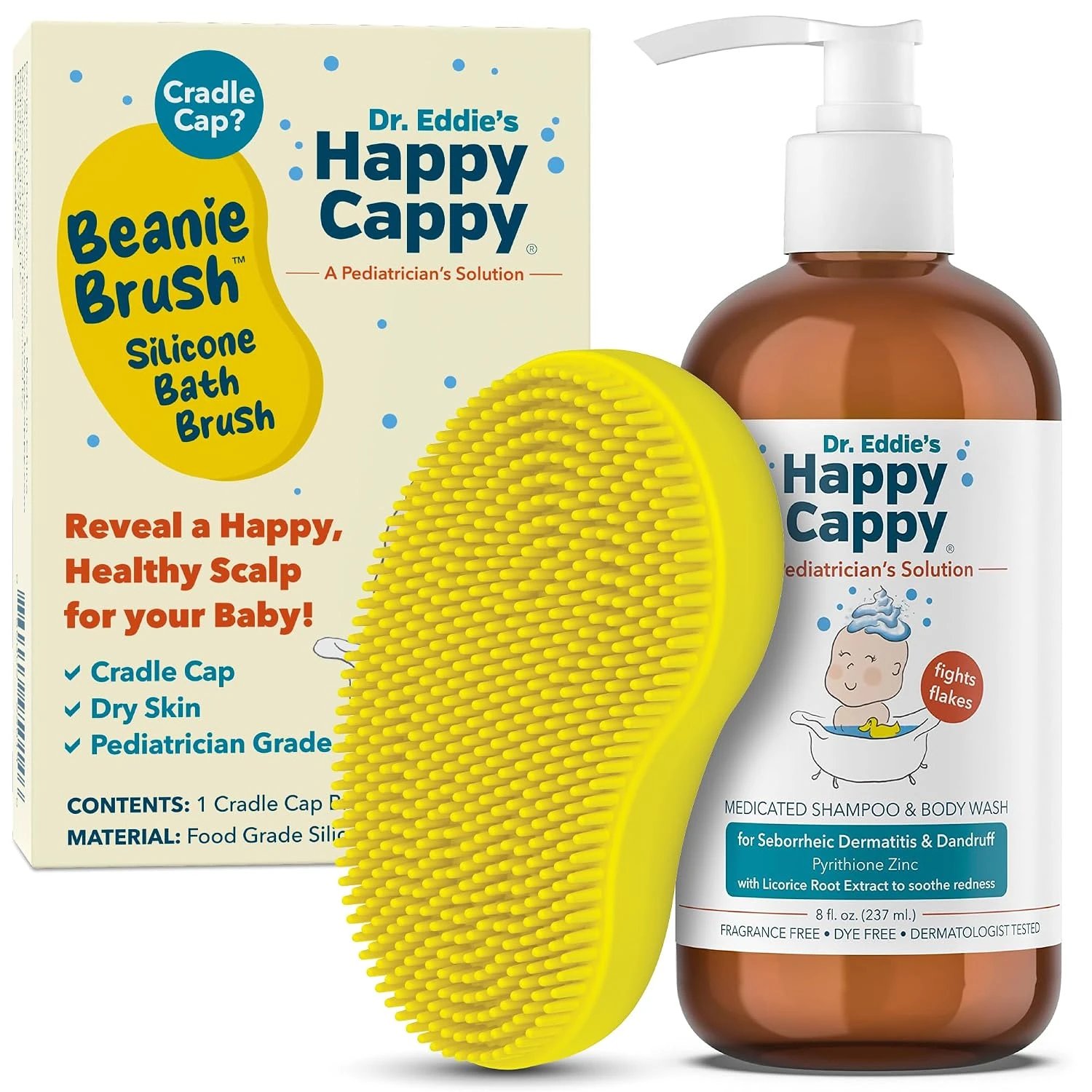
The Happy Cappy Medicated Shampoo + Beanie Brush Bundle pairs one 8 oz medicated wash with one soft silicone Beanie Brush for a simple wash-and-brush routine.
The wash contains 0.95% pyrithione zinc to help relieve flaking, scaling, redness, and itching associated with seborrheic dermatitis and dandruff. Its fragrance-free, dye-free formula is designed for sensitive skin. Glycerin and panthenol support hydration and softness, while licorice root extract helps soothe visible redness.5,8
Skip the oily mess. Wet the hair thoroughly, gently massage in the shampoo, and use the brush with a light touch to lift loose flakes. Rinse well. Use the shampoo at least twice a week. Keep it out of the eyes. Stop the shampoo and ask a doctor if the condition worsens or does not improve with regular use.3,5
Hair that comes away with cradle-cap scales will regrow
Some hair may come away with loose scales. That hair will regrow. Babies also commonly shed their newborn hair in the first few months, which can happen while they have cradle cap. Persistent bald patches, broken hairs, or an inflamed scalp need assessment. Read more in our cradle cap and hair loss guide.2,7
Comfort comes before a flake-free scalp
Use a soft brush with a light touch during washing, let easily released flakes rinse away, and leave resistant scales for another day. Keep the brush clean and stop at any sign of irritation. A comfortable scalp matters more than removing every visible flake.