


Quick answer: If your baby’s scalp is leaking fluid, bleeding, or becoming swollen, contact your pediatrician. Ordinary cradle cap usually forms greasy scales without much discomfort. New oozing needs assessment for irritated or damaged skin, eczema, or infection. Do not wait for a shampoo to fix it before asking for advice.1,4
Scalp drainage needs pediatric assessment
Call your pediatrician promptly about new or increasing drainage, including a wet, raw area behind the ears. Describe when it began, whether the rash is spreading, and how your baby is feeding and behaving. A clear photograph can help the office decide how soon your baby needs to be examined.1,2,4
Get urgent medical care now if:
- Your baby is younger than 3 months and has a temperature of 100.4°F (38°C) or higher.3
- Your baby looks very ill, is unusually drowsy, or has fever with a worsening rash.2,3,5
- A baby younger than 1 month has a cluster of small fluid-filled blisters or pimples.2
- The skin develops rapidly spreading redness, significant pain, or blisters and open sores, especially with fever.5
For life-threatening symptoms, such as severe trouble breathing or unresponsiveness, call 911. Otherwise, contact the pediatrician or on-call service for the appropriate place to be seen.2
Possible causes of a leaking scalp
Cradle cap usually appears as attached, greasy scalp scales and causes little or no itch or pain. Yellow scale by itself is not the same as pus. For an overview of typical findings, see our cradle cap guide.1,2
Fluid can seep from inflamed skin or a surface that has been damaged by scratching, picking, or vigorous scale removal. Eczema can also weep clear or yellowish fluid without being infected. The same-looking rash can have an infection as well, so color or a photograph alone cannot settle the diagnosis.4,5
- Irritation or skin injury: new products, rubbing, or picking may leave the surface raw.
- Eczema or another dermatitis: itchy, inflamed skin can crack and weep. A clinician may need to distinguish it from seborrheic dermatitis.
- Infection: pus, worsening tenderness, warmth or swelling, spreading redness, new blisters, or fever increase concern. Bacterial infections such as impetigo are among the possibilities.
These possibilities can overlap. Oozing should not automatically be labeled “severe cradle cap,” and an odor does not identify which organism, if any, is involved.4,5
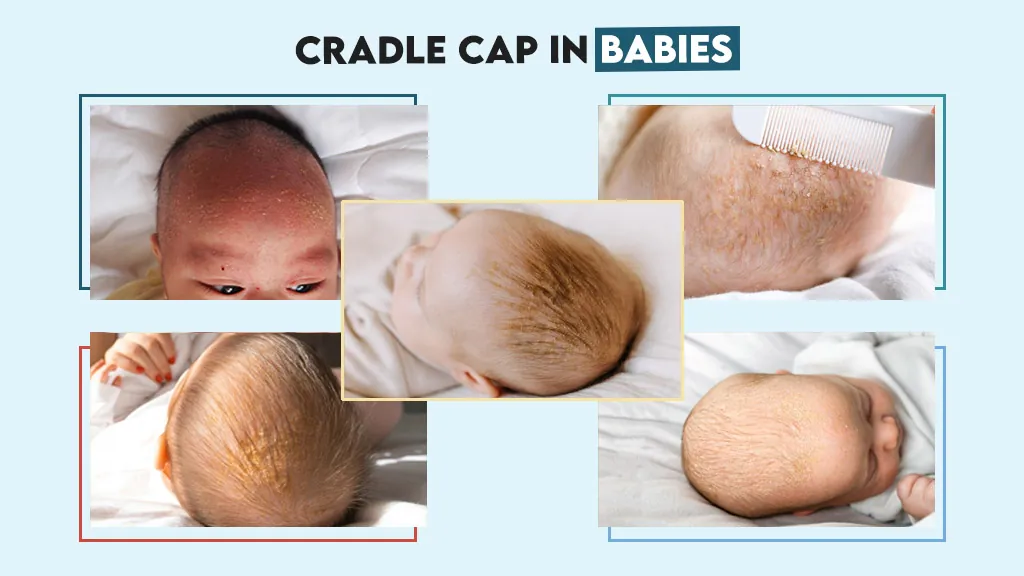
Gentle care while arranging an assessment
- Handle the area gently. Clean away surface drainage with lukewarm water and pat dry. Avoid scrubbing or repeatedly washing the same sore spot.4
- Stop picking or brushing raw skin. Leave attached crusts alone. Keep nails short to reduce scratching.4,6
- Pause new products. Avoid experimenting with oils, essential oils, fragranced products, or home remedies on the wet rash. Tell the clinician what has already been applied.4
- Ask before starting a new medicine. Do not choose a leftover antibiotic, steroid, or antifungal solely from the rash’s appearance. If your baby already has a prescribed plan, contact the prescriber about the new drainage.4,5
- Note changes. Record the temperature, when the fluid started, any spreading redness, feeding changes, and products used. These details can help the clinician assess the rash.
A shampoo and brush routine is intended for scale on skin that can tolerate routine cleansing. Brushing an open or oozing patch can cause more irritation. Let the clinician advise when to resume it.4,6
Treatment depends on the cause of the drainage
Treatment depends on what is causing the drainage. Your pediatrician can check for skin injury, dermatitis, and signs of infection. A dermatologist can help when the diagnosis is uncertain, the rash is extensive, or symptoms keep returning.
Inflamed dermatitis may need a prescribed anti-inflammatory treatment. A bacterial infection may need a topical or oral antibiotic, while certain viral infections require antiviral treatment. Steroid cream is not an automatic answer to every wet rash, and antibiotics are not needed for every episode of weeping.4,5
A raw patch behind the ear also deserves attention. If fluid appears to come from inside the ear canal rather than the skin fold, tell the pediatrician explicitly; that needs a separate ear assessment. Do not put scalp products into the ear.
Routine cradle-cap care after the skin settles
Once the skin has been assessed and your clinician says routine care can resume, gentle baby shampoo and careful removal of loose scale may be enough. A medicated wash can help when ordinary washing does not control typical cradle-cap flakes.6
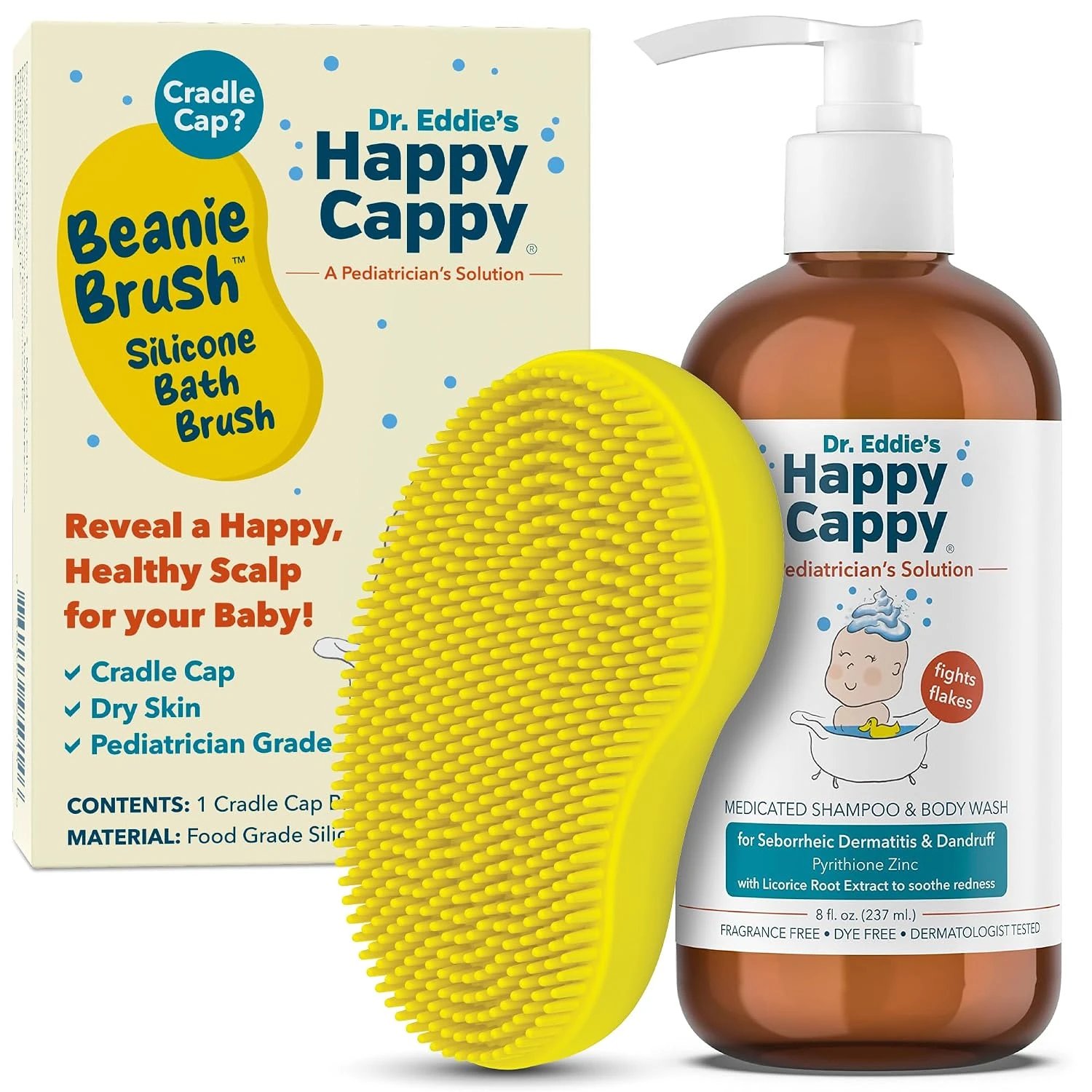
The Happy Cappy Medicated Shampoo + Beanie Brush Bundle pairs an 8 oz fragrance-free, dye-free wash with a soft silicone brush. The wash contains 0.95% pyrithione zinc to help relieve flaking, scaling, redness, and itching associated with dandruff and seborrheic dermatitis.7
Follow the product directions and keep the wash out of the eyes. Brush only loose scales on intact, comfortable skin. This routine does not treat an undiagnosed draining rash.
The cradle-cap guide explains routine care after the concerning skin changes have been addressed.