

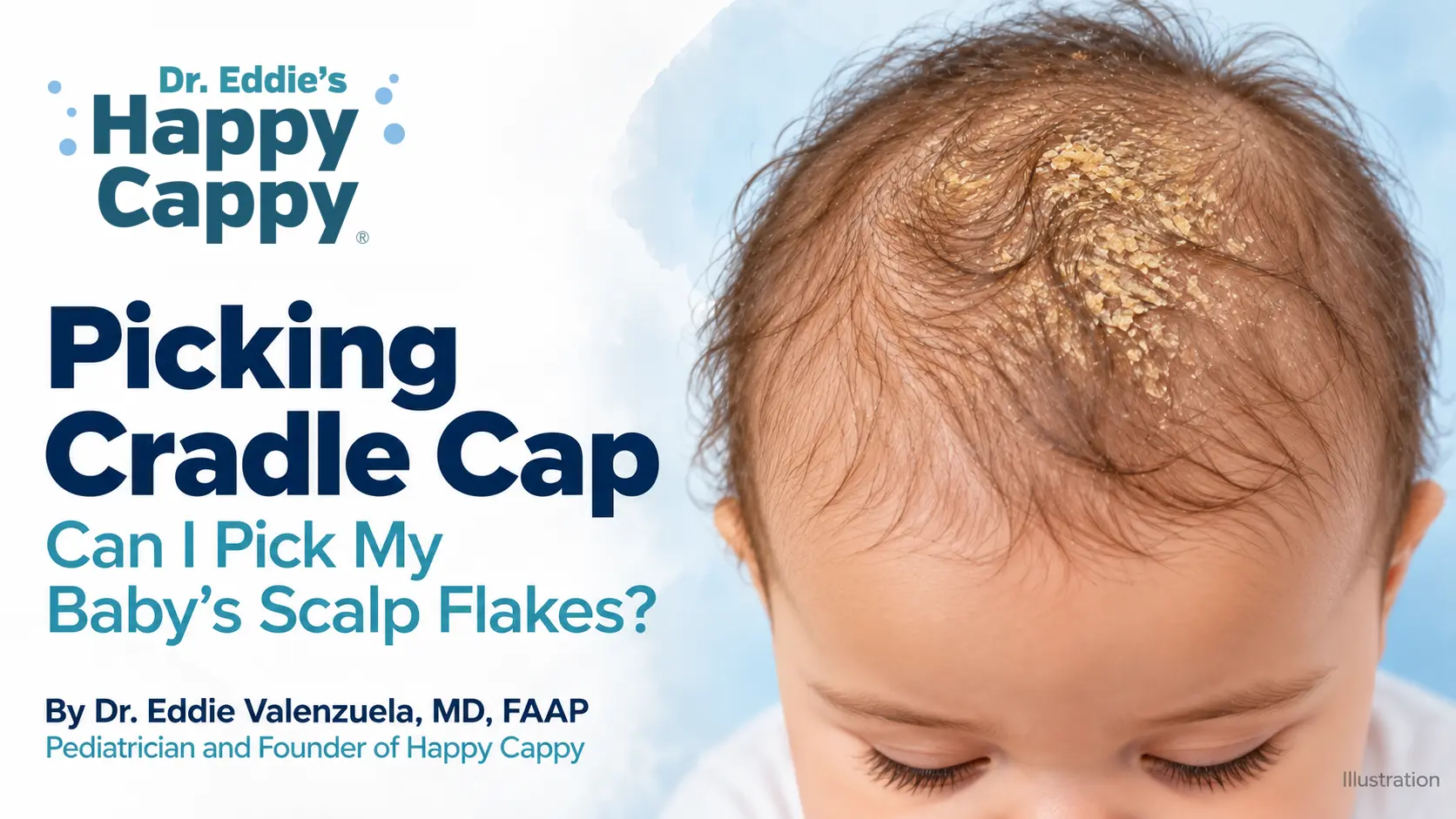
No. Do not pick, peel, or scratch off your baby’s cradle-cap scales. Gentle washing can release loose flakes, but pulling off attached crusts can break the skin and increase the risk of infection. Leave stubborn scales for another wash.3
Cradle-cap scales on a baby’s scalp
Cradle cap is seborrheic dermatitis of the scalp in babies. It often produces greasy, yellowish or whitish scales. It is not a sign of poor hygiene, and babies with ordinary cradle cap are usually comfortable.7
Picking can injure the skin beneath the scales
A scale may look ready to come off while still being attached to delicate skin. Scratching or peeling can leave that skin sore or bleeding. Infection is a possible complication, not an inevitable result of touching a flake.1
| What you notice | What to do |
|---|---|
| Loose flakes that wash away easily | Let them rinse away during gentle cleansing. |
| A crust that resists gentle washing | Leave it attached. Avoid prying with nails, tweezers, or a comb. |
| Raw, bleeding, painful, or oozing skin | Stop scale removal and assess the skin injury or rash. |
You do not need to expose a perfectly clear scalp at the end of each bath.1
Scalp care after accidental picking
Stop picking and check the skin. A flake coming off does not automatically mean you have caused lasting damage. If the skin is intact and your baby is comfortable, return to gentle care.
Cleaning a small scratch
For a small scratch, wash your hands. If it is bleeding, hold gentle pressure with clean gauze or a clean cloth. Once bleeding stops, rinse the area with clean water and pat the surrounding skin dry. Do not scrub the scratch or keep removing nearby crusts.5
Signs that need prompt assessment
Get prompt medical advice for bleeding that does not stop, spreading redness, warmth, swelling, pus, or increasing pain. A baby who has a fever or seems unwell needs medical assessment.5,7
Gentle scale removal without picking
Washing away loose flakes
- Start with gentle shampooing. Wet the hair and scalp, then lather a mild, fragrance-free baby shampoo. Use the pads of your fingers, keeping your nails off the scalp.1,2
- Use light pressure. A soft baby brush can help move flakes that are already loosening. Stop if the skin becomes sore or the scales resist.7
- Rinse thoroughly. Let loosened flakes wash away. Avoid repeatedly brushing one patch to force it clear.
- Repeat gently over time. Mild cradle cap often improves without treatment. Regular washing can help manage the buildup.2,7
Softening attached scales
For stubborn scale, an emollient is optional. The American Academy of Dermatology suggests a non-food-based oil, such as baby oil, before shampooing. A plain, fragrance-free mineral oil is one option. Wash it out afterward; more oil or harder rubbing is not the goal.1
See our baby cradle-cap brush guide for technique and our coconut oil and olive oil guides for oil-specific advice.
Medicated washing and a soft brush for persistent scaling
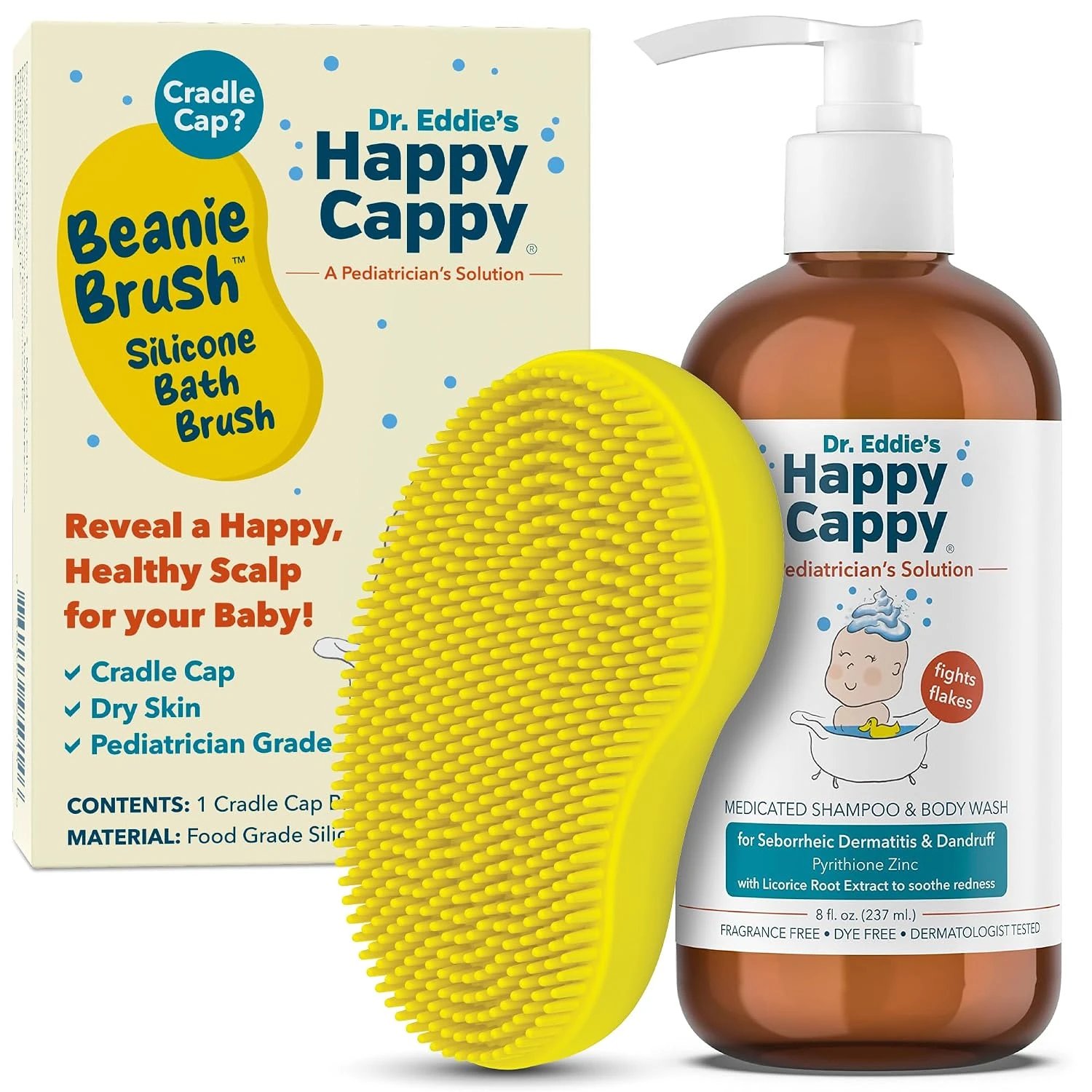
For persistent scaling on intact skin, the Happy Cappy Medicated Shampoo + Beanie Brush Bundle pairs an 8 oz medicated wash with a soft silicone scalp brush. The fragrance-free, dye-free wash contains 0.95% pyrithione zinc to help relieve flaking, scaling, redness, and itching associated with dandruff and seborrheic dermatitis.6
Follow the product directions and keep the wash out of the eyes. Brush lightly to move only flakes that release easily. Leave attached scales, scratches, and raw patches alone.
Our cradle-cap care guide covers the full washing routine.
Hair that comes away with cradle-cap scales will regrow
Hair that comes away with ordinary cradle-cap scales will regrow. Do not pull attached crusts to speed things along.2,3
Normal newborn shedding can occur alongside cradle cap in the first few months after birth. See our cradle cap and hair-loss guide for the differences and signs that need assessment.4
Scalp changes that need medical attention
Arrange a review if the rash is painful, swollen, weeping, or producing pus, or if redness is spreading. An unpleasant odor or a rash that keeps worsening also deserves a closer look. These signs should not be managed by more brushing or picking.2,7
Our guide to cradle cap that is leaking fluid explains why oozing needs assessment.
Protect the scalp while scales loosen
Leave attached scales alone. Use gentle washing to release loose flakes, and choose a medicated wash when you need help controlling scaling. Cradle-cap care should make the scalp more comfortable, without scraping it clear.