

Quick answer: Lice eggs (nits) are tiny oval structures firmly attached to individual hairs. Dandruff is loose, irregular skin scale that usually brushes or flakes away. Finding a live crawling louse is the clearest sign of an active infestation; itching or white specks alone cannot confirm lice.1
Noticing white specks in your hair can leave you wondering whether you need a dandruff shampoo or a lice treatment. Both conditions can cause an itchy scalp, but they need different care. Start with where the specks sit and how firmly they are attached, then look for live lice. The comparison below walks through those clues and explains what to do when the answer is still uncertain.
Lice eggs and dandruff explained
The main difference is what you are seeing: a nit is an egg attached to a hair, while a dandruff flake is shed scalp skin. They may look alike from a distance, especially in thick hair, but they come from separate processes.
Head lice and their eggs
Head lice are small insects that live on the scalp and feed on blood. Female lice attach their eggs near the base of individual hairs. This attachment keeps a nit in place; it does not simply brush off onto a shoulder as loose dandruff often does.1
Lice develop from eggs into immature lice called nymphs, then adults. The eggs usually hatch in about 6 to 9 days, and nymphs become adults in about another week.7 That life cycle matters when treating an infestation: a medicine that kills crawling lice may not kill every egg, so its directions may call for a second treatment. An empty shell can also stay attached after hatching; seeing a nit does not tell you, by itself, whether it is still viable.2
Dandruff flakes
Dandruff is visible shedding of scalp skin, sometimes with itching. It is generally considered the mild, relatively uninflamed scalp form of seborrheic dermatitis. Flakes may collect among the hairs or fall onto clothing, and the condition is not contagious.5
People often call any flaky scalp dandruff, but other skin conditions can also shed scale. Marked inflammation or persistent flaking deserves a closer look rather than an assumption based on white specks alone.
Symptoms of lice versus dandruff
Symptoms with head lice
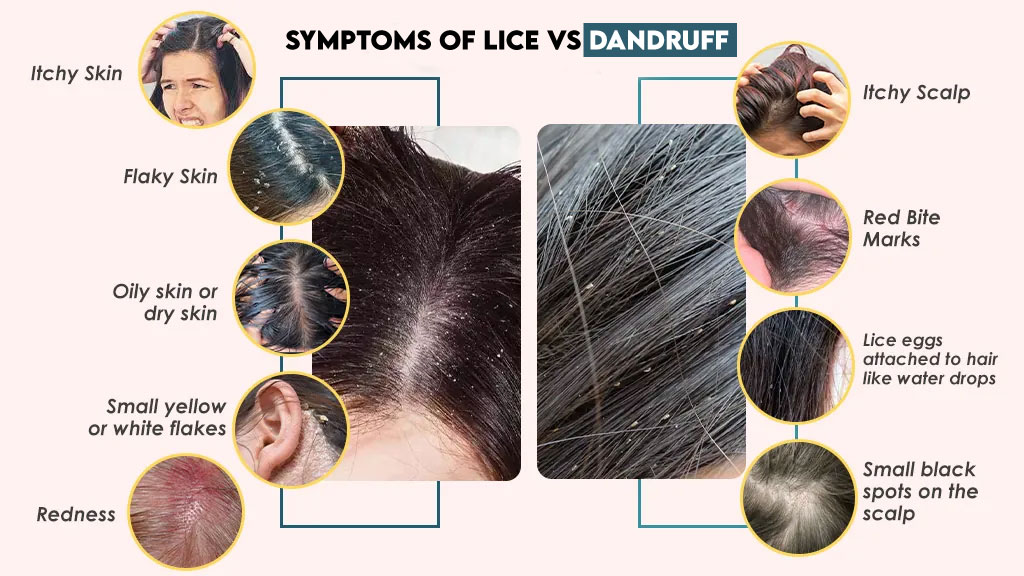
Itching is a reaction to lice bites, and some people notice a tickling or crawling feeling in their hair. Scratching can leave sores. During a first infestation, itching may take four to six weeks to appear, so a person can have lice before feeling particularly itchy.1
Look for the lice and their eggs as well as symptoms. Tiny oval structures fixed to individual hairs warrant closer examination, while a live crawling louse provides the clearest evidence of an active infestation.
Symptoms with dandruff
Dandruff usually produces white or yellowish scalp flakes with varying amounts of itch. The scalp may feel oily or dry. More obvious inflammation can occur with seborrheic dermatitis, but redness is not necessary for dandruff to be present.5
Because both conditions can itch, the intensity of scratching is a poor way to tell them apart. A comfortable scalp does not rule out lice, and a very itchy one does not prove it. The next useful step is to examine the hairs and scalp in good light.
Different causes of dandruff and lice eggs
Dandruff and the scalp environment
Dandruff involves the interaction of Malassezia yeast, skin oils, and individual skin sensitivity. Dry scalp and eczema can also cause flakes, but they are not automatically dandruff. Neither dandruff nor dry scalp produces lice eggs.5
Head-lice transmission
Head lice mainly spread through direct head-to-head contact. They crawl and cannot jump or fly. Transfer through recently shared hair tools or headwear is less common. Lice infestation is unrelated to personal cleanliness.1
Appearance and attachment of nits versus flakes
Color alone is not a dependable guide: nits and dandruff can both look pale. Shape, placement and attachment are more useful when considered together.
Lice eggs are tiny, fairly uniform oval structures attached to individual hair shafts. They are often yellowish or white and can be hard to spot. A nit stays fixed to the hair instead of falling away with ordinary brushing.1
Dandruff flakes are irregular pieces of shed skin that vary in size. Loose flakes often lift away readily, although greasy scale can cling to the scalp or hair. Something that does not brush away easily is therefore a reason to inspect it more closely, not proof that it is a nit. Our microscope guide explains the layered skin cells within a flake; you do not need a microscope to begin checking for head lice.
Pictures and a closer scalp check
Use these pictures to understand the broad difference between attached nits and scalp flakes. Lighting, hair color and image magnification change how each appears; a photograph cannot confirm what is in your own hair.
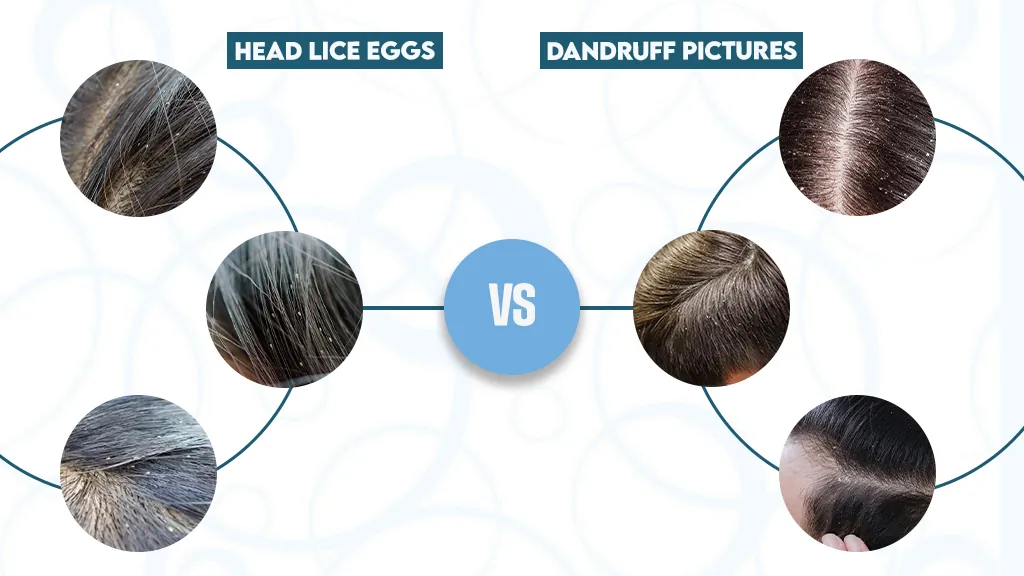
Check in good light: Part the hair into small sections and examine close to the scalp, especially behind the ears and at the nape of the neck. A magnifying lens and fine-toothed louse comb can help. If you are checking yourself, ask someone to examine the back of your head, where it is difficult to see clearly.1
Finding a live crawling louse is the strongest clue. If you cannot find one but see what appear to be nits within about a quarter inch of the scalp, seek help confirming the finding. Close-to-scalp eggs are more concerning than distant shells, but dandruff and other debris are commonly mistaken for nits. A clinician or school nurse can help you decide whether treatment is needed.3
Differences between lice eggs and dandruff
Use the table as a guide to the pattern rather than a test based on one feature. Attachment is helpful; finding a live louse is more decisive.
| Feature | Head lice and nits | Dandruff |
|---|---|---|
| Material in the hair | Oval eggs or empty shells attached to individual hairs; live lice are crawling insects. | Irregular pieces of shed scalp skin. |
| Attachment | Nits are firmly fixed to a hair shaft and do not brush away easily. | Loose flakes often brush away; greasy scale may cling. |
| Location | Eggs are laid near the scalp, often behind the ears and near the neck. Older shells move outward as hair grows. | Scale begins on the scalp and may collect in the hair or fall onto clothing. |
| Color and shape | Often yellowish or white, with a fairly uniform oval shape. | White or yellowish, with variable shapes and sizes. |
| Itching | Variable; may be absent early in an infestation. | Variable; can accompany recurring flakes. |
| Spread between people | Head lice spread mainly through direct hair-to-hair contact. Nits stay attached to hairs. | Dandruff is not contagious. |
| Care | Confirm infestation and follow an appropriate lice-treatment plan. | Use suitable dandruff care and reassess if symptoms persist. |
Nits and flakes on a comb
Dandruff usually brushes away readily, while nits cling to individual hairs. A nit comb may catch loose flakes too, so debris on a comb alone does not confirm lice. Examine the hair and scalp for live crawling lice.1
Treatment differences for dandruff and lice eggs
The distinction matters because dandruff shampoo does not treat a lice infestation, and a lice medicine does not address the cause of dandruff. If the examination is inconclusive, getting help with identification is more useful than trying both treatments just in case.
Head Lice Treatment
Once head lice are confirmed, choose a treatment appropriate for the person's age and follow its directions exactly. Ask a healthcare professional before treating a young child. A pharmacist or clinician can also explain whether the chosen medicine kills eggs and when another application is needed.
- Use the recommended amount of one lice medicine. Do not combine treatments or repeat extra doses without advice.
- Nits can be removed manually, but a fine-toothed nit comb can make removal easier. Use it as directed, working through small sections from close to the scalp toward the ends. Do not pull out hairs or scrape the skin.
- Check the label for retreatment timing. Some medicines do not kill eggs and need a properly timed second treatment.
- Follow the medicine's instructions about conditioner and washing. Conditioner before some treatments can interfere with their action.
- Check close household contacts and avoid head-to-head contact and shared hair tools.
- Focus cleaning on recently used hair tools, clothing, and bedding. Extensive house cleaning and insecticide sprays or foggers are unnecessary.
If live lice remain after correctly completed treatment, ask a clinician about the next step instead of repeatedly applying the same medicine.2, 4
Dandruff Treatment
A dandruff shampoo helps control flaking and itching. Follow the chosen product's directions and use gentle cleansing as needed. Dandruff does not require a special nit comb; avoid scraping the scalp. The dandruff guide explains treatment options in more detail.6
If symptoms continue despite appropriate care, ask a clinician to reassess the diagnosis.
Head lice, remaining nits, and school attendance
CDC guidance says children with head lice do not need to leave school early. They can finish the day, begin appropriate treatment at home, and return after starting treatment. The American Academy of Pediatrics and National Association of School Nurses oppose “no-nit” exclusion policies.3
Nits farther than a quarter inch from the scalp are usually already hatched or unlikely to hatch. Dead eggs and empty shells can remain attached as hair grows, until removed or the hair sheds. Nits alone do not necessarily mean live lice remain. Coordinate with the school nurse about examination and treatment, and remember that lice are not a sign of poor hygiene.
Happy Cappy’s role in dandruff care
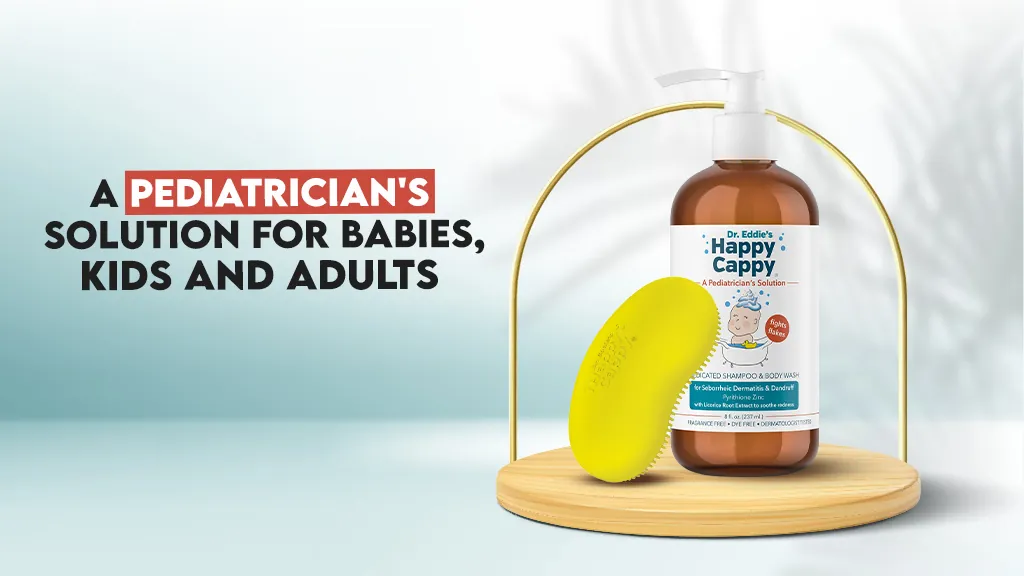
Happy Cappy treats dandruff symptoms, not lice. Happy Cappy Medicated Shampoo & Body Wash contains pyrithione zinc 0.95% to relieve flaking, scaling, and itching associated with dandruff and seborrheic dermatitis.8 It was developed by Dr. Eddie Valenzuela.
Its fragrance-free formula offers an option for people who prefer to avoid added fragrance. Follow the label directions and keep scalp care gentle. A soft brush is optional for lifting loose scale; it is not a nit comb. The shampoo and brush pictured here are for dandruff care, and neither replaces appropriate lice treatment.
Choosing the right next step
Start with a calm, careful look at the scalp and individual hairs. Loose irregular flakes suggest shed skin, while firmly attached oval structures deserve a closer check for nits and live lice. Neither color nor itching settles the question alone.
Once the cause is clear, the care becomes clearer too: use dandruff care for scalp flaking and an appropriate lice treatment for an infestation. If you are still unsure, ask for an examination before adding medication. That avoids unnecessary treatment while making sure the real problem receives attention.