
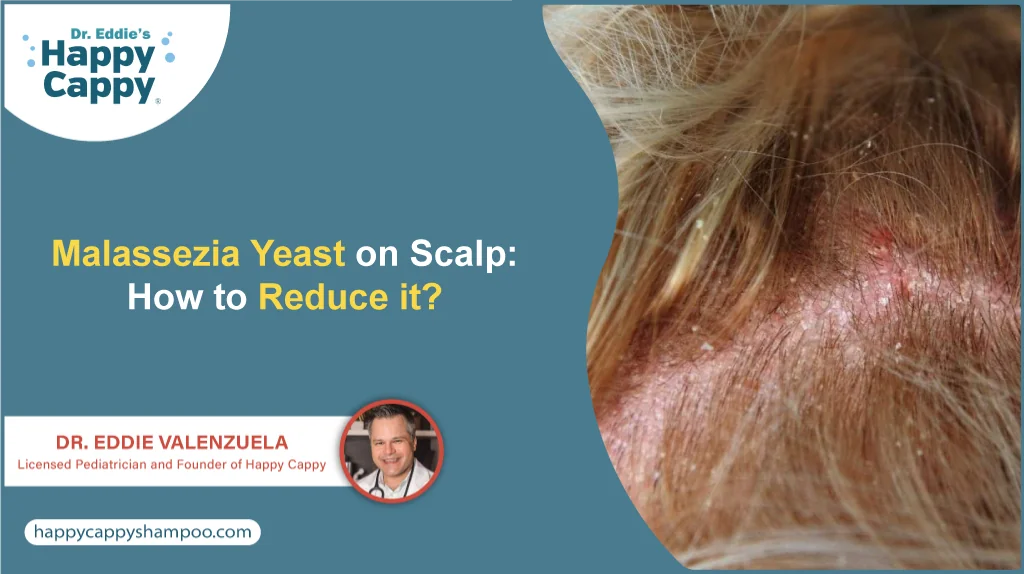
There is a 50% chance you have experienced dandruff or seborrheic dermatitis at some point in your life. Have you ever wondered what the root cause of these pesky skin conditions is? Malassezia yeast on the scalp is one of the main culprits that causes flakes and scales on the scalp.
Don’t know what Malassezia yeast is? In this blog, Dr. Eddie explains what Malassezia yeast is, its symptoms, causes, and how to safely reduce it.
What is Malassezia Yeast on Scalp?
Malassezia is a group of yeast species, with 17 different subtypes that naturally live on human skin. It is usually found on those body parts that have overactive sebaceous glands or high oil production, and the scalp is one of those parts.
Along with other healthy bacteria, this yeast is also important for a healthy scalp microbiome. However, sometimes Malassezia can grow really fast and wreak havoc on your head. Different types of Malassezia yeast can cause different skin conditions on the scalp.
But the most common one to cause issues on the scalp is Malassezia globosa. According to PubMed Central, it can lead to dandruff and seborrheic dermatitis, also known as cradle cap in babies.
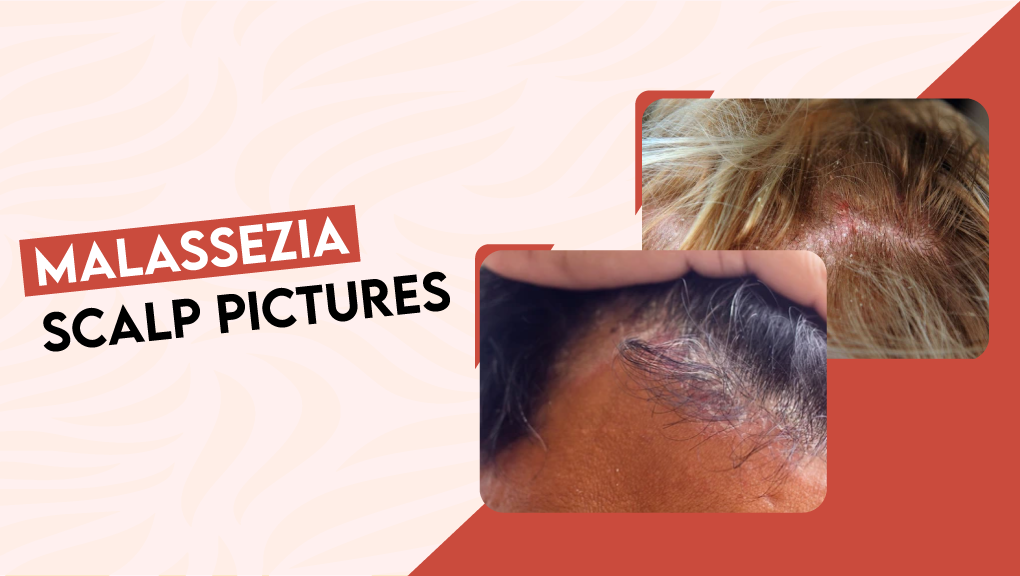
Malassezia Scalp Pictures
Here are a few pictures of the common scalp conditions caused by Malassezia yeast to help you identify
What Causes Malassezia Yeast on Scalp to Grow?
Now the question arises: what causes Malassezia yeast to grow? There are various factors that often come together to give you an oily, flaky, itchy scalp.
Presence of Excess Sebum
The sebaceous glands on our skin are responsible for producing just enough sebum (natural oil) to keep our skin moist. However, sometimes, these glands start producing excess sebum.
Malassezia yeast feeds on the fatty acids found in sebum. So, when there is excess sebum on the scalp, it provides an environment for the yeast to grow faster.
Spoken plainly, an oily scalp is a buffet for the yeast on your scalp.
Triggers of Malassezia Yeast Overgrowth
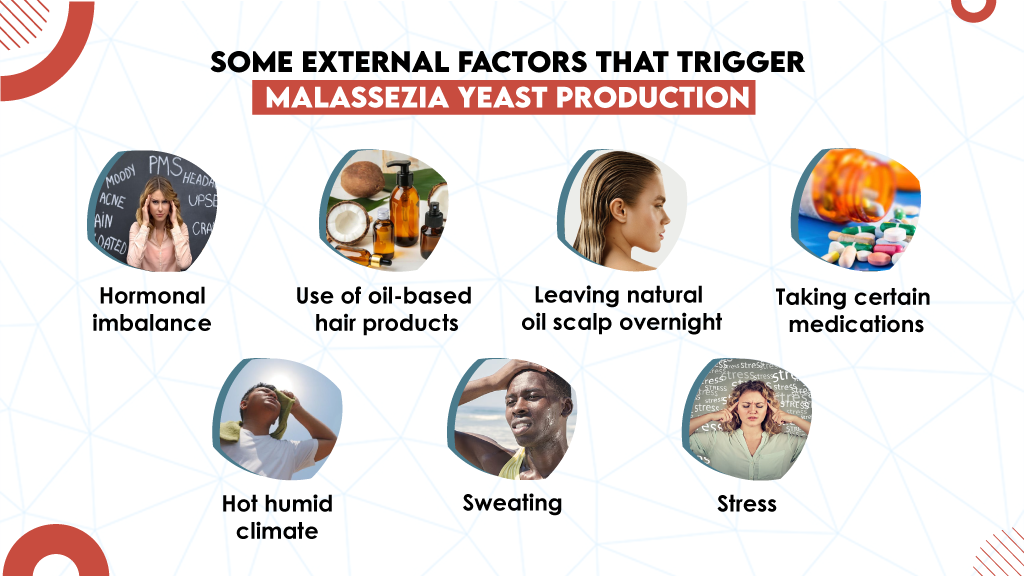
Sometimes, the sebaceous glands start producing excess sebum due to genetics, while other times, external factors can trigger its production, such as:
- Hormonal imbalance
- Use of oil-based hair products
- Leaving natural oil scalp overnight
- Taking certain medications
- Hot, humid climate
- Sweating
- Stress
Due to these factors, the yeast can grow beyond its normal levels, which can lead to scalp inflammation, irritation, and the development of scalp issues like dandruff and seborrheic dermatitis.
Symptoms of Malassezia on Scalp
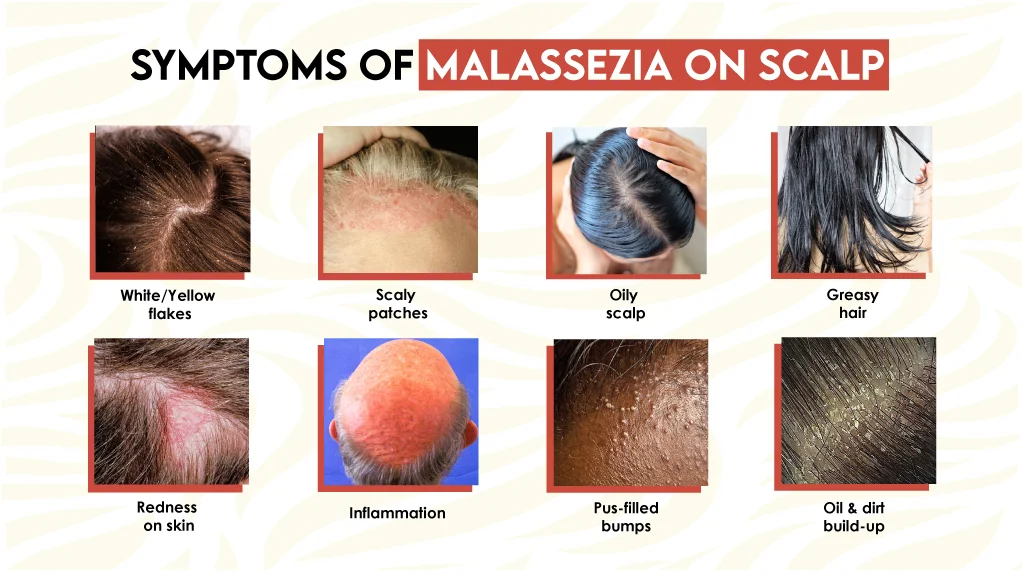
The symptoms of Malassezia yeast on scalp may vary from person to person, but usually you will experience:
- White or yellow flakes
- Scaly patches
- Oily scalp
- Greasy hair
- Redness on skin (red or pink in people with lighter skin tones and purple or brown in people with darker skin tones.)
- Inflammation
- Pus-filled bumps (in severe cases)
- Oil and dirt build up
It is important to remember that other skin and scalp conditions, such as eczema and rosacea, can also cause similar symptoms and make it difficult for you to diagnose the condition on your own.
This is why it is advised to consult a doctor or a dermatologist to get an accurate and timely diagnosis and the appropriate treatment right away.
Scalp Conditions Caused by Malassezia Yeast
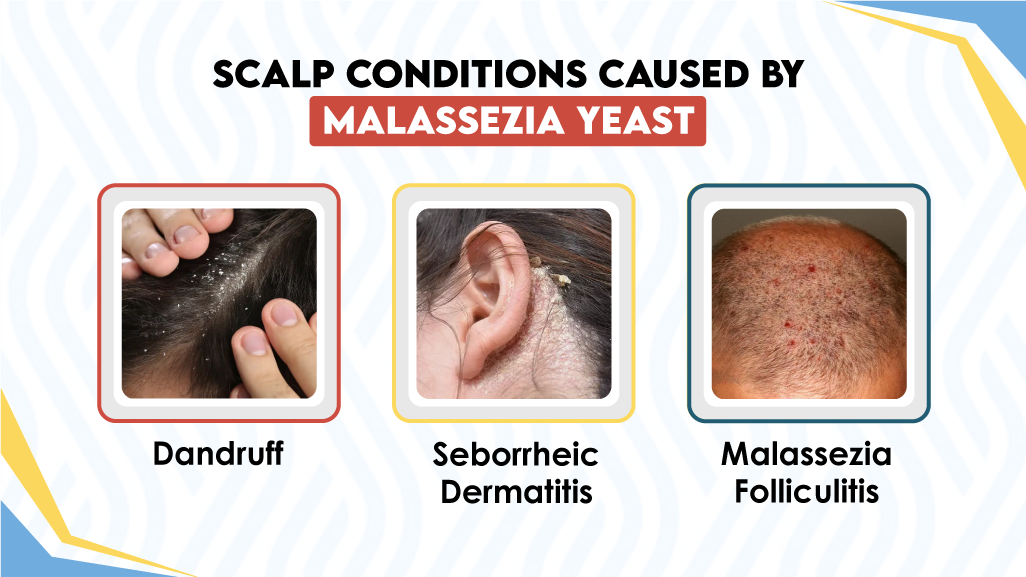
The three most common scalp conditions caused by the overgrowth of Malassezia yeast are:
Dandruff
It is one of the most common scalp conditions, affecting approximately 50% of the population worldwide. It is characterized by an itchy scalp and the presence of white flakes. The dandruff flakes are actually dead skin cells that clump together and take the form of a flake.
The overproduction of Malassezia yeast on the scalp can disrupt the scalp microbiome, causing skin cells to shed faster than they normally do during their life cycle. These cells then accumulate on the scalp due to the sebum and form flakes.
Seborrheic Dermatitis
Seborrheic dermatitis is an inflammatory skin condition that, when experienced by babies, is known as cradle cap. It can cause thick, greasy, white, or yellow scales to appear on the scalp.
Unlike dandruff, which only affects the scalp, eyebrows, and beard, seborrheic dermatitis can also manifest its symptoms on other parts of the body, such as redness
- Behind the ears
- On the sides of the nose
- In the skin folds
- Around the diaper area in babies.
The excess sebum and Malassezia yeast produce a byproduct known as oleic acid. When the skin reacts to this acid, it can cause inflammation, irritation, flakes, and scales associated with seborrheic dermatitis.
Malassezia Folliculitis
Malassezia folliculitis or Pityrosporum folliculitis, which is also known as fungal acne, can also affect the scalp. It can cause itchy, red bumps and pimples to appear on the scalp, along with flaking and crusting.
It is caused when the Malassezia yeast reaches the hair follicles and causes infection in them. While Malassezia folliculitis is more common on the face, chest, shoulders, and upper back, it can also affect the scalp.
All of these conditions could require separate treatment plans, but the main idea behind the management of all three conditions is controlling the activity of Malassezia on the scalp.
How to Reduce Malassezia Yeast on Scalp?
As we discussed before, the treatment for Malassezia conditions mostly depends on reducing the amount of yeast on the scalp. But how can you do that? Treating Malassezia yeast on the scalp is quite easy.
1. Use a Medicated Shampoo
The first-line treatment most doctors advise to reduce Malassezia on the scalp is using a medicated shampoo to cleanse the scalp.
A Malassezia scalp shampoo that contains any of the following active ingredients
- Zinc pyrithione
- Selenium sulfide
- Ketoconazole
- Sulfur
- Salicylic acid
Use it once daily, or 2 to 3 times a week, depending on the severity of the condition, to soothe the symptoms of fungal acne, cradle cap, seborrheic dermatitis, and dandruff.
For fungal acne, a doctor may prescribe the use of anti-fungal shampoo or antifungal oral medications in severe cases.
2. Avoid Using Oil
As we have discussed before, Malassezia thrives in a greasy environment; this is why you must avoid applying oil to the scalp or using heavy oil-based products.
3. Manage Stress
When you are under constant stress, your body goes into fight or flight mode. Because of this, different hormonal changes and the release of certain chemicals in the body can trigger the sebaceous glands to start producing excess sebum.
This is why it is essential that you manage stress with the help of yoga, exercise, walking, and deep breathing techniques.
4. Use the Right Products
Using products that contain harsh or storing chemicals can irritate your sensitive scalp and trigger inflammation, which will ultimately make your condition worse. This is why always try to use hair products that are
- Fragrance-free
- Paraben-free
- Dye-free
- Sulfate-free
- Alcohol-free
- Dimethicone-free
- Phthalate-free
5. Consult a Dermatologist
If symptoms are not improving with an over-the-counter (OTC) anti-dandruff shampoo and anti-seborrheic dermatitis shampoo (found at your local grocery store, drug store, or big box store), then it is best to consult a doctor for evaluation, diagnosis, and treatment.
The doctor may prescribe the use of
- Hydrocortisone (OTC), prescription steroids, pimecrolimus, tacrolimus for dandruff and seborrheic dermatitis.
- Topical antifungals, oral antifungals like Fluconazole and Itraconazole for fungal acne.
Fighting Dandruff and Seborrheic Dermatitis With Happy Cappy
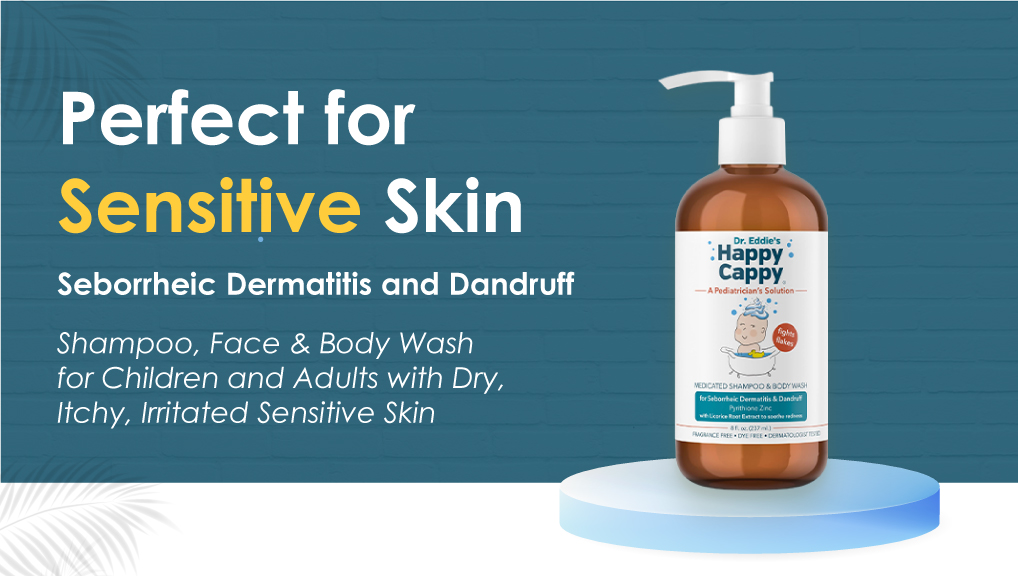
If you are searching for skin-friendly products to eliminate the flaking and scaling of the scalp and skin associated with dandruff and seborrheic dermatitis, then try Happy Cappy Medicated Shampoo.
- Our adult anti-seborrheic dermatitis shampoo and anti dandruff shampoo are formulated to reduce the scaling and flaking associated with seborrheic dermatitis and dandruff in adults and teenagers.
- Our cradle cap shampoo and body wash are specially formulated for babies and children of all ages to help reduce the greasy scales of cradle cap.
These products are pediatrician-developed and dermatologist-tested, infused with 95% natural ingredients, making them safe to be used on the scalp, face, and skin.
Additionally, they contain the active ingredient Pyrithione Zinc, which is generally regarded as safe and effective and can prevent the recurrence of scaling, flaking, and irritation of the scalp and skin associated with seborrheic dermatitis and dandruff.
The best part is that these products are free from any skin-irritating chemicals, and they can be used as a face wash, body wash, and shampoo at the same time to simplify your scalp and skincare routine.
Conclusion
Malassezia yeast on the scalp is essential for maintaining a healthy scalp microbiome. However, an overabundance of this yeast can occur for various reasons, such as overproduction of sebum, hormonal imbalance, taking certain medications, or environmental factors.
This overgrowth of yeast on the scalp can lead to common scalp conditions such as dandruff, seborrheic dermatitis (cradle cap), and Malassezia folliculitis. These conditions can cause flaking, scaling, itching, and irritation on the scalp. In order to manage these conditions, it is essential to reduce the presence of Malassezia on the scalp. A great first-line approach to managing these conditions is by using an over-the-counter (OTC) anti-dandruff medicated pyrithione zinc shampoo at least 2 to 3 times a week. If not improving, please see a doctor; they can prescribe topical or oral medications to help alleviate discomfort.
FAQs
- About
- Latest Posts
- WhatToExpect Mentioned Happy Cappy Shampoo as the Best Medicated Shampoo For Cradle Cap - September 29, 2025
- Parents.com Mentioned Happy Cappy Shampoo in the List of 10 Best Shampoos for Babies and Kids of All Hair Types - September 29, 2025
- Chain Drug Review Covers Happy Cappy’s CVS Launch Nationwide - August 27, 2025
How do I know if I have Malassezia on my scalp?
If you are experiencing white or yellow flakes and scales on the scalp along with redness, oily skin, irritation, and mild itching, then there is a chance you are experiencing an overgrowth of Malassezia yeast on the scalp.
However, the best way to diagnose your condition is to consult a dermatologist.
What does Malassezia look like on the scalp?
The Malassezia yeast are tiny species of fungus that can not be seen with the naked eye. However, when you start experiencing skin conditions like dandruff and seborrheic dermatitis due to its overgrowth, it can appear as flaky, white, or yellow flakes and scales.
What kills Malassezia yeast on scalp?
Most research shows that pyrithione zinc can help reduce the presence of Malassezia yeast on the scalp. However, the goal is not to eliminate the yeast entirely because some amount of Malassezia is essential for keeping the scalp healthy.
Should I wash my hair every day if I have Malassezia?
The presence of excess Malassezia on the scalp can cause dandruff, seborrheic dermatitis, and fungal acne. If you have an oily scalp and skin, daily washing may be appropriate.
For dandruff, an anti-dandruff shampoo should be used at least 2 to 3 times a week. For seborrheic dermatitis, a medicated anti-seborrheic dermatitis pyrithione zinc shampoo can be used daily or 2 to 3 times a week. For fungal acne, anti-dandruff, and anti-seborrheic dermatitis, OTC shampoo can help soothe this condition. If not improving, a doctor may suggest a specific topical anti-fungal medication or an anti-fungal shampoo.
Can kids get Malassezia?
Malassezia yeast is a fungus that lives naturally on the skin and is present in everyone, babies, kids, adults, and teenagers.
What makes Malassezia worse?
A few common triggers that can make Malassezia worse or promote the production of yeast on the scalp are:
Use of oils on the scalp, especially when left overnight.
Hot, humid climate.
Sweating.
Oil-based products
Stress
Hormonal changes
Certain medical conditions.
If you notice that the flaking, scaling, and inflammation on your scalp or skin are worsening, immediately consult a doctor.
How to treat seborrheic dermatitis in kids?
Seborrheic dermatitis, when it appears in kids, is usually known as cradle cap, which causes thick, greasy scales on the scalp, eyebrows, and redness on different parts of the skin.
Even though there is no permanent cure for SD, you can easily manage it at home by washing the scalp and affected area with a medicated cradle cap shampoo and using a cradle cap brush while shampooing to remove the flakes.