
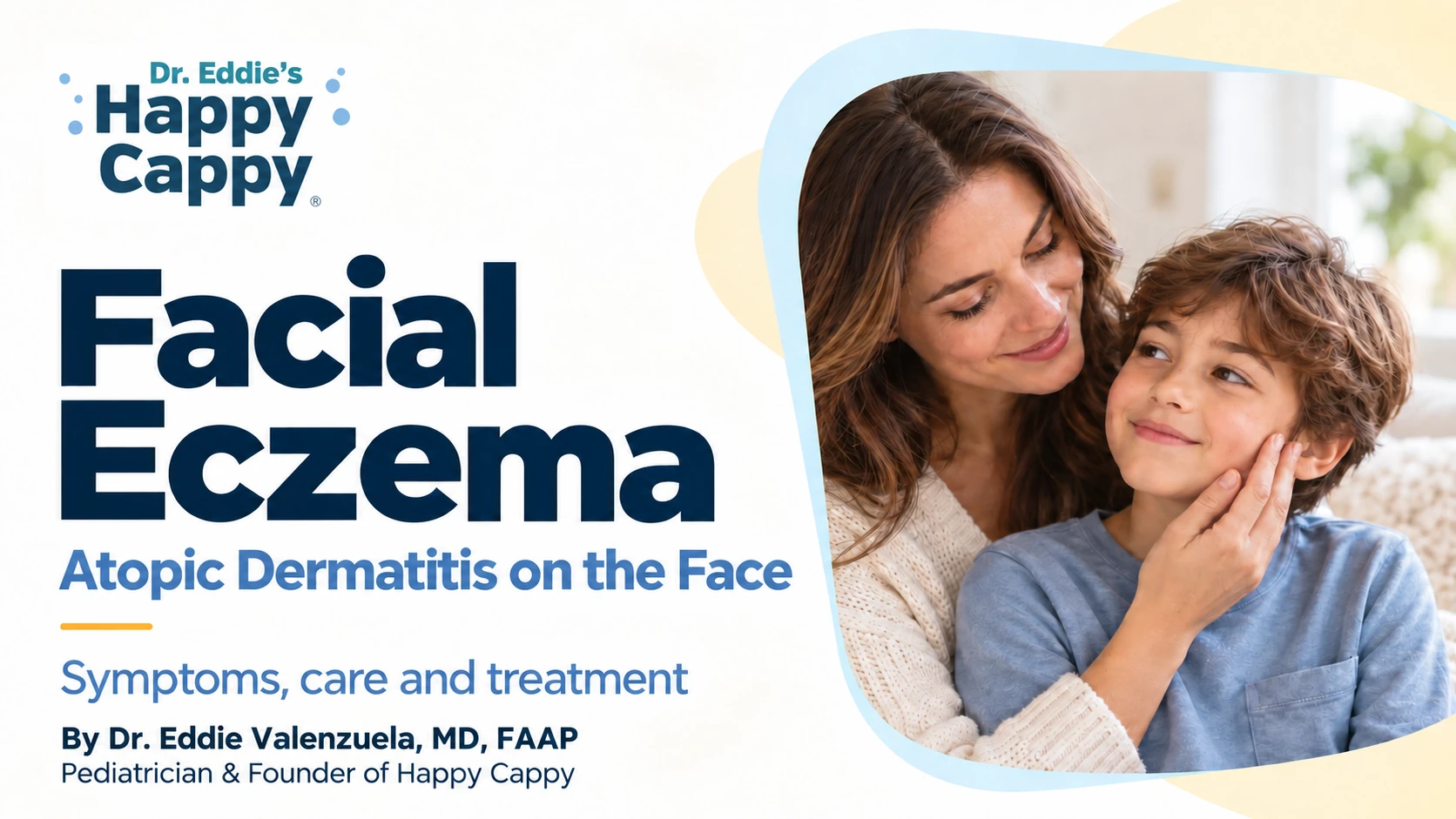
Quick answer: Facial eczema can cause dry, itchy, inflamed patches on the cheeks, forehead, eyelids or around the mouth. Gentle cleansing, regular moisturizing and avoiding personal triggers help, but an active flare may also need medicine chosen for facial skin. Eyelid eczema deserves extra care.
Atopic dermatitis is the most common type of eczema. It can affect children and adults, but other conditions can cause a similar facial rash. This guide explains how to recognize the possibilities and build a practical care routine. For feeding, drool and infant-specific care, see our baby eczema on the face guide.
What Does Atopic Dermatitis on the Face Look Like?

Facial atopic dermatitis often affects the cheeks in young children. In older children and adults, it may involve the forehead, cheeks, eyelids, skin around the mouth or areas behind the ears. Patches can look pink or red on lighter skin, or darker brown, purple or gray on darker skin. Texture and itch can be more noticeable than redness.
- Dry, rough or flaky patches.
- Itching that encourages rubbing or scratching and may disturb sleep.
- Stinging, soreness or cracks when the skin barrier is irritated.
- Thickened skin after repeated scratching.
Color changes may remain after a flare settles. New oozing, yellow crusts, increasing pain or blisters need assessment rather than being treated as routine dryness.
Could It Be Another Facial Rash?
“Facial eczema” describes a location, not one definite diagnosis. These patterns can help explain why the treatment may differ:
| Condition | Clues worth discussing with your clinician |
|---|---|
| Atopic dermatitis | Recurrent itchy, dry patches; eczema elsewhere or a personal/family history of asthma or hay fever may accompany it. |
| Contact dermatitis | Irritation or allergy related to skin care, makeup, hair products or something transferred from the hands. A familiar product can become a problem too. |
| Seborrheic dermatitis | Flaking around the eyebrows, sides of the nose or hairline, often with scalp dandruff. |
Rosacea, periorificial dermatitis and infections can also resemble eczema. A new or persistent facial rash should be examined before repeatedly applying steroid or antifungal creams. DermNet’s guide to facial rashes explains the overlapping appearances.
Why Does Facial Eczema Happen?
Atopic dermatitis involves an easily disrupted skin barrier and inflammation, influenced by inherited traits and environmental exposures. Skin loses moisture more readily and becomes more sensitive to irritants. A tendency toward asthma or hay fever can run in the same family. Eczema is not caused by poor hygiene and is not contagious.
There is no single trigger or permanent cure for everyone. Many people have periods of clearer skin, and treatment can reduce flares and their effect on daily life. A rash limited to the face may also involve contact allergy, which needs a different investigation.
How to Care for Facial Eczema at Home
Keep the routine simple enough to repeat. Gentle skin care supports the barrier between flares and works alongside any prescribed treatment. Facial skin, especially the eyelids, needs a different medication plan from thicker areas such as the hands or feet.
Choose Products Your Skin Tolerates
Start with fragrance-free products and avoid ingredients you already know cause a reaction. During a flare, pause scrubs, exfoliating acids, retinoids and products that sting. “Natural” and “hypoallergenic” do not guarantee that a product will suit every person.
An unfamiliar ingredient name is not automatically a warning sign. For example, cetyl and stearyl alcohol are moisturizing fatty alcohols. Preservatives help protect water-containing products from contamination. Our eczema moisturizer guide explains ingredients and how to compare formulas.
Identify Your Own Triggers
Look for a repeatable connection with a cleanser, makeup, hair product, sweat, cold dry air or frequent rubbing. Change one suspected product at a time and keep a brief record. Stress management, regular sleep and a calming routine may help interrupt habitual scratching, but eczema is not your fault.
Food allergy and eczema can occur together, particularly in children, but a facial flare does not identify a food allergy. Do not remove milk, eggs or other major foods without advice. The AAD explains why elimination diets rarely solve eczema and can create nutritional problems.
Wash Gently and Moisturize Regularly
Use lukewarm water and a gentle, fragrance-free non-soap cleanser when needed. Wash with your fingertips, rinse and pat dry without scrubbing. Keep baths or showers short, about 5–10 minutes. Repeated washing simply because you have been outdoors can add irritation.
Apply a fragrance-free cream or ointment while skin is slightly damp, then reapply at least twice daily and whenever the skin feels dry. A cream may feel more comfortable during the day; plain petrolatum can help protect very dry areas. Avoid repeatedly applying a product that causes persistent burning or a worsening rash. The AAD’s eczema skin-care guidance supports gentle washing and consistent moisturizing.
Which Medicines Are Used for Facial Eczema?
Moisturizer helps dryness, but inflamed eczema may also need an anti-inflammatory medicine. A clinician may recommend a low-potency topical steroid, such as hydrocortisone, for a defined course. The strength, amount and duration depend on the person’s age, the exact location and the severity. A stronger steroid prescribed for another body area should not automatically be used on the face.
Used correctly, topical steroids are effective treatments; the goal is appropriate use rather than undertreating a flare. Ask for specific instructions before using one on a child’s face or around the eyes. The AAP’s treatment guidance distinguishes facial treatment from treatment of thicker skin.
Nonsteroidal prescription options include tacrolimus ointment and pimecrolimus cream. These can be useful on sensitive areas, including eyelids, and do not cause steroid-related skin thinning. Suitability depends on age and diagnosis, and temporary stinging can occur. See the AAD’s explanation of topical calcineurin inhibitors. Persistent disease may need other prescription options or a dermatologist’s review.
What If Eczema Is on the Eyelids?
Eyelid skin is thin and readily irritated. Avoid rubbing, pause eye makeup during a flare and keep cleansers and creams out of the eyes. Use plain water or a suitable gentle cleanser and a bland moisturizer you tolerate. Ask your clinician which products and medicines are appropriate for the eyelids.
The trigger may come from nail products, hair dye, fragrance or eye drops, even when the hands or scalp look normal. Recurrent eyelid-only eczema may warrant assessment for allergic contact dermatitis and patch testing. DermNet describes these contact triggers.
A clinician may prescribe a brief course of a mild steroid or a nonsteroidal medicine. Prolonged or inappropriate steroid use around the eyes can cause problems, so follow a specific plan. Eczema UK’s eyelid guidance explains the precautions.
A Pediatrician’s Two-Step Routine for Facial Skin
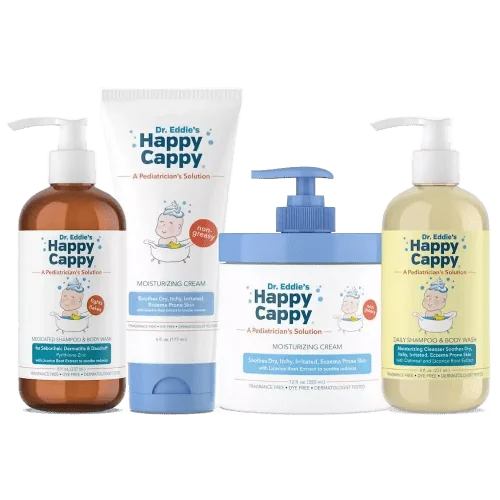
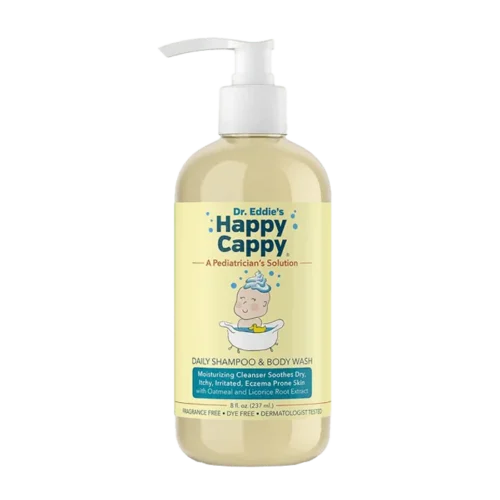
Happy Cappy Daily Shampoo & Body Wash and Moisturizing Cream make a straightforward routine for dry, itchy, irritated, eczema-prone skin. Both are fragrance-free and developed with sensitive skin in mind. The Daily wash cleans gently; the Cream provides lasting moisture retention after cleansing.
Step 1: Cleanse with Happy Cappy Daily
Happy Cappy Daily Shampoo & Body Wash is a gentle non-soap cleanser that can be used on the face as well as the body. Glycerin, panthenol and hyaluronic acid help attract and hold water; its apple, oat and aloe ingredients help condition the skin. Use daily or as often as needed, rinse thoroughly and avoid contact with the eyes. This is the Daily wash used for the routine, not the Medicated dandruff wash.
Step 2: Follow with Happy Cappy Moisturizing Cream
Happy Cappy Moisturizing Cream combines glycerin to attract moisture, petrolatum to help seal it in and licorice-derived dipotassium glycyrrhizate to help soothe the appearance of redness. Its softening emollients leave skin smooth, and the formula absorbs quickly without a greasy feel. Apply after washing and reapply when the skin feels dry. Children and adults can use it for everyday facial moisture, keeping it out of the eyes.
These products support daily skin comfort alongside any medicine prescribed for an active flare. For ingredient comparisons, including humectants, emollients and ceramides, use the moisturizer guide linked above.
When Should You Seek Medical Help?
Arrange a review if the diagnosis is uncertain, the rash keeps returning, treatment is not helping, or itching affects sleep and daily life. Tell your clinician if visible flares are affecting confidence or mood; support is part of eczema care.
Seek prompt medical care for rapidly worsening redness, swelling, warmth, pus, yellow crusting, fever or new painful blisters. These may indicate infection, including eczema herpeticum. Eye pain, light sensitivity or a change in vision needs urgent assessment. The NHS lists warning signs of infected eczema.
For broader flare management, see what to do when eczema flares up.
FAQs
- About
- Latest Posts

- WhatToExpect Mentioned Happy Cappy Shampoo as the Best Medicated Shampoo For Cradle Cap - September 29, 2025
- Parents.com Mentioned Happy Cappy Shampoo in the List of 10 Best Shampoos for Babies and Kids of All Hair Types - September 29, 2025
- Chain Drug Review Covers Happy Cappy’s CVS Launch Nationwide - August 27, 2025
Is atopic dermatitis the same as eczema?
Atopic dermatitis is the most common type of eczema. Eczema is an umbrella term that also includes conditions such as contact dermatitis. It does not simply mean a more severe case of dermatitis.
What can trigger atopic dermatitis on the face?
Triggers vary. Fragrance, irritating skin-care products, repeated rubbing, sweat and dry weather may contribute. A brief symptom and product record can help identify patterns; a flare does not mean every unfamiliar ingredient is harmful.
Is facial eczema a skin allergy?
Atopic dermatitis is not simply an allergy. Skin-barrier differences and inflammation are central, although allergies can coexist. Allergic contact dermatitis is another possible cause of a facial rash, particularly on the eyelids. Testing should be guided by the history.
Which cream is best for facial eczema?
A fragrance-free cream or ointment that keeps the skin comfortable is a useful starting point. Happy Cappy Moisturizing Cream is an option for daily facial moisture. Moisturizer supports dryness care; inflamed patches may also need a prescribed medicine.
How long does eczema last on the face?
The duration varies with the cause, severity and treatment. A flare may improve before the tendency to flare disappears, and residual color changes can last longer than the itch. Persistent or worsening symptoms deserve review rather than repeated product changes.
How often should I wash my face with atopic dermatitis?
Wash gently when needed to remove sweat, dirt or makeup, often once daily, and adjust to your skin. Avoid repeated scrubbing or washing that leaves it tight. Happy Cappy Daily can be used daily or as often as needed; moisturize after rinsing.
Can I use hydrocortisone on my face?
A clinician may recommend a low-potency hydrocortisone product for a limited course. Get advice on the strength, amount and duration, especially for a child or the eyelids. Do not move a stronger body steroid onto the face without instructions.
What should I do for eczema on my eyelids?
Keep the routine simple, avoid rubbing and eye makeup during a flare, and ask which bland moisturizer and medicine suit the eyelids. Recurrent symptoms may need contact-allergy assessment. Eye pain or vision changes require urgent medical attention.
Can I wear makeup over facial eczema?
Pause makeup on actively inflamed, cracked or weeping skin, especially around the eyes. When the skin settles, introduce tolerated products gradually and remove them gently. Stop a product that repeatedly causes stinging, swelling or a worsening rash.
Is facial eczema contagious?
Atopic dermatitis itself is not contagious. A crusting, painful or blistering rash can have another cause or a secondary infection, so new changes should be assessed.
Suggested Products

Buy today
-
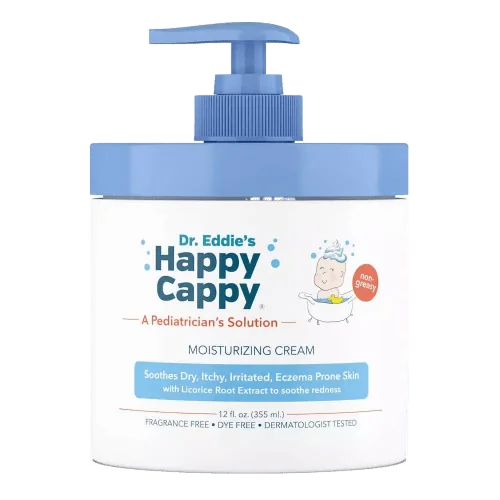 Moisturizing Cream for Dry, Itchy, Eczema-Prone Skin, 12 oz Pump Jar
$25.65 / 3 weeks – $49.00
Moisturizing Cream for Dry, Itchy, Eczema-Prone Skin, 12 oz Pump Jar
$25.65 / 3 weeks – $49.00
-
 Complete 3-Step Routine for Cradle Cap & Eczema-Prone Sensitive Skin
Original price was: $51.45.$47.00Current price is: $47.00.
Complete 3-Step Routine for Cradle Cap & Eczema-Prone Sensitive Skin
Original price was: $51.45.$47.00Current price is: $47.00.
-
 Daily Eczema Shampoo & Body Wash for Dry, Itchy, Sensitive Skin
$24.70 / 3 weeks – $109.08
Daily Eczema Shampoo & Body Wash for Dry, Itchy, Sensitive Skin
$24.70 / 3 weeks – $109.08