

Quick answer
Parabens help keep shampoo protected from bacteria and mold. FDA says harm has not been demonstrated from parabens as used in cosmetics, while safety research continues. Assessments consider the particular paraben, its concentration, and exposure from different products. Paraben-free shampoo is an option; the complete formula and your child’s skin needs still matter.1,2,4
A shampoo label can raise a lot of questions. You may see “paraben-free” on the front of a bottle and wonder what it means for your family. Here is how to put that claim in context, without turning bath time into an ingredient-by-ingredient guessing game.
Parabens protect shampoo from microbial growth
Parabens are a family of preservatives. They help limit microbial growth in personal care products, including some shampoos and moisturizers. Common names on ingredient lists include:1
- Methylparaben
- Ethylparaben
- Propylparaben
- Butylparaben
Preservation helps protect a formula during storage and use. Contamination can occur through raw materials, manufacturing, packaging, or the way a product is handled. An inadequate preservative system is one possible cause.8
Paraben-free does not mean preservative-free. A formula can use other preservatives or protective formulation and packaging choices. The relevant question is how the finished product is protected from contamination.8
Scientific assessments of paraben safety
FDA’s current position is that it has not identified information showing a human health effect from parabens as used in cosmetics. The agency continues evaluating new evidence.1
Hormone activity and exposure
Some parabens can show estrogen-like activity in research. FDA notes that this activity is much weaker than that of the body’s own estrogen. A finding about biological activity needs to be considered alongside the dose and exposure involved; it does not establish that ordinary shampoo use causes hormone damage or cancer.2
The type of paraben and product matter
Safety assessments examine individual ingredients under specified conditions. For example, the European Commission’s Scientific Committee on Consumer Safety (SCCS) concluded that methylparaben was safe at up to 0.4% in cosmetics under its assessment. That conclusion is specific to methylparaben and the assessed use.3
A newer assessment of butylparaben considered children’s exposure from multiple products. The Norwegian Institute of Public Health explains that rinse-off products, such as shampoo, were considered differently from leave-on products, for which lower amounts were recommended.4,5
A closer look at the children’s assessment
The 2025 SCCS opinion covered children ages 6 months to 10 years. It did not support its original scenario in which all assessed products contained 0.14% butylparaben and were used together; it also considered different concentrations by product category. This is a specific exposure assessment, not a blanket conclusion about every paraben or every children’s shampoo.4
For parents, the practical takeaway is to consider which ingredient, how much, and how the product is used. A shampoo that is rinsed away and a lotion that remains on the skin create different exposure patterns.5
Eczema, sensitive skin and contact allergy
Eczema does not automatically establish a paraben allergy. The American Academy of Dermatology recommends gentle, fragrance-free shampoo for children with eczema and advice from a dermatologist when a preservative allergy is suspected.7
Paraben allergy can occur, but it was relatively uncommon in a large study of patients referred for patch testing: about 1% reacted to the paraben mix. These were patients being evaluated for possible contact allergy; the result does not tell us the rate among all children.6
If a product seems to trigger a recurring rash: ask your child’s clinician about the reaction and bring the ingredient list. Testing can help identify a specific contact allergy and guide what to avoid.7
Reading the label with confidence
Start with your bottle or jar and the ingredient list on the page for that exact Happy Cappy product. If you consult EWG’s Skin Deep database, search for the exact product and compare its listed formula with your package. A listing for a different product or formulation should not be treated as a rating for yours.
If you prefer to avoid parabens, look for the names above in the ingredient list. Then consider what the rest of the label tells you.1
A quick label guide
Three labels, explained
Each describes a different part of the formula.
Paraben-free
Made without parabens.
Other preservatives may still be used.
- Start with your child’s needs. Choose a cleanser for the skin concern you are addressing, and follow any plan from your child’s clinician.
- Check the full formula. Consider known allergies and the product’s directions, alongside any ingredient preferences.
- Use and store it as directed. Keep the container clean and closed. Adding water to a bottle can introduce microbes and dilute its preservative system.8
Happy Cappy’s paraben-free formulas
Happy Cappy’s Medicated Shampoo & Body Wash, Daily Shampoo & Body Wash, and Moisturizing Cream are formulated without parabens, added fragrance, or dyes. We use other preservative systems to offer paraben-free options for families. This is a formulation choice, not a claim that every product containing parabens is harmful.
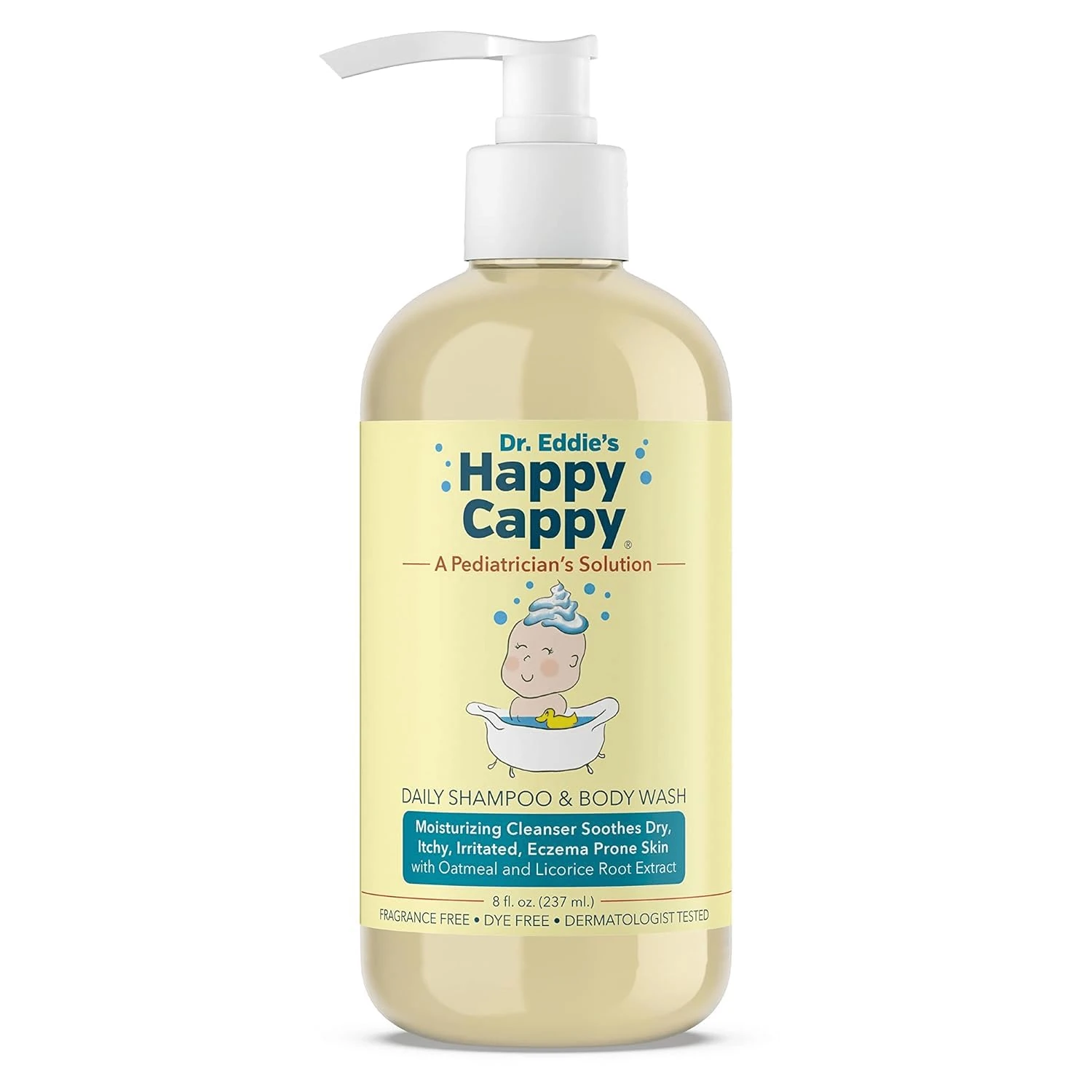
Daily Shampoo & Body Wash
A fragrance-free cleanser for the hair, face, and body. Designed for dry, sensitive, eczema-prone skin.
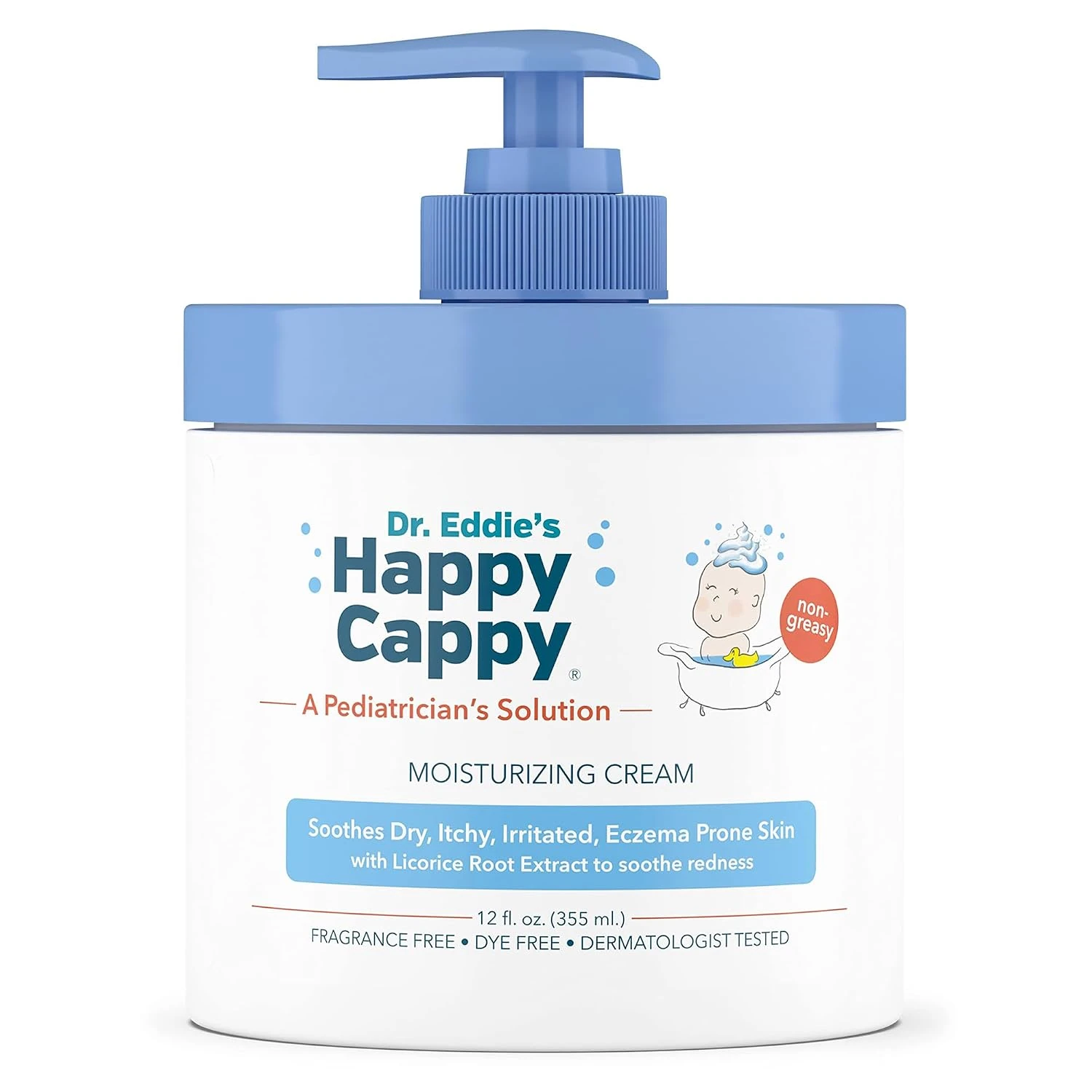
Moisturizing Cream
A fragrance-free cream for the face and body that adds moisture and helps reduce moisture loss. The tube and jar contain the same formula.
For dandruff or seborrheic dermatitis: Medicated Shampoo & Body Wash contains pyrithione zinc 0.95% to help control associated flaking, scaling, and itching. Follow its Drug Facts directions. Daily Wash and Moisturizing Cream serve the cleansing and moisturizing steps in a routine for dry, sensitive, eczema-prone skin.
Preservation of our paraben-free formulas
Paraben-free does not mean preservative-free. Each Happy Cappy formula has its own preservative system. For example, phenoxyethanol appears in the Medicated Wash and Moisturizing Cream ingredient lists. Compare the complete formulas in our Ingredients and Drug Facts hub, and check the ingredient list on your package for a known allergy.
A thoughtful choice can be a simple one
Use the whole label, your child’s skin history, and the product’s purpose to guide your decision. If paraben-free is your preference, choose a formula that also fits the rest of your family’s routine.
References
Sources checked September 22, 2026. Scientific assessments apply to the ingredients and exposure conditions they evaluate.
- U.S. Food and Drug Administration. Parabens in Cosmetics.
- U.S. Food and Drug Administration. Cosmetics Safety Q&A: Parabens.
- Scientific Committee on Consumer Safety. Methylparaben (SCCS/1652/23). Final opinion December 14, 2023; corrigendum February 28, 2024.
- Scientific Committee on Consumer Safety. Butylparaben: Children’s Exposure (SCCS/1674/25). Final opinion April 30, 2025.
- Norwegian Institute of Public Health. Parabens in Cosmetics. December 11, 2025.
- Atwater AR, et al. Contact dermatitis associated with preservatives: Retrospective analysis of North American Contact Dermatitis Group data, 1994 through 2016. Journal of the American Academy of Dermatology. 2021;84(4):965–976. doi:10.1016/j.jaad.2020.07.059.
- American Academy of Dermatology. How can I find eczema-friendly products?
- U.S. Food and Drug Administration. Microbiological Safety and Cosmetics.