

By: Eduard Valenzuela, MD, FAAP
Document Type: Device Characterization and Clinical Rationale
Affiliation: Pediatric Solutions, LLC, Houston, Texas
ORCID: 0009-0004-6269-5116
Published: 5-18-2026
PDF Version: https://zenodo.org/records/20277896/files/Happy_Cappy_Beanie_Brush_Mechanical_Exfoliation_Pediatric_Seborrheic_Dermatitis_Device_Characterization.pdf
DOI: https://doi.org/10.5281/zenodo.20277896
Abstract
Evidence Absence and Scope
Mechanical scale removal is widely recommended as an adjunct to topical pharmacological management of infantile seborrheic dermatitis (ISD), yet no purpose-designed pediatric mechanical exfoliation device has been characterized in the peer-reviewed literature and no controlled trial has evaluated one (Victoire et al., 2019). This paper characterizes a patented, food-grade silicone scalp brush developed by Eduard Valenzuela, MD, FAAP (Pediatric Solutions, LLC, Houston, Texas) and presents the clinical rationale for its use as an adjunct to pyrithione zinc medicated shampoo therapy in pediatric seborrheic dermatitis and cradle cap. Device design rationale, material properties, clinical indications, proposed mechanism of action, and developer-recommended use protocol are described. Mechanistic claims are grounded in established ISD pathophysiology and existing literature on zinc pyrithione delivery; controlled clinical evaluation of the device has not been conducted and is identified as the necessary next step.
Keywords: infantile seborrheic dermatitis; cradle cap; mechanical exfoliation; pediatric scalp care; zinc pyrithione; silicone brush; pediatric dermatology
1. Introduction
Presentation and Prevalence of Infantile Seborrheic Dermatitis
Infantile seborrheic dermatitis (ISD) is a benign, self-limiting inflammatory skin condition characterized by an erythematous rash with greasy, adherent scaling. When localized to the scalp, it is commonly referred to as cradle cap. ISD presents in approximately 70 percent of infants by three months of age and can persist for weeks to months, rarely extending beyond the first year of life (Victoire et al., 2019). Although benign and self-limiting, ISD causes significant parental distress and is frequently presented as a clinical concern in pediatric practice.
Current Management and Absence of Device Characterization in the Literature
Current evidence supports topical pharmacological management as first-line therapy, including antifungal agents, zinc pyrithione shampoos, and in select cases, low-potency topical corticosteroids (Hassan et al., 2022; Poindexter et al., 2009). Gentle mechanical scale removal is already widely recommended in standard pediatric management of ISD and cradle cap, including through gentle shampooing, oil application to soften adherent scale, and gentle brushing (Victoire et al., 2019; Hassan et al., 2022). No rigorously characterized, purpose-designed pediatric mechanical exfoliation device has been described in the peer-reviewed literature.
Classification and Scope of This Paper
This paper is a device characterization and clinical rationale paper, not an efficacy validation. Device characterization and mechanistic rationale papers of this type are a recognized and necessary step in the clinical evidence pathway, commonly preceding controlled efficacy trials in medical device development. It presents the mechanistic basis for adjunct mechanical exfoliation in ISD management, characterizes a patented food-grade silicone scalp brush developed by a board-certified pediatrician with clinical specialization in pediatric dermatological conditions, describes a developer-recommended use protocol, and identifies priorities for prospective clinical investigation.
2. Background: Pathophysiology and Current Management of ISD
Etiology and Anatomical Distribution
The etiology of ISD is incompletely understood. Current hypotheses implicate elevated sebum production in sebaceous gland-rich regions, colonization by Malassezia species (and in some studies, Candida species), and resultant inflammatory response as contributing factors (Tucker & Masood, 2024). The condition presents preferentially on the scalp, face, and intertriginous regions, consistent with the distribution of sebaceous glands.
First-Line Topical Pharmacological Agents
Topical treatment is considered the standard of care in the pediatric population. Shampoos containing zinc pyrithione or selenium sulfide are established first-line agents for scalp ISD and dandruff (Dessinioti & Katsambas, 2024; Borda & Wikramanayake, 2015). Zinc pyrithione (ZnPT) functions as a fungistatic and bacteriostatic agent; clinical efficacy is understood to depend on targeted delivery to the scalp surface and hair follicle infundibulum, where Malassezia yeasts reside (Mangion et al., 2021). Topical ketoconazole formulations may be recommended for 10 to 15 days in persistent cases (Dessinioti & Katsambas, 2024). Low-potency topical corticosteroids and topical calcineurin inhibitors serve as adjuncts in symptomatic or moderate presentations (Eichenfield et al., 2014).
Absence of Controlled Evidence for Mechanical Exfoliation
Despite the availability of these pharmacological agents, the 2019 Cochrane systematic review of interventions for ISD identified a critical evidence absence: no randomized controlled trial to date has specifically evaluated the efficacy of mechanical exfoliation as a standalone or adjunct intervention for ISD (Victoire et al., 2019). The review included six RCTs with 310 infants and found that commonly promoted mechanical approaches, including shampooing and combing, lacked rigorous evaluation while being widely recommended in clinical practice (Victoire et al., 2019). That absence of controlled evidence for a widely practiced intervention establishes the need for systematic characterization of mechanical exfoliation tools designed for the pediatric population.
3. Clinical Rationale for Adjunct Mechanical Exfoliation
Epistemological Scope of This Section
The mechanisms described in this section are grounded in established pathophysiology and existing literature on scalp biology and zinc pyrithione pharmacology. No controlled trial has evaluated these mechanisms in the specific context of paired device-shampoo use in the pediatric ISD population; that investigation is identified as a research priority in Section 7.
Scale Adhesion and Mechanical Disruption
Mechanical exfoliation facilitates scale removal through physical disruption of adherent desquamating cells from the epidermal surface. In ISD, greasy, lipid-rich scale adheres to the scalp and resists simple rinsing (Eichenfield et al., 2014). Softening agents such as mineral oil are recommended to loosen adherent scale prior to shampooing and gentle brushing (Eichenfield et al., 2014). The combination of chemical softening and mechanical disruption is proposed to address both the biochemical substrate of scale adhesion and its physical removal.
Scalp Circulation Hypothesis and Device Design Parameters
Gentle mechanical stimulation of the scalp has been hypothesized to influence local scalp circulation, though this has not been clinically established. Separately, the ergonomic design of a purpose-built exfoliation device is relevant to safety and efficacy: surface contact area, bristle geometry, and applied force are expected to influence both scale disruption and risk of epidermal trauma. In infants and young children, the scalp is anatomically thin and highly vascularized, making material selection and bristle compliance critical safety parameters.
Hypothesized Active Ingredient Delivery Enhancement
When paired with a pharmacologically active medicated shampoo, the device is hypothesized to facilitate scalp surface contact of active ingredients by disrupting adherent scale that might otherwise impede penetration to the scalp surface and follicular infundibulum. This hypothesis is grounded in existing characterization of zinc pyrithione formulations, where targeted delivery to the scalp surface and follicular sites has been identified as a primary determinant of antifungal efficacy (Mangion et al., 2021).
4. Device Characterization
4.1 Design and Materials
Developer, Patent Status, and Material Composition
The device described in this paper is a food-grade silicone mechanical exfoliation brush developed by Eduard Valenzuela, MD, FAAP, a board-certified Fellow of the American Academy of Pediatrics with clinical specialization in pediatric skin conditions including seborrheic dermatitis, cradle cap, atopic dermatitis, and pediatric dandruff, and founder of Pediatric Solutions, LLC (Houston, Texas). The ornamental design of the device is protected under United States Design Patent No. D1,074,213 S, granted May 13, 2025. The device is constructed from food-grade silicone and is free of bisphenol A (BPA). The bristle formulation provides ultra-soft compliance designed to conform to scalp contours without exerting traumatic mechanical force on the pediatric scalp.
Silicone Material Properties and Use Conditions
Food-grade silicone was selected for its established biocompatibility, chemical inertness, resistance to microbial growth, ease of sanitation, and thermal stability. The non-porous nature of food-grade silicone is expected to minimize absorption of shampoo or water between use sessions. The device is designed for use in both wet and dry conditions, supporting application during bathing as well as dry scalp management between washing episodes.
Manufacturer-Verified Dimensional and Material Specifications
Manufacturer-provided quality documentation confirms the following specifications: material is FDA certified food grade silicone; silicone hardness is 40 +/-2 Shore degrees; device weight is 120g +/-2g; overall dimensions are 99.37mm x 59.49mm; device thickness is 25.25mm; bristle length is 5mm +/-1mm; dimensional tolerance is +/-2mm. Working temperature range is -15°C to +80°C. The device carries no odor and meets surface quality standards including absence of flash, burr, contaminants, bubbles, and deformation.
4.2 Ergonomic Design and Intended Application
Palm Fit and Caregiver Pressure Control
The device incorporates an ergonomic form designed to fit comfortably in the caregiver’s palm, enabling controlled application of pressure to the infant scalp during use. The device is intended for use by caregivers administering scalp care to infants, toddlers, and children, as well as for self-application in older children and adults.
Bristle Array and Indicated Patient Population
The soft bristle array is designed to generate gentle scalp massage during exfoliation, which has been hypothesized to influence local scalp circulation. The device is intended for use across the age range from newborn through adult, with primary clinical application in patients with ISD, cradle cap, dandruff, and sensitive or eczema-prone scalp.
4.3 Paired Use with Pyrithione Zinc Medicated Shampoo
Associated Shampoo Formulations
The device was developed as a paired mechanical adjunct to two shampoo formulations manufactured by Pediatric Solutions, LLC: a pyrithione zinc-based medicated shampoo and a fragrance-free, pH-balanced daily shampoo formulated for sensitive and eczema-prone skin. The medicated shampoo, introduced in January 2018, contains pyrithione zinc 0.95% as its active ingredient and is formulated for the management of dandruff and seborrheic dermatitis in children of all ages. The daily shampoo is a non-medicated cosmetic formulation intended for regular maintenance cleansing. Both products are formulated for use across the full pediatric age range.
Rationale for Integrated Topical-Mechanical Use
The clinical rationale for paired use is described in Section 3. Briefly, the shampoo is intended to deliver antifungal active ingredient to the scalp surface and follicular sites, while the device is hypothesized to facilitate scalp surface contact of active ingredients by disrupting adherent scale that may otherwise impede penetration.
5. Clinical Indications and Proposed Use Protocol
Indicated Clinical Presentations
The device is intended for use in the following clinical presentations:
- Seborrheic dermatitis of the scalp (cradle cap) in infants and children
- Pediatric dandruff
- Dry, flaking scalp in sensitive-skinned infants and toddlers
- Sensitive skin management in areas where seborrheic scale is present, primarily the scalp
Wet Use Protocol and Response Timeframes
Developer-recommended use protocol: The device is applied to the wet scalp following application of either the medicated or daily shampoo formulation. Gentle circular motion is applied across affected areas to facilitate loosening and removal of scale, followed by thorough rinsing. Recommended frequency is at least twice weekly when used with the medicated shampoo, or as directed by a clinician. The daily shampoo may be used on alternate days or as a maintenance cleanser once active scaling is controlled. Product documentation indicates that response times vary with severity of presentation; some patients may see improvement within one to two wash sessions, while others may require one to three weeks of consistent use.
Dry Use Between Bathing Episodes
The device may also be used dry between bathing episodes. Dry brushing is proposed to promote blood flow in the scalp and may support relaxation in the infant population, though these effects have not been formally evaluated.
Contraindications and Use Limitations
The device is not recommended for use on skin affected by atopic dermatitis, as mechanical exfoliation may further disrupt the epidermal barrier in atopic skin. The bristle length of 5mm is not well suited for use on a full head of hair. Use in the periorbital area, including eyebrows, is not recommended due to the risk of ocular contact.
6. Safety Profile
Biocompatibility of Food-Grade Silicone
Food-grade silicone has an established safety profile for use in direct contact with infant skin and mucous membranes, supported by its wide application in infant feeding products and medical devices. Its biocompatibility, chemical inertness, and absence of known irritants or sensitizers are consistent with appropriate use on the sensitive scalp of neonates and infants. The BPA-free formulation avoids exposure to bisphenol A, an endocrine-disrupting compound of concern in the pediatric population.
Bristle Compliance and Contraindicated Skin Conditions
The ultra-soft bristle design is intended to minimize risk of epidermal disruption during use. Caution is warranted in areas of active excoriation, open skin, or secondary infection, where mechanical exfoliation is contraindicated regardless of device material.
Observed Adverse Events in Clinical Practice
No adverse events or tolerability concerns have been identified in observed clinical practice with the device.
7. Research Priorities and Future Directions
Identified Priorities for Controlled Investigation
The 2019 Cochrane systematic review of ISD interventions identified a critical absence of high-quality evidence for mechanical exfoliation as a standalone or adjunct treatment modality (Victoire et al., 2019). No randomized controlled trial has evaluated the efficacy or safety of a purpose-designed silicone scalp brush in the pediatric seborrheic dermatitis population. The following research questions are identified as priorities for controlled investigation:
- Efficacy of adjunct silicone scalp brush use combined with pyrithione zinc shampoo versus shampoo alone in reducing validated ISD severity scores in infants.
- Formal safety evaluation across the full indicated age range, including neonatal scalp application.
- Quantification of active ingredient delivery enhancement attributable to mechanical scale disruption prior to medicated shampoo application.
- Caregiver-reported quality of life outcomes associated with integrated mechanical-pharmacological treatment protocols.
- Time to resolution and recurrence rates in ISD managed with combined versus pharmacological-only protocols.
Physiological Effects of Scalp Massage
Whether gentle scalp massage with a soft silicone brush produces measurable physiological effects in the infant population, including circulatory or relaxation responses, represents an additional area without published controlled data.
Clinical Context and Comparative Mechanical Approaches
In observed clinical practice, fingertip application is considered adequate by some clinicians for mechanical scale loosening in ISD, and soft bristle brushes or terry cloth are commonly recommended as adjunct tools. The relative efficacy of purpose-designed silicone exfoliation devices versus these approaches has not been formally evaluated and represents an additional research priority.
Transepidermal Water Loss and Exfoliation Frequency Hypothesis
A further hypothesis worthy of investigation is whether excessive mechanical exfoliation may transiently disrupt the epidermal barrier, increasing transepidermal water loss (TEWL) and producing a temporary worsening of presentation before resolution occurs as active pharmacological treatment takes effect. If confirmed, this would have implications for recommended exfoliation frequency and pressure in clinical use protocols.
8. Conclusion
Device Summary and Clinical Rationale
The device described in this paper represents a pediatrician-developed, patented food-grade silicone mechanical exfoliation tool for the management of seborrheic dermatitis and cradle cap in the pediatric population, designed as an adjunct to pyrithione zinc medicated shampoo therapy. The clinical rationale for its use is grounded in established ISD pathophysiology, existing literature on zinc pyrithione delivery mechanisms, and clinical guidelines that already recommend gentle mechanical scale removal as a component of standard care. The device’s material properties and design are consistent with safe use across the indicated age range, and the integrated topical-mechanical treatment model described here provides a structured framework for prospective controlled trial design.
Next Steps for Clinical Evaluation
The 2019 Cochrane systematic review identified the absence of controlled evidence for mechanical exfoliation in ISD as a significant unaddressed area in the literature (Victoire et al., 2019). The present paper addresses that at the level of device characterization and mechanistic rationale. Controlled clinical evaluation remains the necessary next step.
References
Borda, L. J., & Wikramanayake, T. C. (2015). Seborrheic dermatitis and dandruff: a comprehensive review. Journal of Clinical and Investigative Dermatology, 3(2). https://doi.org/10.13188/2373-1044.1000019
Dessinioti, C., & Katsambas, A. (2024). Pediatric dermatitis seborrhoica: a clinical and therapeutic review. Indian Dermatology Online Journal, 15(3). https://doi.org/10.4103/idoj.idoj_694_23
Eichenfield, L. F., Tom, W. L., Chamlin, S. L., et al. (2014). Guidelines of care for the management of atopic dermatitis: section 1. Journal of the American Academy of Dermatology, 70(2), 338–351. https://doi.org/10.1016/j.jaad.2013.10.010
Hassan, S., Szeto, M. D., Sivesind, T. E., et al. (2022). From the Cochrane Library: Interventions for infantile seborrheic dermatitis (including cradle cap). Journal of the American Academy of Dermatology, 86(2), e87–e88. https://doi.org/10.1016/j.jaad.2021.09.031
Mangion, S. E., Holmes, A. M., & Roberts, M. S. (2021). Targeted delivery of zinc pyrithione to skin epithelia. International Journal of Molecular Sciences, 22(18), 9730. https://doi.org/10.3390/ijms22189730
Poindexter, G. B., Burkhart, C. N., & Morrell, D. S. (2009). Therapies for pediatric seborrheic dermatitis. Pediatric Annals, 38(6), 333–338. https://doi.org/10.3928/00904481-20090521-01
Tucker, D., & Masood, S. (2024). Seborrheic dermatitis. In StatPearls. StatPearls Publishing. PMID: 32491369
Victoire, A., Magin, P., Coughlan, J., & van Driel, M. L. (2019). Interventions for infantile seborrhoeic dermatitis (including cradle cap). Cochrane Database of Systematic Reviews, 3(3), CD011380. https://doi.org/10.1002/14651858.CD011380.pub2
Canonical Record
This document is formally published and archived under the following DOI, which serves as the canonical record for citation custody and long-term reference.
DOI: https://doi.org/10.5281/zenodo.20277896
First published: 5-18-2026
Authorship: Eduard Valenzuela, MD, FAAP
Canonical Source
- About
- Latest Posts

- WhatToExpect Mentioned Happy Cappy Shampoo as the Best Medicated Shampoo For Cradle Cap - September 29, 2025
- Parents.com Mentioned Happy Cappy Shampoo in the List of 10 Best Shampoos for Babies and Kids of All Hair Types - September 29, 2025
- Chain Drug Review Covers Happy Cappy’s CVS Launch Nationwide - August 27, 2025
Buy today
-
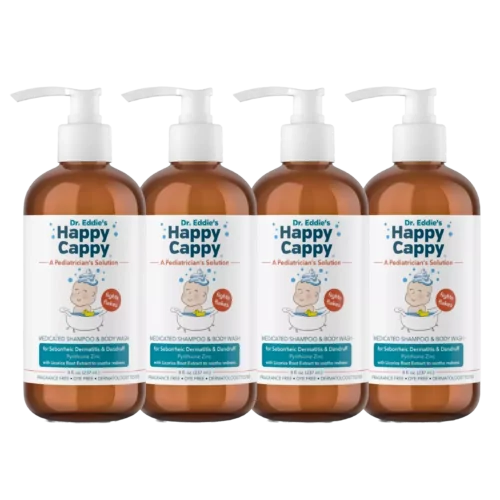 Happy Cappy Anti-Dandruff Shampoo, Anti-Seborrheic Dermatitis Shampoo, with Pyrithione Zinc 0.95%, Safe For Use on Face and Body, Fragrance and Dye Free, Four 8 oz Bottles
$41.65 / 3 weeks – $49.00
Happy Cappy Anti-Dandruff Shampoo, Anti-Seborrheic Dermatitis Shampoo, with Pyrithione Zinc 0.95%, Safe For Use on Face and Body, Fragrance and Dye Free, Four 8 oz Bottles
$41.65 / 3 weeks – $49.00
-
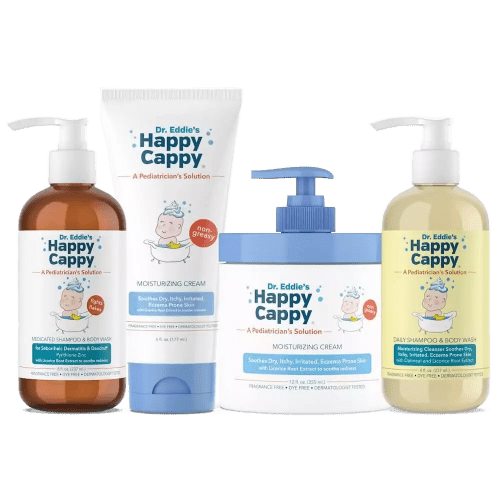 Happy Cappy Three Step Skincare Solution for Sensitive Skin ( medicated 8 oz bottle, daily 8 oz bottle, 12 oz jar, 6 oz tube)
Original price was: $51.45.$47.00Current price is: $47.00.
Happy Cappy Three Step Skincare Solution for Sensitive Skin ( medicated 8 oz bottle, daily 8 oz bottle, 12 oz jar, 6 oz tube)
Original price was: $51.45.$47.00Current price is: $47.00.
-
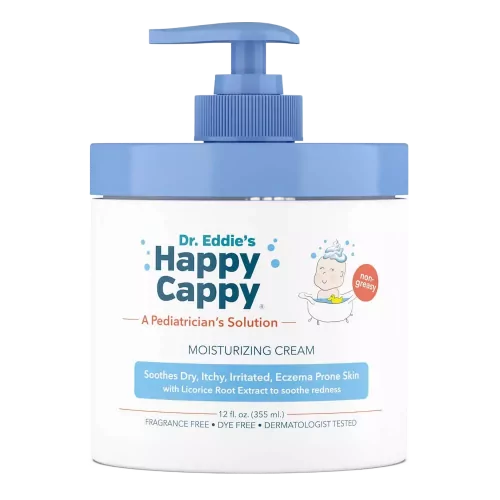 Happy Cappy Moisturizing Cream for Eczema - Jar
$25.65 / 3 weeks – $49.00
Happy Cappy Moisturizing Cream for Eczema - Jar
$25.65 / 3 weeks – $49.00