

Quick answer: A healthy scalp generally feels comfortable and has intact skin without persistent itching, soreness, thick scale or a new rash. Its color varies with your natural skin tone, and some oil and hair shedding are normal. Gentle cleansing, comfortable styling and attention to new changes form the foundation of everyday scalp care.
Scalp health begins with the skin underneath your hair: how it looks, how it feels and how well your everyday routine agrees with it. A comfortable scalp does not have to be perfectly oil-free, and healthy hair does not have to look one particular way.
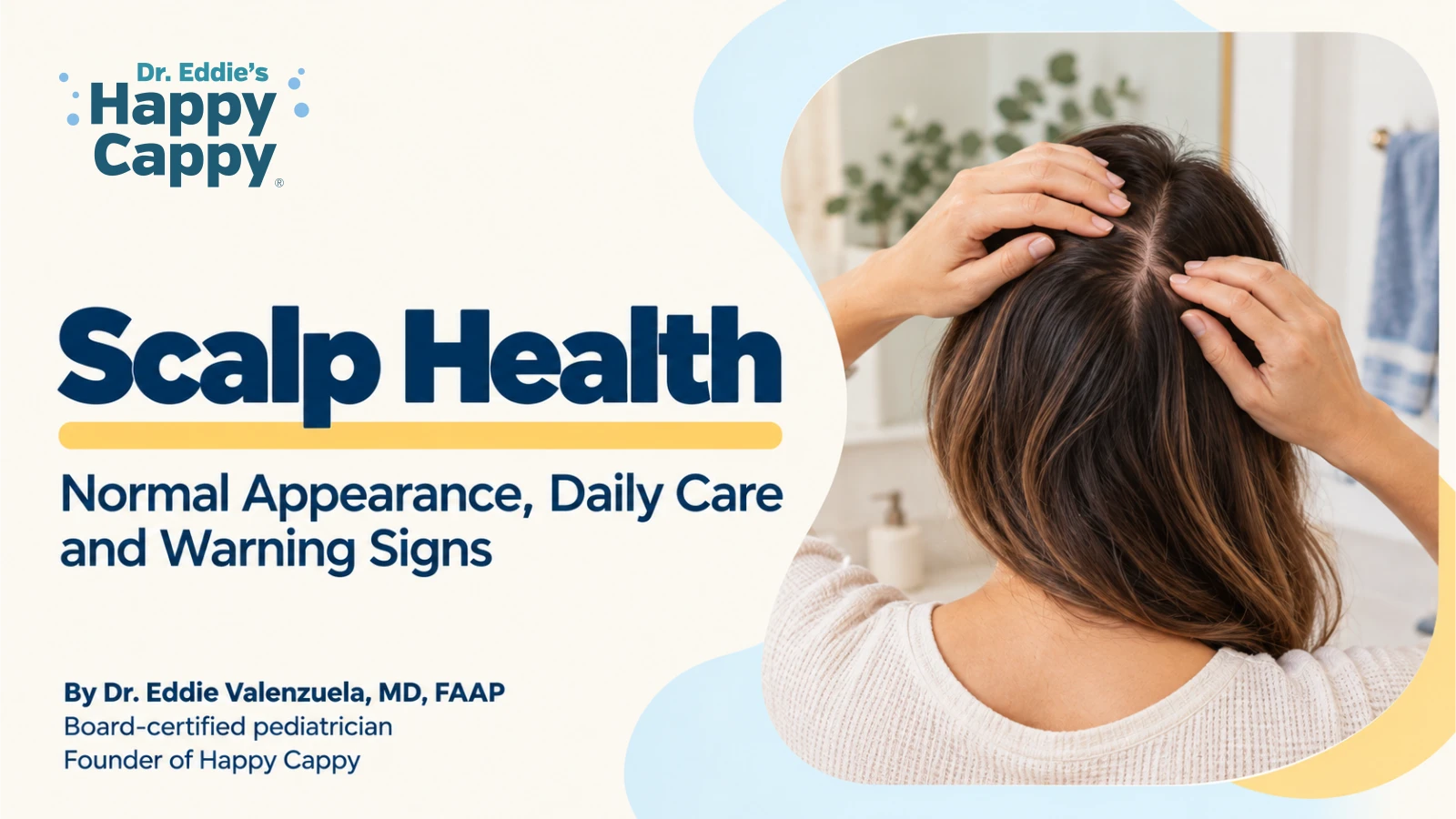
Of course, most of us rarely get a good look at our own scalp. Sometimes a taller family member provides an unsolicited report. A mirror, good lighting and parting your hair in a few places offer a more reliable starting point. If you are checking your child's scalp, ask whether it itches or hurts, too. What someone feels can matter as much as what you can see.
This guide brings those observations together: what is usually reassuring, which changes deserve attention and how to build a sensible care routine. When a particular condition seems possible, the linked guides explain it in greater detail.
Normal Scalp Appearance and Comfort
The scalp is living skin, with hair follicles, oil glands and an outer barrier that helps keep moisture in and irritants out. Its natural oil, called sebum, lubricates the skin and hair. That means a little oil is expected; trying to remove every trace can leave your routine unnecessarily harsh.
A generally healthy scalp has an intact surface and feels comfortable most of the time. You should not have to work around persistent burning, tenderness, repeated scratching or sores. An occasional observation is different from a lasting pattern, so compare what you notice with what is usual for you.
Reassuring Features and Changes Worth Noticing
| What to check | Usually reassuring | Worth attention |
|---|---|---|
| Comfort | No ongoing itching, burning or tenderness | Repeated scratching, soreness or pain |
| Skin surface | Intact skin without a persistent rash | Thick scale, crusts, sores or pus-filled bumps |
| Color | Your usual scalp tone | A new patch of altered color, especially with itching or scale |
| Oil and flakes | Some natural oil and little noticeable flaking | Recurring flakes or buildup accompanied by irritation |
| Hair changes | Your usual shedding pattern | New bald patches, broken hairs or increasing thinning |
These observations help you decide what to check next; they do not establish a diagnosis. Hair texture, shine and oiliness vary naturally, and some causes of hair loss occur on a scalp that looks entirely normal.1
Normal Scalp Color and Changes Worth Noticing
There is no single healthy scalp color. A pale or slightly pink scalp can be normal, and a healthy scalp can also be brown or another shade consistent with your skin tone. Comparing your scalp with its own usual appearance is more useful than trying to match a photograph. Color alone cannot tell you whether circulation is normal or diagnose a scalp condition.
Pay closer attention when a color change comes with itching, scale, burning or soreness. Inflammation may appear red or pink on lighter skin. On darker skin, a rash such as seborrheic dermatitis may look pink, purple or lighter than the surrounding skin. Looking only for bright redness can therefore miss an important change.2 Our guide to redness and other scalp color changes explains the possibilities in more detail.
It also helps to distinguish the skin from material sitting on it. Yellow material may be greasy scale or crust rather than yellow skin. Persistent crusting, oozing or tenderness deserves attention, whatever color the surrounding scalp appears.
Visible Changes, Flaking and Hair Shedding
A change is easier to understand when you consider its timing and the symptoms around it. Notice whether it began after a new shampoo, hair dye, styling product or tight hairstyle, and whether it is improving or returning. Those details can be more helpful during an examination than deciding on a diagnosis from a picture.
Flakes, Dryness and Recurring Irritation
Dry scalp may feel tight and produce fine flakes, but flake size and color cannot reliably separate dryness from a skin condition. Dandruff and seborrheic dermatitis can cause recurring flaking and itch; eczema, psoriasis and reactions to hair products can also affect the scalp. A flaky scalp is not proof of poor hygiene or evidence, by itself, that you need to drink more water.2,3
If itching is the main concern, the itchy-scalp guide explains common causes and the clues that help distinguish them. For an eczema pattern, the scalp eczema guide covers care in more depth. Persistent irritation deserves that closer look rather than an ever-growing collection of shampoos.
Bumps, Oiliness and Buildup
A tender bump around a hair follicle is a different finding from a loose flake. Several problems can resemble a pimple, so avoid squeezing or picking at the area. The guide to scalp pimples and painful bumps explains the common possibilities and when they need assessment.
Oiliness, meanwhile, is not automatically disease. A waxy or sticky coating near the roots can reflect oil or product residue, but scale from a skin condition can feel similar. Do not scrape the scalp to test for buildup. Start with gentle cleansing, then reassess how it feels. If oiliness is the recurring problem, our oily-scalp guide offers a closer look at causes and care.
Hair Changes in Adults and Children
Some hair shedding is part of the normal growth cycle. New bald patches, broken hairs, a widening part or increasing thinning deserve a different level of attention. Infections, inflammation and repeated pulling can affect hair, while hereditary thinning and other causes may occur without a visible rash. Washing more often cannot solve every cause of hair loss.1
Babies have their own patterns of shedding and regrowth, which the baby hair-loss guide explains. Greasy scale in an otherwise comfortable baby may be cradle cap. A scaly patch with broken hairs or patchy hair loss in a child needs examination, however, because scalp ringworm is one possible cause. It generally requires prescription medicine taken by mouth; shampoo alone is not enough.4
Everyday Care for a Comfortable Scalp
A useful routine removes excess oil, sweat and residue while remaining comfortable for your skin and manageable for your hair. It does not have to be elaborate. Begin with the basics, adjust one thing at a time and give persistent symptoms the attention they deserve.
Cleansing That Fits Your Hair and Skin
There is no single washing schedule for everyone. An oily scalp with straight hair may need shampooing daily, while dry, curly or coily hair may do better with less frequent washing. Sweat, styling and your scalp's response also matter. Follow the directions for any medicated shampoo rather than treating its schedule as interchangeable with ordinary cleansing.5
Work shampoo gently over the scalp with your fingertips, then rinse thoroughly. Avoid digging with your nails or scrubbing irritated areas. Conditioner helps care for the hair itself; apply it according to your hair's needs and the product directions. If washing repeatedly leaves your scalp burning or uncomfortable, reconsider the product and technique instead of assuming that a stronger clean is better.5
For sensitive skin, a gentle, fragrance-free cleanser can be a useful starting point. Stop a product that repeatedly causes a rash or burning, particularly if symptoms began soon after you introduced it. The best routine is one your skin tolerates and you can follow consistently.
The Scalp Microbiome: A Normal Community on Living Skin
The scalp microbiome is the community of microorganisms that lives on the skin beneath your hair. Common residents include Cutibacterium and Staphylococcus bacteria and Malassezia yeasts. Researchers find these organisms on comfortable scalps as well as scalps with dandruff. Their presence alone does not mean that the skin is dirty or infected.6
This community lives in an environment shaped by the skin barrier, moisture and natural oils. Sebum helps explain why oil-loving Malassezia is so common on the scalp. Studies have found differences in the proportions of certain bacteria and yeasts in people with dandruff, but the findings describe relationships rather than a simple test of whether someone's scalp is healthy.6,11
That distinction matters when you notice symptoms. Itching, flakes, odor or thinning cannot tell you which microorganisms are present or prove that your microbiome needs to be “reset.” Skin sensitivity, inflammation and other causes of hair loss also need consideration. Our Malassezia on the scalp guide explains the yeast's relationship to dandruff and seborrheic dermatitis without treating every scalp change as a fungal problem.
For everyday care, the practical goal is comfortable skin and removal of excess oil and residue. Choose washing frequency by your scalp and hair's needs, as described above. There is no reason to impose an every-other-day schedule on everyone or assume a supplement, probiotic or “microbiome-friendly” label guarantees hair growth. The research is developing; a broad marketing claim is not evidence that a finished product will deliver that result.5,11
Product Buildup and Scalp-Detox Claims
If your roots feel coated, consider how much styling product you use and whether you rinse shampoo thoroughly. Gentle cleansing may remove residue, but persistent scale or irritation deserves a closer look. Adding a scrub or stronger wash can make uncomfortable skin harder to care for without addressing the cause. The scalp-detox guide explores what these services and products can realistically do.
Comfortable Styling and Sun Protection
A hairstyle should not hurt. Repeated tension from tight braids, ponytails or other styles can contribute to hair loss, so loosen a style that pulls and take soreness seriously. Handle hair gently and limit excessive heat. A light fingertip massage may feel pleasant, but it should not involve scraping scale or tugging hair.7
Remember exposed skin along the part or on a thinning scalp when planning sun protection. Shade and a protective hat are useful. Use a broad-spectrum, water-resistant sunscreen with SPF 30 or higher on exposed skin when appropriate for the person's age, following its directions. A heat-styling protectant does not provide the same protection.8
Diet, Hydration and Realistic Expectations
Food supplies the energy and nutrients your body uses to maintain skin and grow hair. A varied eating pattern with adequate protein, fruits, vegetables and other nutrient-rich foods supports that work. However, the appearance of your scalp is not a report card on your diet. Someone can eat well and still develop dandruff, seborrheic dermatitis or hair loss.
Nutrition becomes especially relevant when intake is limited. Too little protein or iron, for example, can contribute to hair loss. If shedding begins after a restrictive diet or you are concerned about a deficiency, an assessment can help determine what is missing. Taking more is not always better: excess selenium and vitamins A or E have also been linked with hair loss. Choose supplements for an identified need rather than assuming that every “hair vitamin” is helpful.1
Diet Research and Seborrheic Dermatitis
One study often cited in this discussion examined 4,379 Rotterdam Study participants, including 636 with seborrheic dermatitis. A higher-fruit dietary pattern was associated with lower odds of the condition. Among women, a Western dietary pattern was associated with higher odds. These were observations from diet questionnaires and skin examinations, not the results of assigning people different diets as treatment.10
The study therefore does not prove that fruit prevents seborrheic dermatitis or that a particular meal causes a flare. Other health and lifestyle differences may help explain the associations. Its adult findings also do not justify restricting a baby's feeding or a breastfeeding parent's diet to treat cradle cap. Balanced eating is a reasonable foundation for general health, while recurring scalp inflammation still needs care directed at its cause.
Hydration and Persistent Dryness
Normal hydration supports general health, but fine flakes are not, by themselves, a sign that you need extra water. Dryness can reflect the skin barrier, the environment or products; dandruff can look similar. Keep your usual hydration needs in mind and address the scalp pattern itself instead of expecting water, scalp oils or supplements to replace an appropriate diagnosis and treatment.
Choosing a Shampoo for Your Scalp's Needs
Once the everyday routine is in place, choose a cleanser for the concern you are actually addressing. Gentle daily cleansing and treatment for dandruff serve different purposes, even when both products are shampoos.
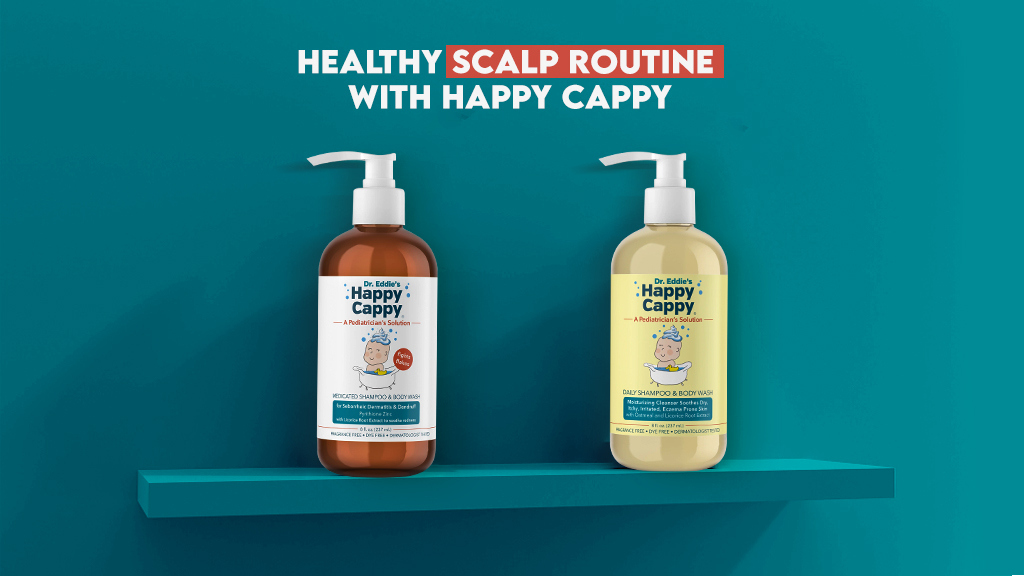
Happy Cappy Daily Shampoo & Body Wash provides gentle, fragrance-free cleansing for dry, sensitive and eczema-prone skin. Use it daily or as often as needed for your routine. It is a nonmedicated cleanser, so its role is washing the skin and hair rather than treating every cause of itching or flakes.
When flakes, scaling and itching are due to dandruff or seborrheic dermatitis, Happy Cappy Medicated Shampoo & Body Wash offers a different role. Its active ingredient is 0.95% pyrithione zinc. The label directs users to wet hair, massage it onto the scalp, rinse and use it at least twice a week for best results, or as directed by a doctor.9
Match treatment to the cause and follow the specific product directions. A medicated dandruff shampoo will not address every rash, infection or cause of hair loss. If appropriate home care is not helping, an examination can clarify what is going on.3,4
When Further Evaluation Is Appropriate
Arrange an examination for persistent itching or scaling, new hair loss, a changing spot or a sore that does not heal. Seek prompt care for significant pain, swelling, pus, spreading redness or fever. A child with a painful, swollen scalp patch or patchy hair loss should be assessed rather than treated repeatedly with a different shampoo.
It helps to bring a short history: when the change began, which products you have tried and whether anything made it better or worse. The goal is to identify the cause and choose care that fits it.
A comfortable scalp and a manageable routine are good goals. You do not need a flawless photograph or a crowded bathroom shelf to achieve them. Know what is usual for you, treat your scalp gently and get a closer look when something changes.