

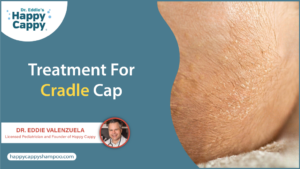
If you have arrived at this article, you may have grown tired of the flakes and scales on your baby’s scalp and eyebrows and are searching for treatment for cradle cap. Or perhaps you are a grandparent that got to see your 2 or 3 month old grandchild for the first time up close and you want to recommend something new since other home remedies have thus far not been effective.
What Are The Signs And Symptoms Of Cradle Cap (Seborrheic Dermatitis)?
The formal name for cradle cap is infantile seborrheic dermatitis. In addition to flakes, scales and crusts on the scalp and eyebrows, you can also see moist red spots with skin clumps
- behind the ears
- neck folds
- armpit folds
- folds of the groin
This redness may appear differently depending on the skin color. On lighter skin tones, it may appear as pink or red. However, on darker skin tones, it may appear as purple or darker than the skin tone.
Some of the most common symptoms of cradle cap in babies that can help you differentiate it from other common skin conditions like eczema are:
- Thick, crusty scales on the scalp
- Characteristic location
- Greasy yellow or brown flakes
What Causes Cradle Cap (Seborrheic Dermatitis) In Babies?
In infancy, there is a large amount of hormonal changes that can cause an increase in the skin lubricant sebum. These hormones are transferred to the baby’s body from the mother either before or at the time of birth.
Sebum is an oily substance naturally present on the skin that works as a natural skin barrier. It is produced in large amounts in different parts of the body such as the scalp, behind the ears, and in the armpits.
Humans all have a microscopic yeast or fungus on the scalp called Malassezia yeast. This yeast eats the sebum and produces a byproduct that irritates the scalp and starts a cascade of inflammation that causes increased shedding of the layers of the skin.
This excess shedding of the skin can be seen by the human eye as flakes, scales, and crusts.
As you can see, the underlying issue with cradle cap is excess human-produced oil, so adding oily products, even plant-based ones like coconut oil, could contribute to a buffet for the yeast that started this cascade of angry skin to begin with!
How common is cradle cap?
It affects 40% to 50% of children in their first year of life. It may resolve before the baby’s first birthday. However, sometimes it may persist and continue to bother 33% of kids under the age of 5 years old.
How To Treat Cradle Cap (Seborrheic Dermatitis)?
Cradle cap is not dangerous for the baby, but as a parent, it is natural that you want to get rid of cradle cap as soon as possible.
Here are a few things you can do to care for your baby’s scalp and relieve scaling and flaking associated with cradle cap.
Regular Washing
Keeping the baby’s scalp clean can help wash away extra oil from the scalp and reduce the chances of growth of Malassezia yeast.
- Wash the baby’s scalp with gentle baby shampoo daily when the scaling and flaking are intense.
- While shampooing a baby’s scalp, use a washcloth or your fingertips to scrub the scalp and loosen the flakes gently.
- Once the flaking and scaling get better, wash the baby’s scalp 2 to 3 times a week.
- Choose the right shampoo for your baby’s scalp. Any baby shampoo or non-medicated shampoo can help cleanse the scalp. But a medicated shampoo can help relieve scaling, flaking, inflammation, and redness associated with cradle cap much faster.
- Never pick on scales.
Brushing
Brushing a baby’s hair and scalp can help you remove loose scales on the scalp. Some flakes may come by themselves, while stubborn, greasy scales may stick to the hair. Then brushing can be your savior.
- Use a fine-toothed comb or a cradle cap brush to brush the baby’s scalp and hair gently.
- The best time to brush is while shampooing the scales may easily come off at that time.
- Gently massage the baby’s scalp with a cradle cap brush in circular motions.
- Rinse the baby’s scalp thoroughly and make sure no residue is left behind.
- Repeat this process 2 to 3 times a week to see visible results.
- Do not remove stubborn scales forcefully this can worsen the condition
Home Remedies
Common home remedies encountered for treatment for cradle cap include using an oil of some sort and applying it with one’s fingers or gently scrubbing with a soft cotton cloth or silicon brush or comb to loosen scales. Oil suggestions range from mineral oil to coconut oil to petroleum jelly. Duration of leaving the oil on the scalp ranges from applying, massaging on the scalp with immediate rinsing to application with massaging and then sleeping with the oil on the scalp and rinsing the next morning.
In my opinion, greasy product use is messy for you, baby, and the bedding and can sometimes worsen the underlying cause of cradle cap.
Breastmilk as treatment for cradle cap: People for generations have suggested breast milk as a remedy for many things. It won’t hurt to try using some if you have it available, but it could be a bit messy as well.
What Shampoo is Good for Cradle Cap?
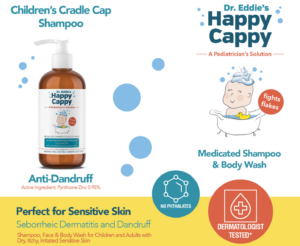
You may wonder what kind of shampoo to use for cradle cap in babies. Sometimes, the simplest solution is the best. Regular old baby shampoo works ok to lather up your baby’s scalp. Just make sure the shampoo is mild and unscented. Shampoos that are made for adults, designed to treat dandruff can be harsh on a baby’s delicate skin.
If you want faster and better results, you can try a specially-made shampoo for this condition. You can also ask your pediatrician or dermatologist to recommend a shampoo formulated to treat cradle cap.
The best cradle cap shampoo for a baby’s scalp is one that does not contain harsh chemicals and is infused with natural ingredients that serve a purpose.
Until the launch of pediatrician-created Happy Cappy Medicated Shampoo and Body Wash, with safe and effective active ingredient pyrithione zinc, no OTC (Over The Counter) anti-seborrheic dermatitis and anti-dandruff shampoo was made specifically for children of all ages.
Now parents, grandparents, and pediatricians have a shampoo, face, and body wash that does not contain common skin irritants and is infused with natural ingredients, licorice root extract, apple fruit extract, and provitamin B5 to eliminate flaking, scaling, and redness on the scalp and skin associated with seborrheic dermatitis. Recall “seborrheic dermatitis” is the medical term for cradle cap. No longer do you have to rely on unreliable and messy techniques used as a treatment for cradle cap.
What The Pediatricians Suggest To Treat Cradle Cap (Seborrheic Dermatitis)?
Seventy percent of pediatricians suggest using an over-the-counter (OTC) adult anti-dandruff shampoo that contains active ingredients like pyrithione zinc, selenium sulfide, or ketoconazole.
Pediatricians do not usually suggest salicylic acid as that is related to aspirin, and that is a big no no in children except for in special circumstances.
The problem with these adult shampoos as a treatment for cradle cap is they are laden with fragrance, dyes, and preservatives like parabens, and most use drying sulfate-containing surfactants, which can further irritate a broken skin barrier.
When Can You See Results After Using A Cradle Cap Shampoo?
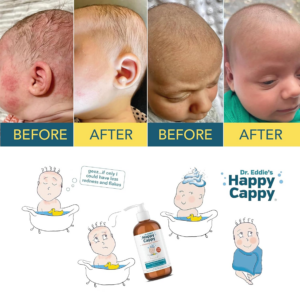
Results may be seen in as few as one or two washes. However, most families will see improvement after 1 to 2 weeks of use. The cradle cap shampoo can be used daily. More frequent use can accelerate the time to see improvement. However, with any anti-dandruff product, excessive use can dry the skin, so it is essential to choose the right shampoo for your baby.
In kids or adults with thick scale build-up,
- Massage the shampoo onto the scalp and leave the shampoo on for one to two minutes before rinsing. People in this latter category should start to see results in 2 weeks. Once the scaling and flaking are under control, we suggest tapering use to 2-3 times per week.
When To Consult A Pediatrician
If you notice there is no change in the baby’s condition even after regular washing and brushing or the cradle cap is spreading to the rest of the body, immediately consult a pediatrician.
If you notice any of the following, then consult a doctor as there is a chance your baby might be experiencing another skin condition, such as eczema (atopic dermatitis) or an infectious disease.
- Having fever
- Blood or liquid oozing from the skin
- Has a severe skin rash
- Scalp emits bad odor
- Itching
- Hair loss
The doctor will be able to properly diagnose the condition and provide a treatment plan according to its severity.
Key Takeaways
- Cradle cap is not dangerous for a baby’s health.
- Cradle cap is not caused by poor hygiene but by factors that are not necessarily under your control.
- Regular shampooing of the baby’s scalp with a medicated cradle cap shampoo and brushing with a cradle cap brush can help relieve scaling, flaking, and inflammation associated with cradle cap.
- Never pick or scratch the scales, as this can cause infection.
- If you are unsure about your baby’s condition or the symptoms are not getting better even after proper care, consult a doctor.
FAQs
- About
- Latest Posts

- WhatToExpect Mentioned Happy Cappy Shampoo as the Best Medicated Shampoo For Cradle Cap - September 29, 2025
- Parents.com Mentioned Happy Cappy Shampoo in the List of 10 Best Shampoos for Babies and Kids of All Hair Types - September 29, 2025
- Chain Drug Review Covers Happy Cappy’s CVS Launch Nationwide - August 27, 2025
Can I Brush Cradle Cap?
Yes, you can brush your baby’s scalp if they are experiencing cradle cap. Brushing the hair and scalp helps improve the blood flow in the scalp. Brushing the scalp with a cradle cap or fine-toothed comb during shampooing can help remove the loose scales from the scalp.
How to get rid of cradle cap fast?
Cradle cap usually resolves on its own within a few weeks or months. However, in some cases, it may persist into toddlerhood. To get rid of cradle cap fast, there are a few simple things you can do.
1 Wash the baby’s scalp and affected area at least two to three times a week with a medicated cradle cap shampoo.
2 While shampooing, gently brush the baby’s scalp with a cradle cap brush in circular motions to get rid of the scales.
3 If you are unsure about anything, consult a pediatrician. They may prescribe the use of cradle cap shampoo on a daily basis if your baby’s cradle cap is severe.
Does baby oil help remove cradle cap?
Baby oil may be helpful in making your baby's hair soft and smooth. The internet suggests that baby oil can help you get rid of cradle cap. However, Dr. Eddie is not a big fan. The oil, if left on the scalp, can aggravate the growth of Malassezia yeast and worsen your baby’s cradle cap. It is better to use a medicated shampoo instead of oil to get rid of the scales.
Will cradle cap stop my baby’s hair growth?
No, cradle cap does not affect your baby’s hair growth but it can cause hair loss. In some cases, scratching and removing the scales forcefully can also contribute to some hair loss. But don’t worry; once the scaling and inflammation associated with cradle cap are relieved, the baby’s hair will grow back normally.
Can I ignore cradle cap?
No, you should not ignore it if your baby is experiencing cradle cap. In some cases, it may resolve on its own without any treatment, but in some cases, especially the severe ones, it may require extra care and treatment.
Generally, washing the baby’s scalp regularly with a medicated shampoo can help you get rid of the scales, flakes, and inflammation associated with cradle cap. If you suspect that your baby’s cradle cap is still not getting better, then consult a doctor.
Suggested Products


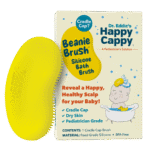
Buy today
-
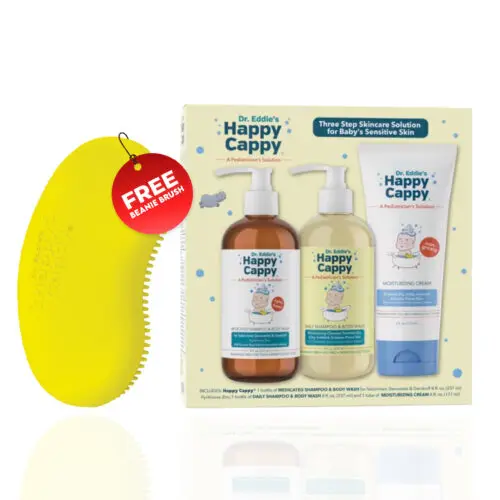 3 Step Baby Skincare Routine Bundle for Baby Acne-Prone and Sensitive Newborn Skin with FREE Beanie Brush
$30.60 / 3 weeks – $34.00
3 Step Baby Skincare Routine Bundle for Baby Acne-Prone and Sensitive Newborn Skin with FREE Beanie Brush
$30.60 / 3 weeks – $34.00
-
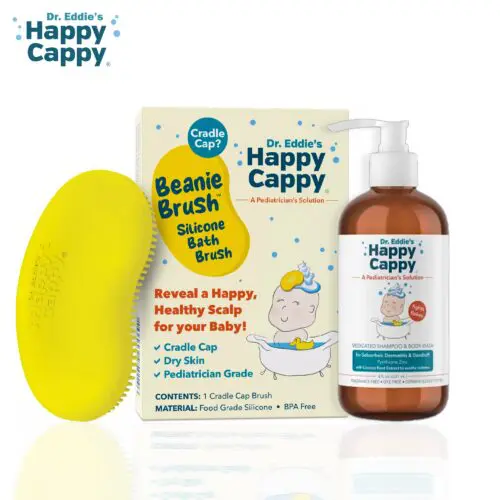 Happy Cappy Baby Bath Bundle for Neonatal Acne Skin with Beanie Brush, Medicated Fragrance-Free Shampoo and Body Wash
Original price was: $23.99.$22.99Current price is: $22.99.
Happy Cappy Baby Bath Bundle for Neonatal Acne Skin with Beanie Brush, Medicated Fragrance-Free Shampoo and Body Wash
Original price was: $23.99.$22.99Current price is: $22.99.
-
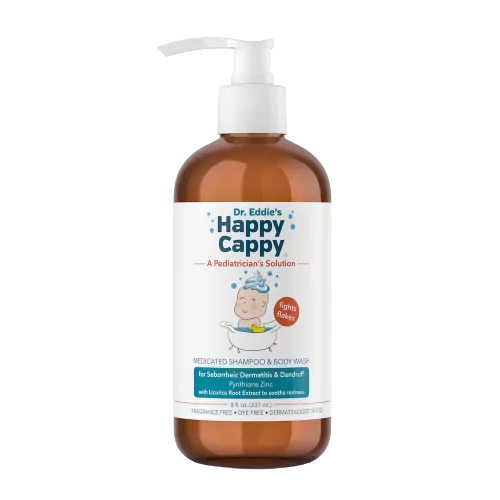 Happy Cappy Neonatal Baby Acne Shampoo and Body Wash Fragrance-Free Gentle Care for Newborn Skin
$26.60 / 3 weeks – $109.08
Happy Cappy Neonatal Baby Acne Shampoo and Body Wash Fragrance-Free Gentle Care for Newborn Skin
$26.60 / 3 weeks – $109.08