

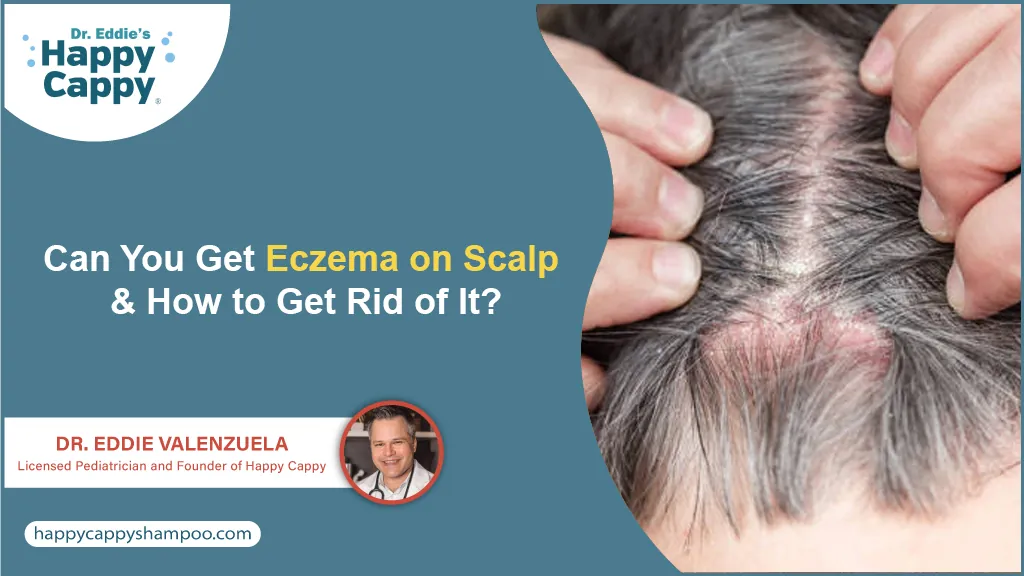
People who have eczema often wonder, “Can you get eczema on your scalp?” It’s a question many people ask when dealing with dry, itchy skin. While scalp eczema is less common than eczema on other parts of the body, it does occur–especially in young children.
Eczema on an infant’s head will tend to happen more on the cheeks, but it can also creep up into the hairline and may be associated with redness and can have some overlying scale. Read this blog to learn more about eczema on scalp and how to soothe it.
What is Eczema?
Irritation on your scalp can be caused by eczema. Wondering what is eczema? It is a chronic inflammatory skin condition that causes
- Itchy skin
- Redness
- Irritation
- Dry Skin
- Rashes
It usually affects your skin and is more common on the
- Face
- Skin folds
- Arms
- Legs
However, there are certain types of eczema that can also affect your scalp, these are mostly classified as dermatitis.
Eczema Symptoms on Scalp
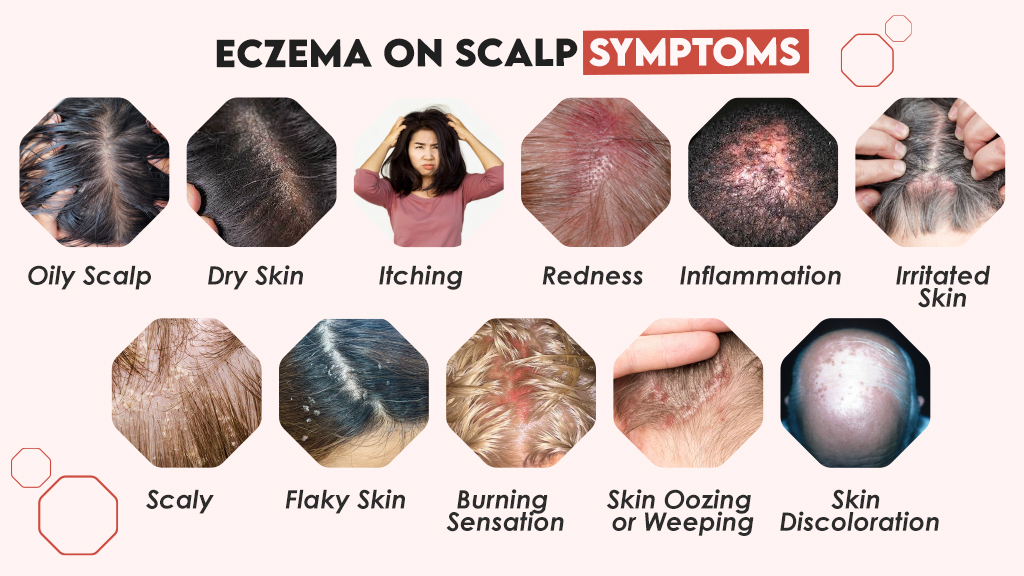
If you are wondering, “What does eczema look like on the scalp?” here is your answer. Eczema symptoms will vary for every individual depending on the severity of the condition and which type of eczema they are experiencing.
Some common symptoms that you may notice are:
- Oily scalp
- Dry skin
- Itching
- Redness
- Inflammation
- Irritated skin
- Scaly
- Flaky skin
- Burning sensation
- Skin oozing or weeping
- Skin discoloration
The redness associated with eczema may appear as red or pink in people with lighter skin tones and purple or brownish in darker skin tones.
Types of Eczema on the Scalp
Eczema on the scalp can cause intense itching, redness, and irritation. While the urge to scratch can be overwhelming, it’s important to resist. Scratching can worsen inflammation, damage the skin, and even lead to infection.
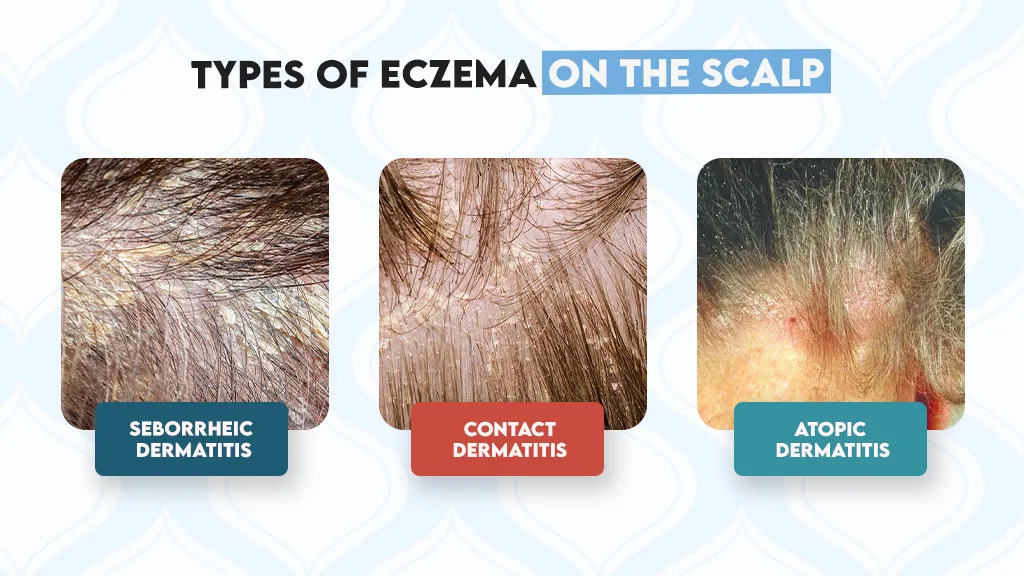
Some of the most common types of scalp eczema are:
Seborrheic Dermatitis
This is the most common type of eczema that appears on the scalp and hairline. When it appears in babies and children it is known as cradle cap. It usually causes
- White or yellow flakes and scales
- Thick scaly patches
- Itching
- Inflammation
- Redness
In children, the scales are thicker and larger than those in adults. A less severe type of seborrheic dermatitis that a large number of people experience worldwide is dandruff.
Contact Dermatitis
Contact dermatitis is when the skin or scalp becomes irritated or allergic to a certain thing. The most common triggers that lead to contact dermatitis on the scalp are chemicals in your hair products some of these are:
- Fragrances
- Sulfates
- Phthaalte
- Parabens
- Dimethicone
- Formaldehyde
You can also experience a reaction from wearing swimming caps and headgear.
These products may not be harmful in general, but due to a weak or impaired immune system, your body may react differently when it comes in contact with them. And as a reaction you experience
- Dry skin
- Itching
- Irritation
- Allergic reaction
Atopic Dermatitis
Atopic dermatitis is the most common type of eczema that appears on the skin, however, it is rare to appear on the scalp. Whenever it does it can lead to redness, dryness, and intense itching on the scalp.
Atopic dermatitis on the scalp may appear when you are experiencing severe eczema flare-ups. Skin dryness and lack of moisture on the scalp are common symptoms that cause itching.
What Causes Eczema on Scalp
There isn’t a single cause of scalp eczema. Instead, it develops from a combination of genetic, environmental, and immune-related factors that weaken the skin’s natural barrier and trigger inflammation.
1. Impaired Skin Barrier Function
Your skin’s outermost layer (the stratum corneum) acts as a shield, locking in moisture and blocking irritants. When this barrier becomes compromised due to genetics, hormonal changes, harsh hair products, or a weakened immune response the scalp loses hydration and becomes more vulnerable to irritation. This leads to dryness, redness, and itching characteristic of eczema.
2. Excess Sebum and Malassezia Yeast
The most common type of eczema affecting the scalp is seborrheic dermatitis. It occurs when the scalp produces too much sebum, a natural oil. The excess oil interacts with Malassezia yeast, a microorganism that naturally lives on the skin. This interaction triggers inflammation, flaking, and the greasy or yellowish scales often seen along the hairline and behind the ears.
3. Genetic and Immune System Factors
People with a family history of eczema, asthma, or allergies are more likely to experience scalp eczema. This genetic predisposition affects how the body’s immune system reacts to irritants, often over-responding to normal substances and causing chronic inflammation.
4. Environmental Triggers
Cold weather, dry air, stress, and certain hair care products (especially those containing fragrance, alcohol, or sulfates) can worsen scalp eczema. Even frequent shampooing or overwashing can strip natural oils and further irritate the skin.
5. Hormonal and Lifestyle Factors
Hormonal shifts, such as during puberty, pregnancy, or periods of high stress, can increase oil production and flare-ups. Lack of sleep, poor diet, and excessive sweating may also play a role in triggering or aggravating the condition.
How to Treat Eczema on Scalp
Treating eczema on the scalp (also known as scalp dermatitis) depends on identifying the underlying cause. Whether it’s seborrheic dermatitis, atopic dermatitis, or contact dermatitis, the goal is to reduce inflammation, control itching, and restore the scalp’s natural barrier.
1. Keep the Scalp Clean
Using a gentle, dermatologist-recommended eczema shampoo is the first line of treatment. Wash your scalp two to three times per week to remove buildup, soothe itching, and calm inflammation.
Avoid regular shampoos that contain fragrance, alcohol, sulfates, or dyes, as they can strip the scalp and worsen irritation.
Best Shampoo Options
- Seborrheic Dermatitis Shampoo: Look for ingredients such as pyrithione zinc, selenium sulfide, or salicylic acid. These help reduce the growth of Malassezia yeast, which often triggers scalp eczema and dandruff.
- Eczema Shampoo: For atopic or contact dermatitis, use a fragrance-free, sulfate-free scalp eczema shampoo made with ingredients formulated for sensitive skin.
2. Choose the Right Hair-Care Products
Many adult anti-dandruff shampoos contain harsh drying agents (sulfates) or artificial fragrances that irritate eczema-prone skin. Some also contain ketoconazole, which may be too harsh for infants or those with sensitive scalps.
Instead, choose OTC (Over-The-Counter) medicated shampoos and scalp treatments that are:
- Free from sulfates, parabens, and dyes
- Clinically tested for sensitive skin
- Formulated with moisturizing and soothing ingredients such as aloe vera, apple fruit extract, or provitamin B5
3. Moisturize the Skin
If you are experiencing eczema, you should keep your skin moisturized with the help of an eczema cream, but this can be difficult when you are experiencing it on the scalp. The hair may get in your way and make it difficult for you to moisturize your scalp.
- For this, you can use a gentle eczema cleanser like Happy Cappy Daily Shampoo that contains natural ingredients like apple fruit extract, aloe vera extract, and provitamin B5 that help soothe the scalp and keep it moisturized.
- For severe eczema, consult a dermatologist. They may prescribe the use of emollients that are in the form of gel, lotion, or oil to moisturize the scalp–make sure to use the medication only as prescribed.
4. Medication for Eczema on Scalp
If OTC products aren’t providing relief, a dermatologist may recommend short-term medications to reduce inflammation and infection risk. Common prescription options include:
- Topical corticosteroids (e.g., 1% hydrocortisone cream)
- Antifungal or antibiotic treatments for secondary infections
- Oral antihistamines to control itching
- Biologic therapies for chronic, severe eczema that doesn’t respond to topical care
Best Shampoo For Eczema on Scalp
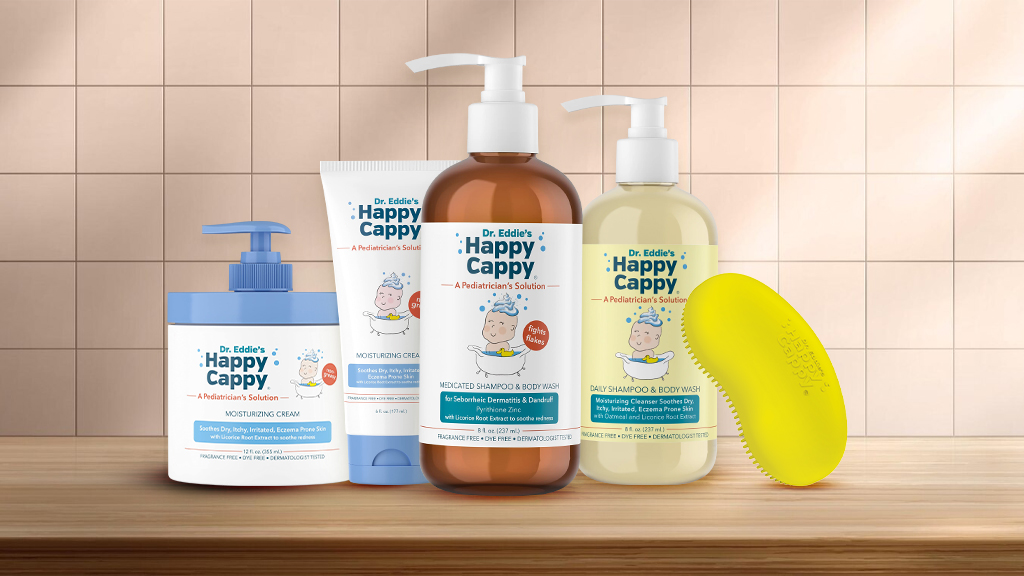
Dr. Eddie’s Happy Cappy Products do not contain added fragrance or dye. We do not use parabens or phthalates, and we have gentle surfactants that are sulfate-free.
Happy Cappy Medicated Shampoo and Happy Cappy Daily Shampoo and Body Wash are designed for children of all ages and many adults have found these products to be a fantastic addition or replacement in their tool chest for dealing with dandruff, seborrheic dermatitis, and scalp eczema.
These shampoos are pH-balanced to keep your skin’s pH optimized and are a great option as a shampoo for eczema on the scalp. All of our products contain redness-soothing Licorice Root Extract and provitamin B5 to moisturize your skin, scalp, and hair.
Preventing Eczema on the Scalp
Even though it is difficult to prevent eczema on the scalp you can reduce the chances of future flare-ups by making a few lifestyle changes. Here are a few things you should do:
- If your scalp eczema is the result of contact dermatitis, avoid the possible triggers that might be causing your flare-ups.
- Use lukewarm or cool water to wash your scalp instead of hot water.
- Choose your hair products that are free or contain very minimal amounts of harsh chemicals.
- Don’t scratch your scalp or pick at scales.
- Stress can also worsen the condition. So manage stress with the help of yoga, exercise, and deep breathing techniques.
- Always shampoo your scalp after a heavy workout or sweating.
- Making a few simple changes to the way you take care of your scalp can help you prevent scalp eczema and other common skin conditions.
Other Similar Conditions
Scalp eczema can often be confused for other skin conditions such as:
Ringworm
Children can develop other flaking conditions isolated to only a few coin-sized spots on the scalp that can frequently cause hair loss. The cause of this is fungus–if it occurred elsewhere on the body, it would be referred to as “ringworm” . The fancy name for ringworm in the hair is tinea capitis.
Psoriasis
Much less common in children and adolescents than eczema and tinea capitis, is psoriasis. This condition can happen in the hairline or the scalp and tends to have a red base with an overlying silver/white colored scale. When it appears on the scalp, it is known as scalp psoriasis.
Key Takeaways
- Scalp eczema can cause itching, irritation, inflammation, and scaling on the scalp.
- There are different types of eczema that can affect your scalp, like seborrheic dermatitis or cradle cap in babies, contact dermatitis, and atopic dermatitis.
- Other common conditions can also cause symptoms resembling those of eczema, such as scalp ringworm and scalp psoriasis.
- If your scalp eczema is caused by contact or atopic dermatitis, then use a gentle daily eczema shampoo and body wash to keep the scalp clean.
If it is caused by seborrheic dermatitis, then use a medicated shampoo that contains pyrithione zinc to soothe the symptoms.
FAQs
- About
- Latest Posts

- WhatToExpect Mentioned Happy Cappy Shampoo as the Best Medicated Shampoo For Cradle Cap - September 29, 2025
- Parents.com Mentioned Happy Cappy Shampoo in the List of 10 Best Shampoos for Babies and Kids of All Hair Types - September 29, 2025
- Chain Drug Review Covers Happy Cappy’s CVS Launch Nationwide - August 27, 2025
What triggers eczema on the scalp?
Scalp eczema can be triggered by a mix of internal and external factors that irritate the skin or weaken the scalp’s barrier. Common triggers include:
Extreme weather conditions (very cold or humid climates)
Harsh chemicals in hair products such as sulfates, parabens, and fragrance
Stress and hormonal changes
Certain medications and allergens
Environmental factors like pollution or hard water
Excess sebum production and Malassezia yeast growth
Skin dryness or an impaired scalp barrier
Keeping the scalp clean with a gentle, fragrance-free shampoo and avoiding harsh products can help reduce flare-ups and irritation.
What does eczema look like on the scalp?
Scalp eczema can appear differently depending on the individual, but some of the most common signs include:
Red, itchy, or inflamed patches
White or yellow flaky scales
Dry, rough, or greasy areas of skin
Thick crusts or scabbing from scratching
It’s often noticed along the hairline, behind the ears, or on the back of the head. If symptoms persist, consult a dermatologist for diagnosis and treatment.
How do you treat scalp eczema?
The best way to manage scalp eczema is by keeping the scalp clean and balanced. Treatment varies depending on the type of eczema:
For seborrheic dermatitis, use a medicated shampoo containing pyrithione zinc, selenium sulfide, or salicylic acid two to three times a week.
For atopic or contact dermatitis, choose a gentle, fragrance-free shampoo for sensitive skin and avoid sulfates or alcohols.
Regular use helps reduce itching, redness, and flaking, while restoring the scalp’s natural moisture barrier.
Is coconut oil good for scalp eczema?
Coconut oil may hydrate dry skin, but it’s not ideal for scalp eczema. In seborrheic dermatitis, applying oil can worsen symptoms by feeding Malassezia yeast, a common trigger for flaking and irritation. Some people may also be allergic or sensitive to coconut oil, which can increase redness and itching. It’s better to use dermatologist-tested, fragrance-free shampoos and moisturizers made for eczema-prone skin.
How often should you wash your hair with scalp eczema?
Washing your scalp regularly helps control buildup and inflammation. Here’s how to balance cleansing and treatment:
Use a gentle daily shampoo for regular cleansing.
Use a medicated shampoo (with pyrithione zinc or selenium sulfide) 2–3 times per week for seborrheic dermatitis.
Avoid hot water, as it can dry out the scalp. If your eczema is severe, consult a dermatologist to tailor your washing routine.
Can oil worsen eczema on the scalp?
Yes. Applying oil can worsen scalp eczema, especially in those with seborrheic dermatitis. Oils trap heat and moisture, allowing Malassezia yeast to grow and trigger inflammation. Leaving oil on for too long may also cause contact dermatitis, clogging pores and worsening redness and itching. Instead, use lightweight, fragrance-free shampoos or medicated scalp treatments designed for eczema-prone skin.
What should you avoid with scalp eczema?
Avoiding common irritants and certain habits can prevent flare-ups and protect your scalp. Stay away from:
Hair products with fragrance, sulfates, or parabens
Scratching or picking at flakes
Hot water when washing your hair
Leaving heavy oils on the scalp
Choose lukewarm water and gentle, dermatologist-approved shampoos to calm irritation and protect your scalp.
Is scalp eczema an autoimmune disease?
No, scalp eczema is not an autoimmune disease. It’s an inflammatory skin condition caused by an overactive immune response to irritants or microbes on the scalp—not by the body attacking its own cells. This overreaction leads to redness, itching, and flaking, but it differs from autoimmune disorders. Managing it involves reducing inflammation and restoring the scalp’s protective barrier with consistent care.