
Quick Answer
Cradle cap is seborrheic dermatitis of a baby's scalp. It causes attached white or yellow scales and usually little discomfort. Gentle washing can help; avoid picking attached scales. Pain, oozing, swelling, or a baby who seems unwell needs medical assessment.11,12
On this page
Cradle Cap: What It Is
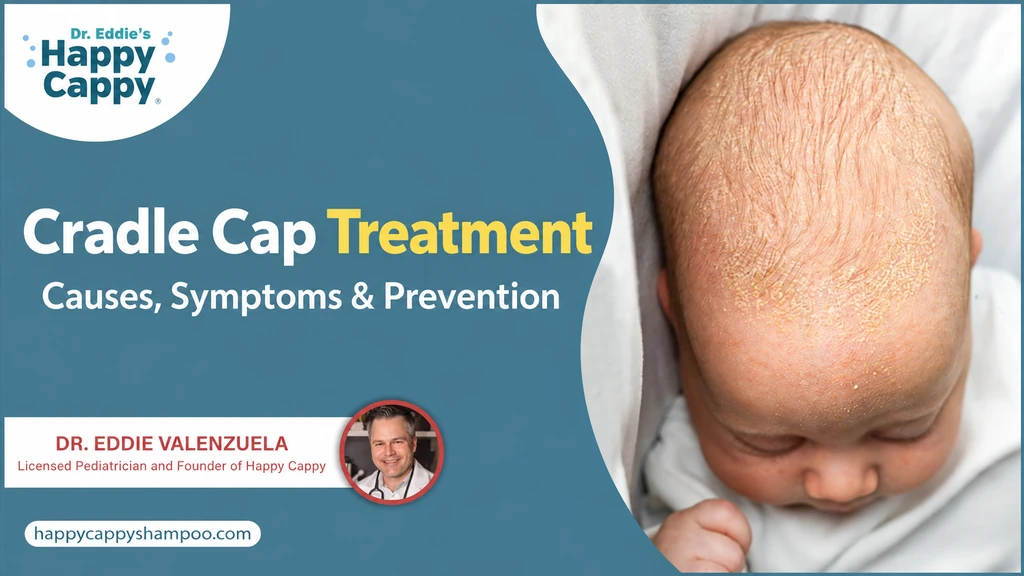
Cradle cap is seborrheic dermatitis of a baby’s scalp. It causes greasy, attached white or yellow scales and usually little discomfort. It is common, is not contagious, and is not a sign of poor hygiene.12
This guide introduces the condition, gentle care, and signs that need assessment. Use the article directory for detailed answers about oils, brushing, hair loss, and other specific concerns.
Other Names for Cradle Cap
Cradle cap is the scalp form of infantile seborrheic dermatitis. You may also see the older names milk crust or crusta lactea. Seborrheic dermatitis can involve other areas of a baby's skin, as described below.
A Note From Dr. Eddie
"I know how concerning cradle cap can look, especially to first time parents. The good news is that it's one of the most common skin conditions I see in infancy, and it isn't a sign that anything is wrong with your baby or anything you did. It looks more uncomfortable than it actually is, and for most babies it clears up completely within the first year."
Dr. Eddie Valenzuela, MD, FAAP
Articles in this hub
Browse 27 articles in this collection. Each title opens a separate guide.
For treatment and washing steps, see the cradle cap care section below.
Recognizing cradle cap
Gentle care and shampoo choices
Oils, remedies and prevention
Duration and scalp concerns
Cradle Cap: Causes and Contributing Factors
The exact cause is uncertain. Researchers describe an interaction among early-life oil-gland activity, hormones, skin oils, naturally occurring Malassezia yeast, and the way an individual baby’s skin responds.1,4
Hormones and skin oils
Hormonal influences may temporarily stimulate the sebaceous glands after birth. These glands make sebum, the skin’s natural oil. Their early activity may contribute to the attached, greasy scales, but excess oil alone does not explain every case.
Yeast metabolism and skin susceptibility
Malassezia normally lives on healthy skin. It breaks down skin lipids, releasing fatty acids, including oleic acid. Research in dandruff and seborrheic dermatitis suggests that these byproducts can irritate susceptible skin and affect its barrier. Whether that pathway operates identically in babies is not fully established.5,6
Cradle cap is not a contagious fungal infection
The presence of yeast does not itself diagnose an infection. Cradle cap is not caused by poor hygiene or a food allergy. It also does not establish a gut disorder; our gut-health evidence review addresses that separate claim.12
Cradle Cap: Signs, Appearance, and Symptoms
According to the Mayo Clinic, the most common observations include:
- White or yellow flakes and scales
- Scaling patches or thick, crusty patches on the scalp, eyebrows, eyelids, or forehead
- Extremely dry skin, or in some cases oily skin
- Mild redness in areas with scaly patches, most commonly on the scalp
- Mild inflammation
- Loose skin flakes that may fall off when brushed
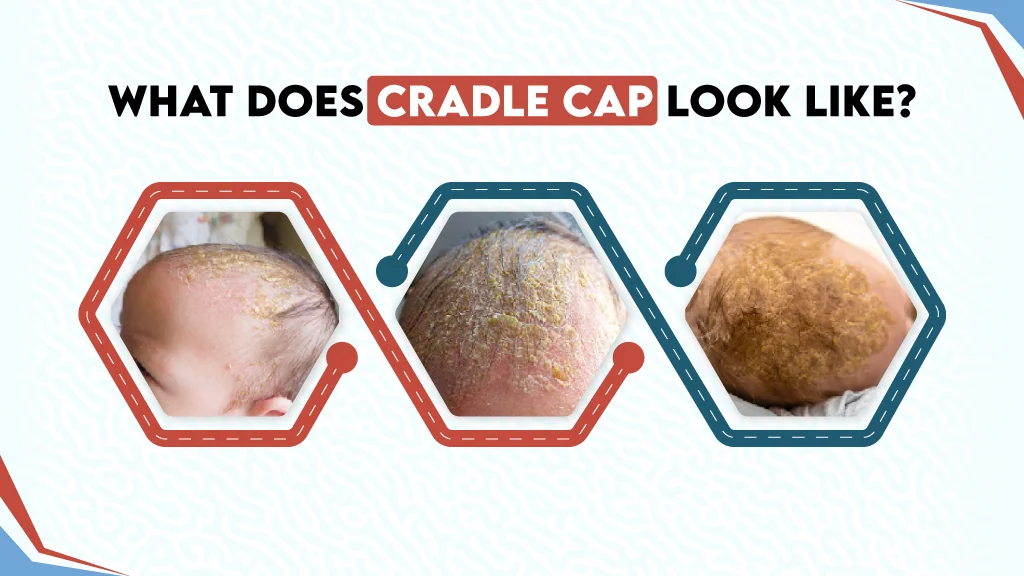
On a baby's scalp, thickened yellow, white, or brown scales are common. Inflamed patches may look pink or red on lighter skin and darker than usual on darker skin. Look at the scale and texture as well as the color.15 A yellow or brown crust can also develop on the eyebrows or behind the ears. It can also cause pink or red, slightly moist skin in the skin folds, around the diaper area, or in the armpits.
Hair Loss and Cradle Cap
Hair that comes away with ordinary cradle-cap scales will regrow. Babies also commonly shed birth hair during the first few months, which can happen at the same time. Read the cradle-cap and newborn hair-loss guide for the differences and signs that need assessment.12
Temporary Skin Color Changes With Infantile Seborrheic Dermatitis
When infantile seborrheic dermatitis extends beyond the scalp, particularly onto the face, skin folds, or trunk, the inflamed areas can sometimes look temporarily darker or lighter after the rash and scaling improve. Darkening is called post-inflammatory hyperpigmentation, while temporary lightening is called post-inflammatory hypopigmentation and may be more noticeable in infants with darker skin tones.
These pigment changes are generally harmless and usually fade gradually as the skin recovers, although the return to the child's usual skin tone may take time. This is different from vitiligo, an unrelated condition that causes loss of skin pigment.
Itching and Discomfort
Ordinary cradle cap usually causes little or no itching or pain. Persistent scratching, tenderness, or distress deserves reassessment. Read the itching, pain, and discomfort guide for the signs to watch for.11,12
Cradle Cap: Where It Appears
The term cradle cap refers to the scalp. Infantile seborrheic dermatitis can also affect the eyebrows, forehead, behind the ears, and skin folds. Care near the eyes differs from scalp brushing; see the baby eyebrow guide.12
The color of any redness can vary by skin tone, appearing pink or red on lighter skin and red or purple on darker skin tones.
Cradle Cap: When It Starts and Age Groups
Cradle cap describes the baby scalp condition. Persistent scales in toddlers and seborrheic dermatitis in adults need their own age-appropriate interpretation.
Newborns and babies
According to Johns Hopkins, cradle cap most often occurs between 3 weeks and 12 months of age. It commonly begins between 3 weeks and 2 months after birth. Greasy, attached scalp scales differ from the fine peeling a newborn may have as their skin adjusts after birth. Not every baby develops cradle cap, and some continue to have patches into toddlerhood.8,12
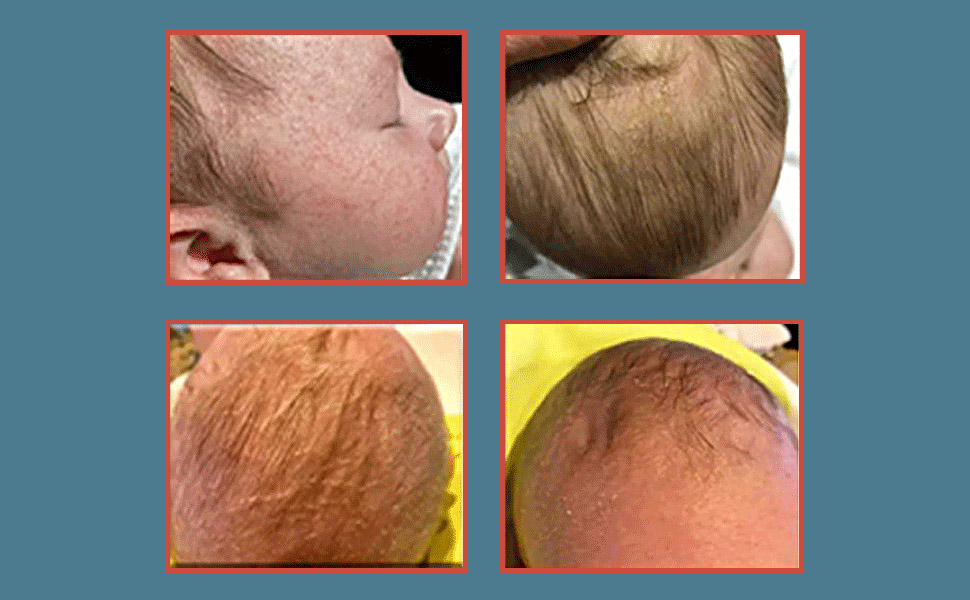
Toddlers
Some toddlers still have flaky buildup that began in babyhood. Persistent or newly appearing scales beyond infancy should be checked, especially with itching, pain, or hair loss. Learn about toddler cradle cap, similar conditions, and scalp care.
Adults
Adults can develop scalp seborrheic dermatitis, often called “adult cradle cap” in searches. It may start without any history of cradle cap in infancy and can recur for years. Use the adult scalp guide for adult treatment and lookalikes.6,10
Cradle Cap: How Long It Lasts
Cradle cap often improves over weeks to months and usually clears during the first year. Some toddlers still have flaky buildup that began in infancy. Persistent or newly appearing scales, especially with discomfort or hair loss, deserve reassessment.8,12
Recurrence does not mean care has failed
Scales can return for a time. Gentle, regular washing helps manage buildup, but no routine guarantees prevention. Avoid repeated scraping in an effort to keep the scalp completely clear.
Cradle Cap: Safety and Risk
Cradle cap is not contagious
It can't spread from a baby to other children, adults, or siblings through contact.
Malassezia normally lives on healthy skin, and cradle cap reflects an individual interaction among skin oils, Malassezia activity, the skin barrier, and susceptibility, not an infection passed from one person to another. It is safe to hold, cuddle, play with, and care for a baby with cradle cap.
When to Consult a Doctor
Most cases of cradle cap can be managed at home and don't require medical treatment. Contact the baby's pediatrician for:
- Fever or a baby who appears ill
- Pain, tenderness, oozing, pus, or significant swelling
- Rapidly spreading or extensive redness
- Significant itching, sleep disturbance, or feeding difficulty
- A persistent or unusual rash that is not improving
- A rash extending beyond the areas commonly affected by infantile seborrheic dermatitis
- Uncertainty about whether the condition is cradle cap, eczema, infection, or another skin condition
Cradle Cap: Treatment Options
Mild cradle cap may improve without treatment. Care focuses on gently washing the scalp, loosening scale that is ready to lift, and keeping the skin comfortable.11,12
A simple cradle-cap care checklist
You do not need a large kit to care for mild cradle cap. Keep a few gentle supplies within reach:
- A mild, fragrance-free baby shampoo, or the specific medicated wash recommended for your child's symptoms.
- A soft baby brush or comb, used lightly only on scales that release easily.
- A clean, soft washcloth for washing around the hairline and a soft towel for drying.
A brush is optional; gentle fingertip massage may be enough. Avoid scraping tools and leave firmly attached scales alone. If your clinician recommends a scale-softening product, use it as directed and wash it out thoroughly.11,12
Gentle washing
Wet the scalp with lukewarm water, massage a mild, fragrance-free shampoo with your fingertips, and rinse thoroughly. Avoid scrubbing. If your baby also has eczema, washing frequency may need adjusting.
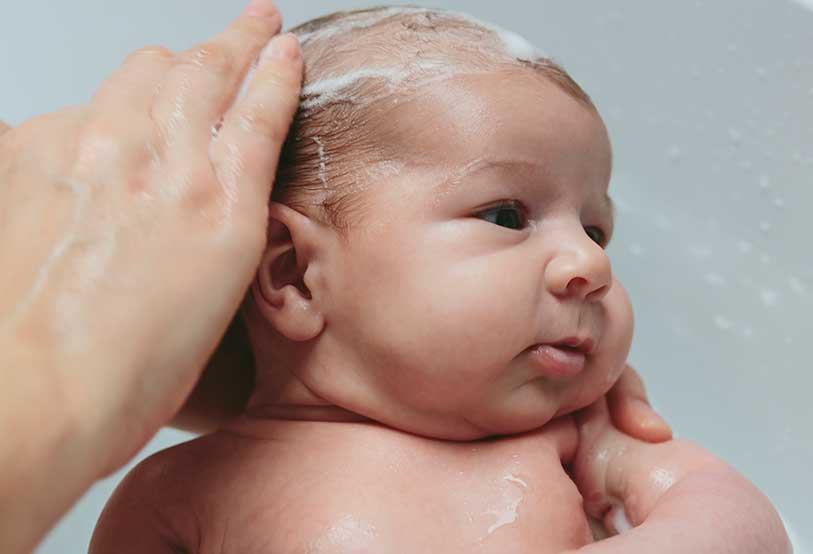
Watch Dr. Eddie demonstrate gentle scalp cleansing. The aim is to release loose flakes without scraping attached scale.
Optional softening for stubborn scales
We favor the American Academy of Dermatology’s non-food-oil guidance when scale needs softening before washing. A plain, fragrance-free mineral oil is one option; shampoo it out afterward. Oils are optional. Our coconut-oil and olive-oil guides explain why the advice differs.11
Light pressure for loose flakes
A soft scalp brush can gently move flakes that have already loosened during washing. Leave attached crusts alone and stop if the skin becomes sore. Do not brush raw or weeping skin. Read the brush technique guide and picking and accidental-scratch guide for details.
Medicated washing for persistent flaking and scaling
A medicated wash can help when gentle washing does not adequately control seborrheic flakes and scale. Choose a formulation for the intended user; adult shampoo routines should not simply be copied onto a baby.
Formulations and age directions differ. The cradle-cap shampoo ingredient guide explains what to look for when choosing a wash.
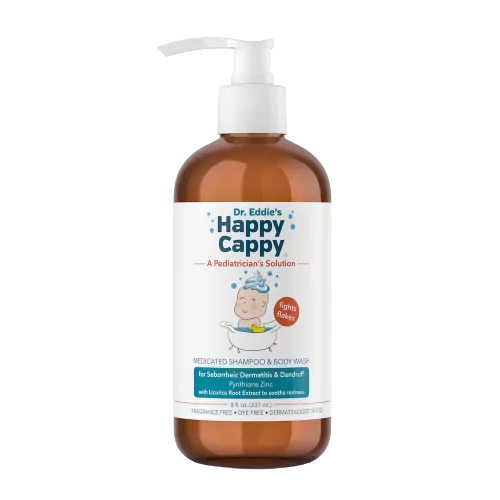
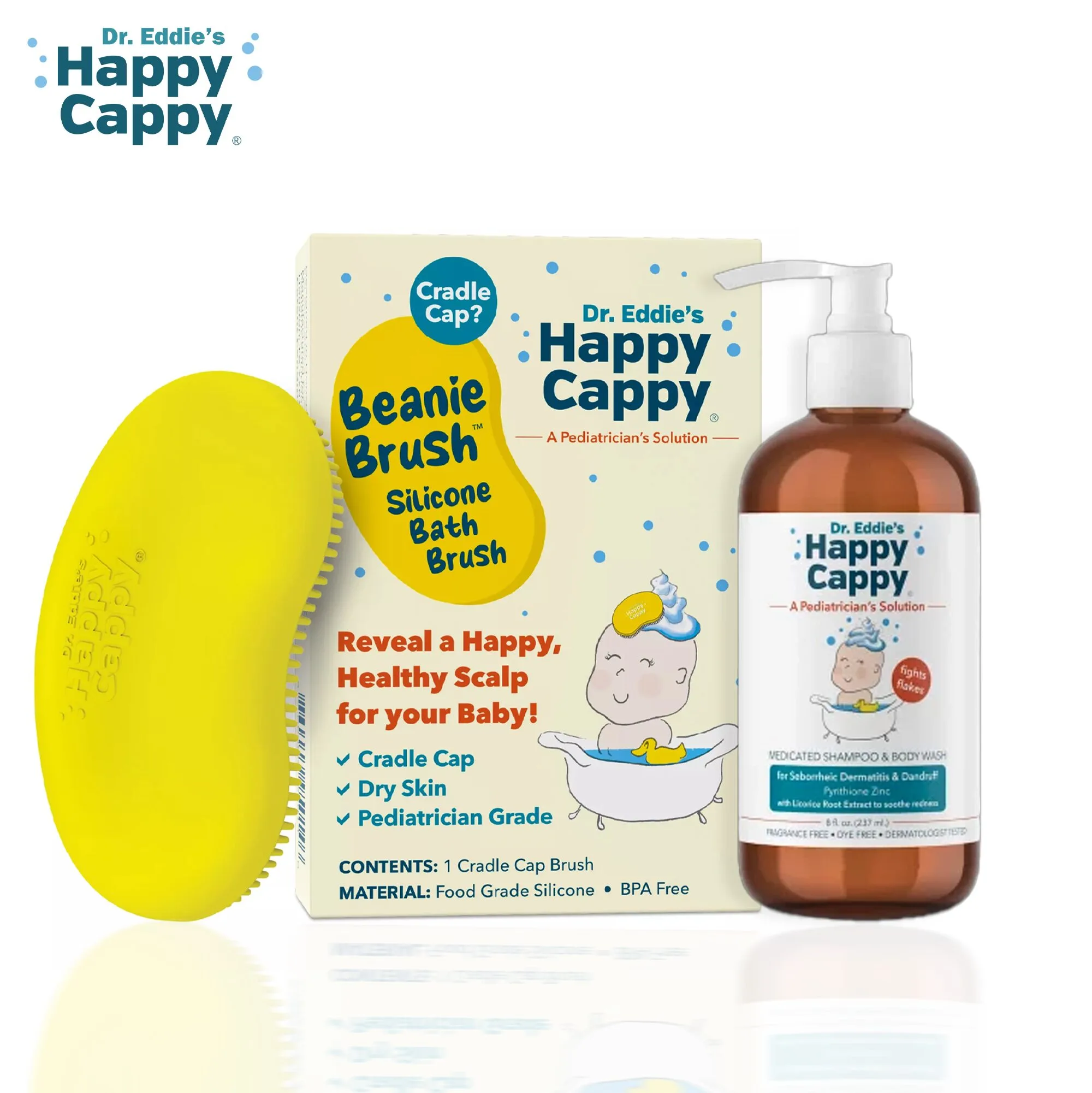
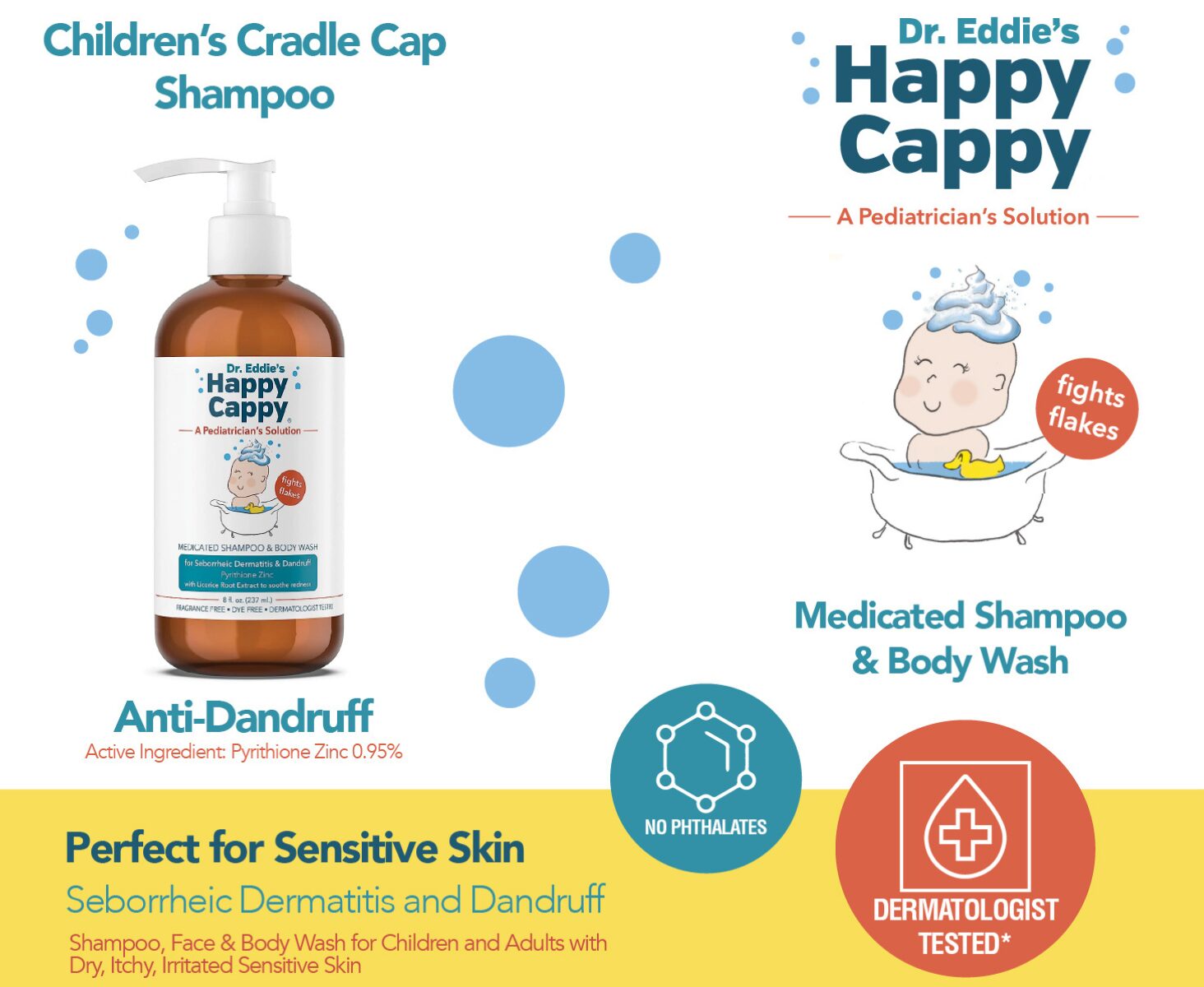
Happy Cappy Medicated Shampoo + Beanie Brush Bundle
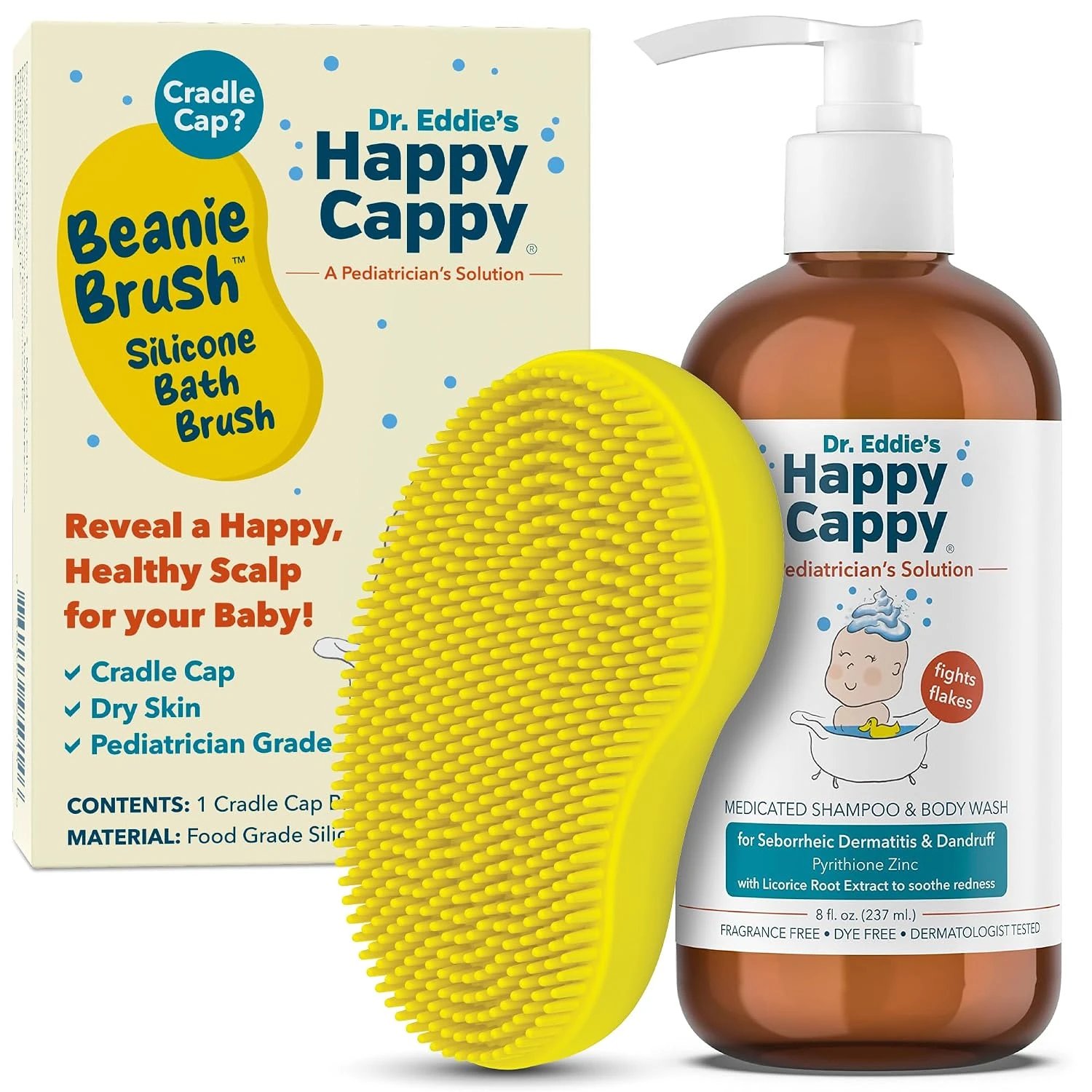
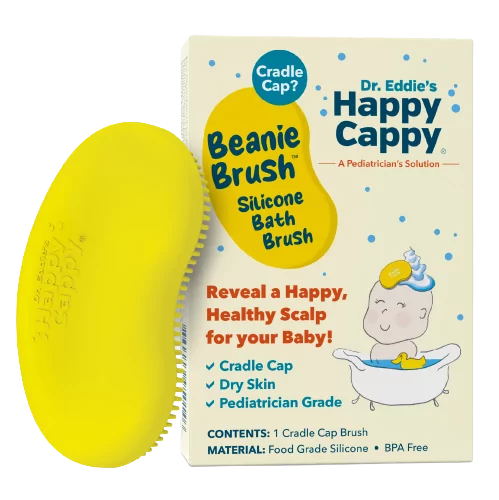
The Happy Cappy Medicated Shampoo + Beanie Brush Bundle pairs an 8 oz medicated wash with a soft silicone scalp brush.
The wash contains 0.95% pyrithione zinc to help relieve flaking, scaling, redness, and itching associated with seborrheic dermatitis and dandruff. Its fragrance-free, dye-free formula is designed for sensitive skin. Glycerin and panthenol support hydration and softness, while licorice root extract helps soothe visible redness.13
Skip the oily mess. Use the brush with a light touch during washing to move flakes that release easily; leave attached scales alone.
Use directions: Wet the hair thoroughly, gently massage in the shampoo, and rinse well. Use at least twice weekly. Keep it out of the eyes. Stop use and ask a doctor if symptoms worsen or do not improve with regular use.13
Already have a suitable wash? Shop the Beanie Brush separately.
Changes you may see with regular care
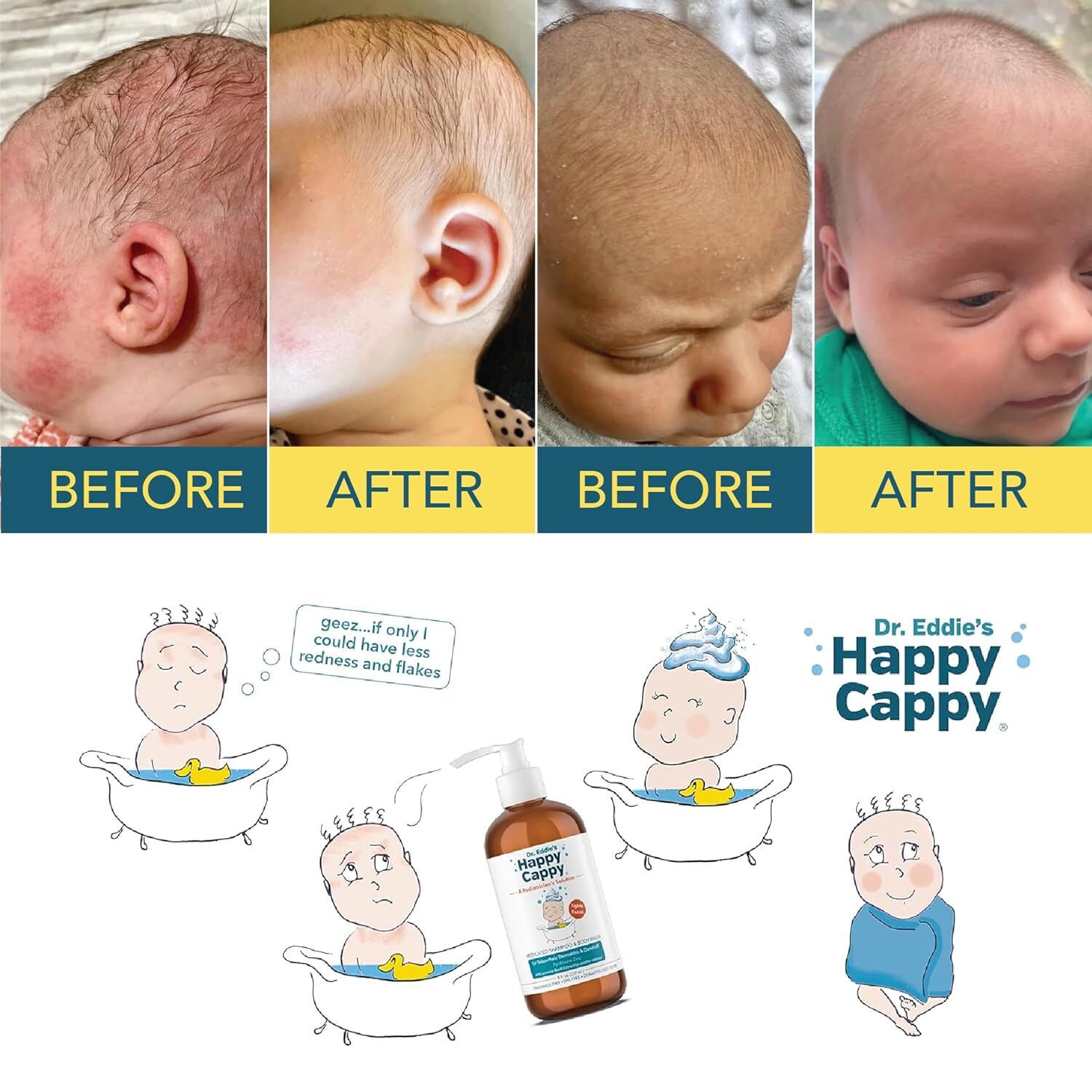
Look for gradually loosening scales and fewer visible flakes. There is no need to remove every crust in one wash. Scales can recur for a time; our guide to how long cradle cap lasts explains the usual course and when to seek reassessment.11,12
Scalp irritation changes the care plan
Avoid picking, scratching, essential oils, and products that irritate the skin. Oozing, pain, swelling, bleeding, pus, or a persistent odor needs assessment before treating it as ordinary cradle cap. The leaking-fluid guide explains what to do while arranging care.
Cradle Cap: How It Differs From Other Conditions
Cradle cap and dandruff differ in age and course
Cradle cap affects babies. Dandruff usually begins around puberty and causes scalp flaking without obvious inflammation. Read the cradle cap versus dandruff comparison.
Eczema usually causes more itching
Atopic eczema more often causes dry, itchy, inflamed patches. A baby can have both conditions. The cradle cap versus eczema guide compares the clues and care roles.
Simple dryness and newborn peeling have different patterns
Normal newborn peeling and fine, dry scalp flakes are different from adherent greasy scales. Use the cradle cap versus dry-skin guide for recognition and care.